Shanghai cuisine—often called “Benbang cuisine”—is a core part of Jiangnan culinary heritage. It’s known for balanced flavors and for highlighting the natural taste of ingredients, reflecting the Shanghainese preference for dishes that feel “light and clean” even when rich. Shanghai’s snack culture is also extremely diverse and full of Jiangnan character.
Beyond local cuisine, the “Magic City” is also a culinary melting pot. As one of China’s earliest treaty ports, Shanghai has long absorbed global influences. Whether you’re craving Japanese, Korean, European, or American food, it’s all easy to find here.
From Breakfast to Late-Night Snacks: Essential Local Eats
Pan-fried Pork Buns

Shengjianbao is one of Shanghai’s most famous snacks, with a history of nearly a century. The bottom is pan-fried until golden and crisp, while the top is often finished with sesame seeds and scallions for extra aroma.
It’s best eaten hot: crisp skin, juicy filling, and broth in every bite. The classic filling is pork, but modern versions include shrimp, chicken, and more.
Shengjian can be divided into two types: mixed-water shengjian and clear-water shengjian.
"Mixed-water shengjian," also known as the old-style shengjian, follows the northern Jiangsu method. It uses semi-leavened dough and primarily features fresh pork with pork skin jelly. Its characteristics include a thin wrapper, crispy bottom, rich juice, and firm meat. The opening faces downward to retain the soup. In the early days, "Luochunge Shengjian" was a representative of this style.
"Clear-water shengjian" is represented by the traditional Shanghai shop, Da Hu Chun. It uses fully leavened dough, with the opening facing upward, and the wrapper is slightly thicker. The filling does not include pork skin jelly, resulting in less soup and lacking the burst of juice found in the mixed-water style. Although it doesn't have a rich and flavorful soup, it is less greasy and offers a more refreshing taste.
Xiaolong Soup Dumplings
When it comes to Shanghai xiaolongbao, Nanxiang Xiaolongbao is the most famous name. The dumplings are steamed in small bamboo baskets—hence the name “xiaolongbao.” Although the style originates from Nanxiang Town, you can now find excellent versions throughout the city.
Because of the brand’s fame, the Nanxiang shop near City God Temple has become a tourist must-try and often draws long lines. But there are many other strong options across Shanghai—such as Wanshouzhai, Jiajia Soup Dumplings, and Wangjiasa—so you don’t have to insist on a single shop.
Fresh Meat Mooncakes
Fresh meat mooncakes are a specialty of the Jiangsu–Zhejiang–Shanghai region. The crust is crisp and flaky, while the meat filling is savory and juicy, with rich flavor where the crust absorbs the meat juices.
They taste more like a cross between a savory pastry and a pan-fried bun than a traditional sweet mooncake. They’re best eaten hot. Around Mid-Autumn Festival, even mildly famous shops can see very long queues.
Pork Ribs with Rice Cakes
Pork Chop Rice Cake is an economical and uniquely flavored snack in Shanghai with a history of over 50 years. Pork Chop Rice Cake is not stir-fried pork chop with rice cake but rather a whole piece of fried pork chop placed on top of two rice cakes. The pork chop has a golden color a crispy surface and is juicy and tender. The fried pork chop is paired with Shanghai- Worcestershire sauce and the rice cake crispy on the outside and soft on the inside exudes a fragrant aroma with a slightly sweet and spicy flavor making it fresh tender and delightful to the palate.
You may have never heard of the concept of Worcestershire sauce. It’s neither soy sauce with chili nor chili sauce with soy sauce, but rather a unique condiment originally from the UK. It’s a blend of chili, vinegar, ginger, scallions, sugar, and salt, offering a taste that’s slightly sour, sweet, savory, and mildly spicy—a complex mix of flavors. In China, it’s only used in cooking in Shanghai and Hong Kong, two cities deeply influenced by British culture. In Cantonese, it’s called "喼汁" (gip zap).
Pairing Worcestershire sauce with fried pork chops is a quirky combination that Westerners could never dream of—it’s neither traditional nor refined. Yet, this is an innovative creation by Shanghainese people, blending local ingredients with the flavors of Shanghai-style cuisine. It symbolizes the pragmatic, adaptable, and inclusive cultural character of the city of Shanghai.
Shanghai Rice Cakes
Shanghai rice cakes are a general term for a category of pastries, with the green rice cake already gaining widespread fame. During the Qingming season, they are also available on major fresh produce e-commerce platforms outside of Shanghai. The original salted egg yolk and pork floss flavor created by Xinghualou features egg yolk that is not added whole but rather mixed and blended with pork floss. The yolk is not dry, offering a sandy, glutinous, and soft texture, and has now become a viral food.
Tiaotou Gao (Sticky Rice Cake) and Shuangniang Tuan (Double-Stuffed Glutinous Rice Ball) are even more popular among locals. Tiaotou Gao is made from glutinous rice flour, shaped into long strips, and sprinkled with osmanthus powder on the outside. It has a sweet yet not cloying taste, with a fragrant and smooth texture. Shuangniang Tuan is also made from glutinous rice, with a thin layer of coconut shreds on the surface and rich red bean paste inside. Each bite is filled with ample stuffing, clearly visible and not overly greasy or heavy.
Shanghai has many specialty cake and pastry shops with long queues always in front of the time-honored ones. Some snack shops also sell them.
From Hongkou Pastry Shop when it comes to cifantuan (sticky rice rolls) you can get to know the Four Heavenly Kings of Shanghai breakfast.
The "Four Heavenly Kings" of breakfast in Shanghai are the da bing (Chinese flatbread), you tiao (fried dough sticks), dou jiang (soy milk), and ci fan tuan (sticky rice balls). These are the most classic breakfast items in Shanghai, and nowadays, even young people enjoy them as a late-night snack. Compared to beer and barbecue, they are considered quite healthy. You tiao and dou jiang need no introduction. Authentic Shanghai da bing is baked in an oven and comes in both savory and sweet varieties. Ci fan tuan also has sweet and savory options: the sweet version is filled with red bean paste or black sesame paste, while the savory one often includes pickled vegetables and pork floss. Regardless of the type, each is typically wrapped around a you tiao, then rolled up and pressed tightly.
Recommended spots: These breakfast stalls can be found wherever there’s a market. However, if you prioritize cleanliness and hygiene, you can also opt for chain stores.
Who says Shanghainese cuisine is only about sweet and salty flavors?
The characteristics of local cuisine
When it comes to Shanghainese cuisine, the phrase "rich oil and deep sauce" naturally comes to mind. Signature dishes like sweet and sour spare ribs and braised pork exemplify this style, but it doesn't fully capture the essence of Shanghainese cuisine. A significant portion of the cuisine also emphasizes seasonality, freshness, and simplicity. For instance, bamboo shoots in spring give rise to the dish "yan du xian", while the knife fish before Qingming Festival makes for a bowl of knife fish noodles so delicious that "one would rather be slapped than let it go." And as the saying goes, "When the autumn wind rises, the crab's legs itch"—whether it's the fatty crab, meat crab, or hairy crab, failing to indulge in crab during this season would make one unworthy of being called a Shanghainese.
"Yan Du Xian"
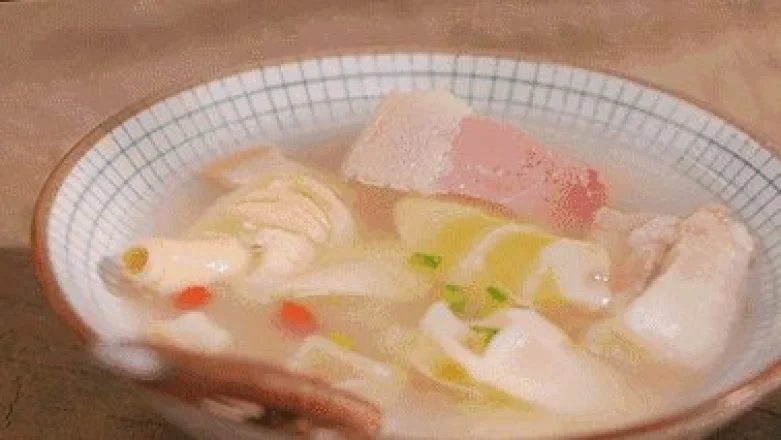
The name of this soup is a bit peculiar and tongue-twisting. In fact, "腌" refers to cured salted meat; "笃" means simmering over low heat; "鲜" refers to fresh meat (usually small pork ribs are chosen). Fresh meat and salted meat paired with spring bamboo shoots, though they are simple ingredients, when simmered slowly over low heat for several hours, without adding salt or MSG, you can taste a broth that is so delicious it could make your eyebrows fall off.
Sweet and Sour Pork Ribs
Sweet and Sour Pork Ribs is a cold dish in Shanghai cuisine, known for its delightful sweet and tangy flavor, and can be found in almost every restaurant in Shanghai. Given the city's preference for sweeter dishes, this one is particularly well-suited for those with a sweet tooth.
Shanghai Drunken Crab Shanghai Drunken Crab is one of the most distinctive dishes in the Shanghai style of Chinese cuisine. After September each year, river crabs become especially delicious, making them ideal for preparing Drunken Crab. However, the best time to enjoy Drunken Crab is from late November to early December.
Generally, female crabs mature earlier and taste better than male crabs at the beginning of the autumn crab season. However, when male crabs mature, the drunken crabs made from them become more delicious than those made from female crabs. The roe of male crabs coagulates after being marinated in alcohol, forming an elastic and dense gelatinous texture that offers a particularly delightful mouthfeel.
Knife Fish Noodles Knife fish, along with pufferfish and shad, are known as the "Three Delicacies of the Yangtze River," and knife fish is the earliest seasonal delicacy of the year. Therefore, enjoying a bowl of knife fish noodles, described as "so fresh it makes your eyebrows fall off," around the Qingming Festival is a must on the agenda for gourmets.
In Shanghai when it comes to knife fish noodles the century-old establishment—Lao Ban Zhai is perhaps the most famous. Strictly speaking the knife fish noodles at this shop are "knife fish broth noodles" as there is no fish meat in the bowl only the broth made from knife fish. The broth is rich and thick with a color as white as milk. Although you can't eat the fish meat the freshness of the "first delicacy of the Yangtze River" has already been infused into the noodles.
"Yangjing Bang" style Shanghai-style Western dessert
Yangjingbang, originally a creek in Shanghai, was located between the former International Settlement and the French Concession. It was later filled in and turned into a road, which is today's Yan'an East Road. The so-called "Yangjingbang English" refers to English that disregards grammar and is directly translated word-for-word from Chinese. Thus, one can imagine how amusing "Yangjingbang-style Western cuisine" might be.
De Da Western Restaurant
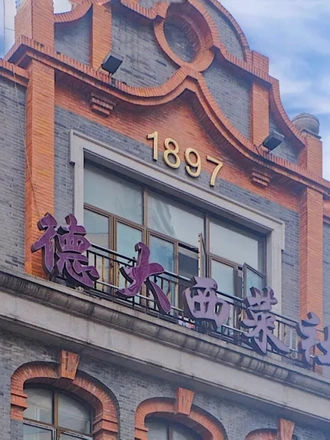
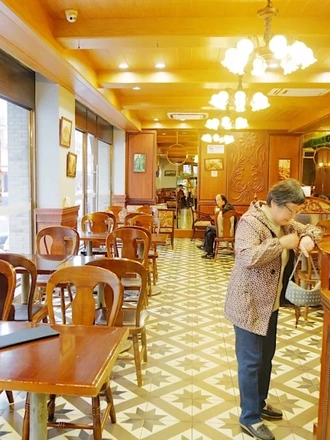
Established in 1879, this restaurant is the earliest example of Shanghai-style Western cuisine and served as the introduction to Western dining in old Shanghai. The menu has remained unchanged since 1897. The interior decor is truly vintage, featuring a revolving door, wooden staircases, and intricately carved tables and chairs.
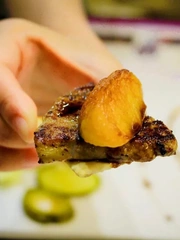
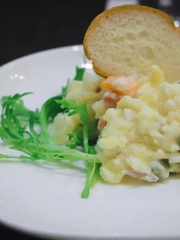
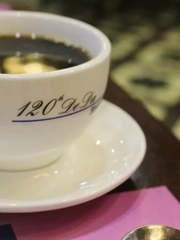
It’s said to be a German- Western restaurant yet its signature dishes—borscht palmiers and fried pork chop with Worcestershire sauce—are respectively inspired by Russian cuisine French cuisine and local Shanghai flavors. This is the essence of "Yangjingbang- Western cuisine."
Harbin Food Factory
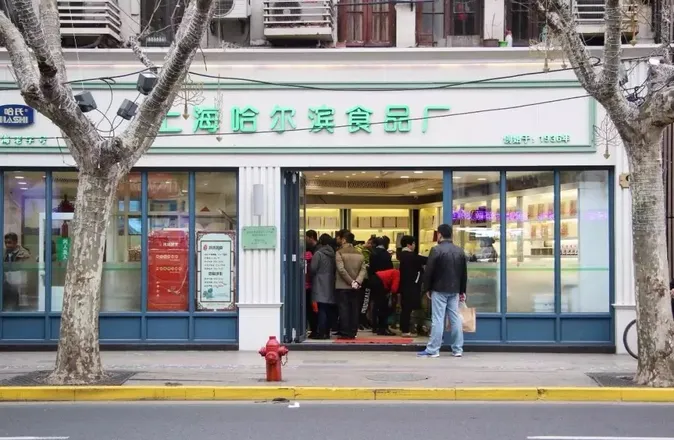
At first glance, the name might make you think it's a shop selling smoked sausages and cured meats. In reality, the store's name stems from the owner's past experience running a Western-style pastry business in Harbin. Since Russian cuisine was among the first Western foods to enter Shanghai, the owner decided to blend Russian-style pastries with local Shanghainese flavors, creating a variety of pastries with a distinct Shanghai twist.
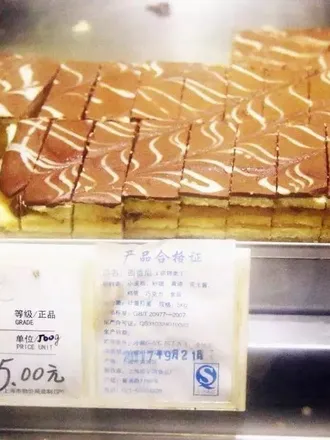
Almond Bars and Palmiers are beloved by many old-school Shanghainese. Almond Bars feature a crispy crust of almond slices and caramel and with just a small bite the aroma of butter fills your mouth. Palmiers are a must-buy for many local grandparents whenever they pass by always bringing some home.
Xifanni is a popular confession tool among the parents' generation in Shanghai as its name sounds similar to the Shanghainese phrase "like you." Eating it by also brings a sweet feeling to the heart.
Address: 603 Huaihai Middle Road with multiple branches Average Cost: 49 CNY per person
Ruby
"Cream Cube" has long been a classic internet-famous dessert in Shanghai-style cuisine. Despite its simple appearance—snow-white fresh cream adorned with a hint of red cherry atop a soft and delicate light yellow cake—it truly embodies the childhood memories of Shanghai kids.
Address: Chained brand multiple branches available Average Cost per Person: 30 CNY
Laodachang
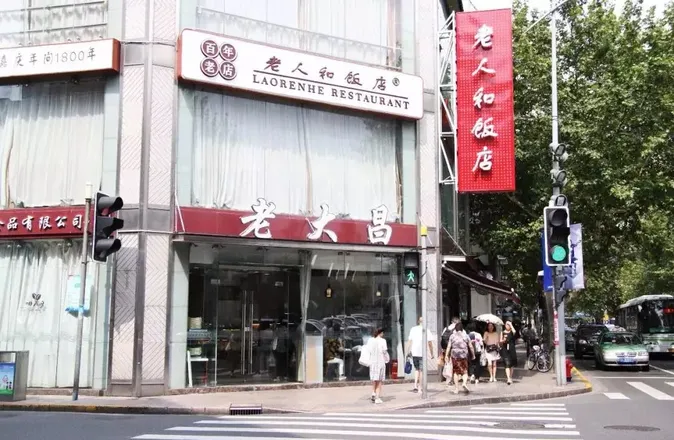
Although the name may not sound particularly sophisticated, it is undoubtedly considered a "premium product" among the uncles and aunties of Shanghai, symbolizing a tasteful and refined lifestyle.
Decades ago in Republican-era Shanghai, not far from St. John's University and across from Zhao Feng Park, there was a Russian bakery called Laodachang. The venerable literary lady Eileen Chang would occasionally stop by after class to pick up some cross buns from the assortment of small breads. These hemispherical buns had a slightly crispy top, with a half-inch-wide cross base embedded at the bottom, containing a hint of slightly salty cheese. When paired with the not-too-sweet bread, it created a subtly delightful flavor.
The most famous dessert at Lao Da Chang is the ice cake, which is said to be a favorite of Eileen Chang. It’s something between ice cream and gelato, with a surface as smooth as fine mutton-fat jade, and inside, it’s studded with caramel-colored nut pieces. When you take a small bite and let it melt in your mouth, it’s so smooth that it makes your lips curl. It’s hard to understand that texture without trying it yourself.
The full name of the ice cake is Italian ice cake. Made with whipped fresh milk and caramel-roasted nut pieces, it was considered top-notch in its time. Entirely handcrafted by master artisans, it comes with a hefty price tag. Whipped cream is also a must-try item here.
Address: 558 Huaihai Middle Road, with multiple branches available
Average cost per person: 30 RMB
Kai Si Ling
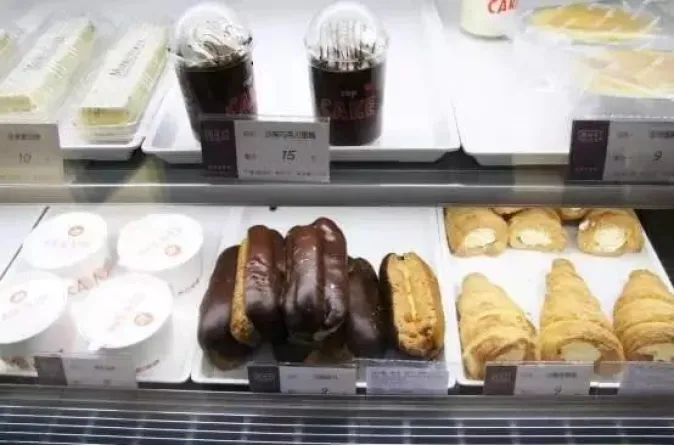
Many "Shanghai kids" learned about this shop from the recommendations of their parents. In the hearts of Shanghai's food connoisseurs, Kaiser's was once a symbol of taste and romance. Their chestnut cake and éclairs are highly recommended.
Hedou: The outer is a crispy chocolate shell the middle is a flaky pastry and the center is filled with cream. One bite offers triple satisfaction. Chestnut Cake: A solid chestnut paste is coated with a thick of fresh cream. It looks petite but has a rich and lingering flavor.
Address: Chained brand multiple branches available Average Cost: 40 CNY
A well-deserved "Coffee Capital"
Strolling along the shaded paths of the city, the aroma of coffee fills the air. Beyond its culinary delights, "coffee" is another hallmark of Shanghai. Today, with over 8,000 coffee shops, Shanghai surpasses international metropolises like Paris, London, New York, and Tokyo in sheer numbers, earning its title as the city with the most coffee shops in the world—a true "Capital of Coffee."
These coffee shops, permeated with the rich scent of coffee, have naturally become a part of the daily life for locals. This city, brimming with innovation, forward-thinking, and inclusivity, has not only given rise to a new generation of local boutique coffee brands like M Stand, Seesaw, and Manner but has also opened up a myriad of possibilities for more coffee brands and spaces.
Whether you are a long-time Shanghainese, a newcomer, or a foreigner, you can always find a cozy coffee shop in Shanghai at any time, immersing yourself in the city's unique culture and warmth.
One Coffee
Highlights: Site of the First National Congress of the Communist Party of China, Shikumen-style architecture, every cup of coffee in the store represents a period of history.
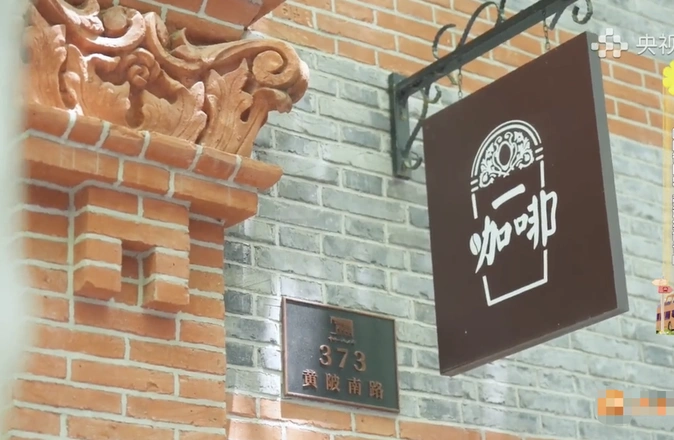
Address: 373 Huangpi South Road Huangpu District
Average Cost per Person: 30 CNY
Business Hours: 09:00~17:30
sômthin’else
Highlight: Dopamine-Themed Café
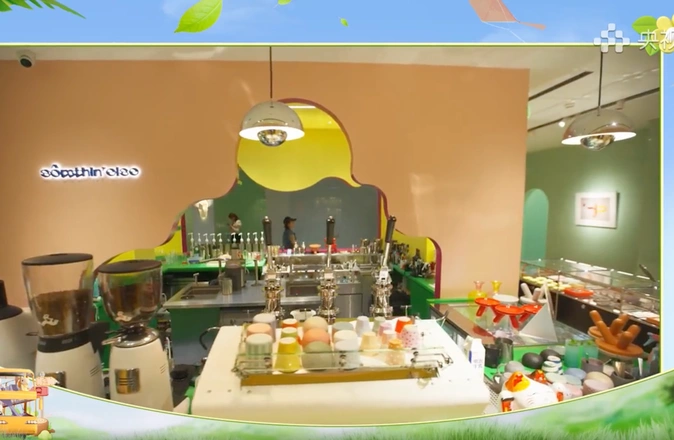
Address: No. 1208 Yuyuan Road Changning District
Average Cost per Person: 62 CNY
Business Hours: Monday 10:00 AM - 8:00 PM; Tuesday to Sunday 10:00 AM - 10:30 PM
Boardroom
Highlight: Ski-themed coffee shop, with a second floor dedicated to a snowboard history museum.


Address: Room 103 No. 457 Jumen Road Huangpu District
Average Cost per Person: 31 CNY
Business Hours: 08:30~20:00
Shanghai Specialty Food Street
If you want to focus on trying some delicious food, you can check out a few food streets.
Lujiazui Food Street
Located in Shanghai's prime area, this food street is inside a shopping mall, featuring Huizhou-style architecture from the Republic of China era. The various snacks are authentic and affordable.
How to get there: Lujiazui Metro Station, Pudong, 6th floor of Super Brand Mall
Yunnan South Road
This short food street, less than 300 meters long, is a gathering place for various restaurants. If you want to try Shanghai-style home-cooked dishes, come here for dishes like pork chop rice cakes, Da Hu Chun pan-fried buns, and old duck vermicelli soup.
How to get there: Dashijie Station, Line 8
Old Shanghai Style Street 1192 Nong
A retro food street on Century Avenue, where you can leisurely enjoy a wide variety of foods.
How to get there: Take the escalator on the right side of Exit 8 at Century Avenue Metro Station
Huaihai Road
Known as the "Haagen-Dazs" for Shanghai locals, this street features specialty snacks and Western cuisine, such as Guangming Village's fresh meat mooncakes, Lao Da Chang's ice cream curry house, and Ding Teller's flavors.
How to get there: South Shaanxi Road Station, Line 1
Just the local snacks and time-honored brands alone could keep you eating for ten days to half a month without exhausting the options. Not to mention, Shanghai's culinary scene, which has remained stylish and diverse since the Republic of China era, continues to thrive. Beyond local cuisine, global foods in Shanghai are also flourishing. Due to space limitations, it’s best to go and taste more of Shanghai’s delicacies yourself~