
Shanghai has always been shaped by outside influence. From its treaty-port past to the era of the “Ten-Mile Foreign Concession,” different cultures blended here in unusually visible ways. Today, historic Bund buildings face modern Pudong skyscrapers across the river, while old-neighborhood daily life coexists with global trends in wine, food, and fashion. It’s an East–West mix where both sides still shine.
Best Time to Travel
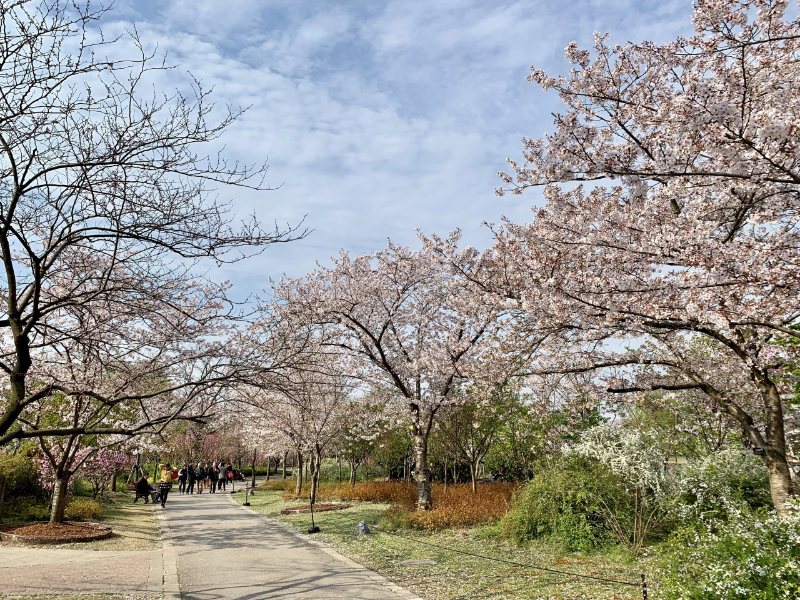
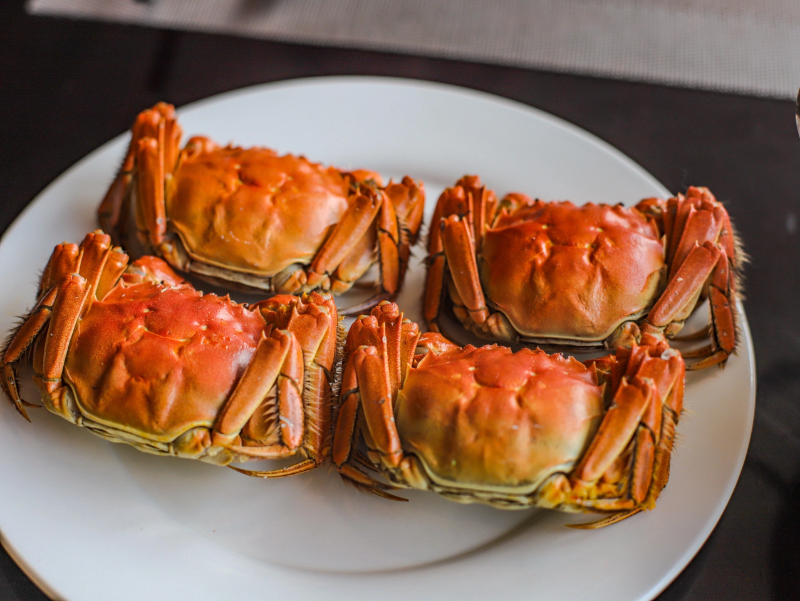
As a global metropolis, Shanghai works year-round. That said, spring brings waves of blooms—wintersweet, cherry blossoms, and magnolias—and autumn is prime time for hairy crab, when the roe and fat are at their best.
July and August can be hot and humid, which makes long outdoor days tiring. January and February are the coldest months, so dress warmly. June to July is plum rain season, so carry rain gear just in case.
How to Get to Shanghai
Airplane
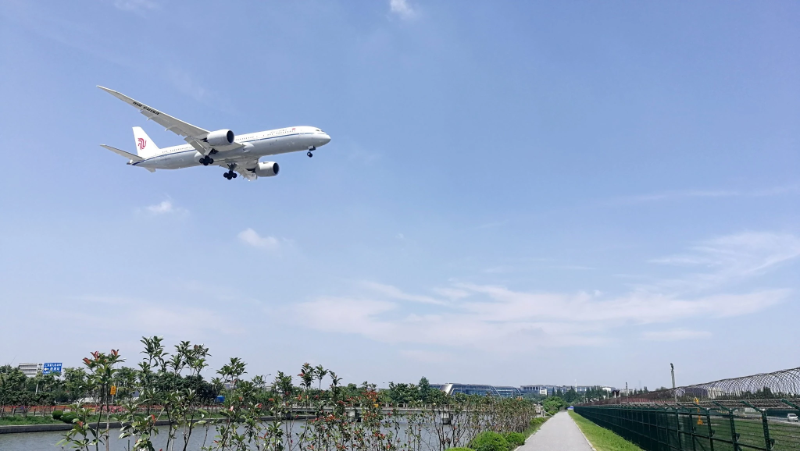
Shanghai is one of China's most important transportation hubs, with over a thousand flights taking off and landing daily. The city's two major airports not only handle flights to and from various parts of China but also serve as crucial entry and exit points for international travel.
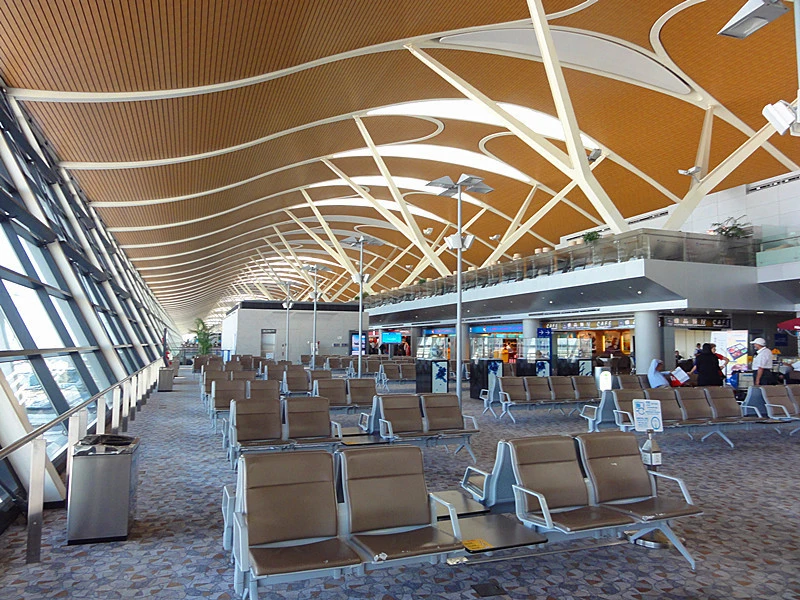
Shanghai is primarily served by two major airports: Hongqiao International Airport and Pudong International Airport, which also serve as the main hubs for China Eastern Airlines. The two airports are located in the east and west of Shanghai, respectively, approximately 50 kilometers apart. If you are transferring flights in Shanghai, it is best to ensure that both flights are at the same airport. Otherwise, traveling between the two airports requires at least 2 hours of transit time.
【Shanghai Hongqiao International Airport】
Located in Puxi, it is closer to the city center than Pudong Airport and primarily operates domestic flights. International routes are limited to a few destinations in Japan, South Korea, Hong Kong, Macau, and Taiwan.
Transportation to/from the city center: The most convenient option is to take Metro Line 10 or Line 2 from the airport to the city center. Line 2 only stops at Terminal 2, while Line 10 has stations at both Terminal 1 and Terminal 2.
【Shanghai Pudong International Airport】
Located in Pudong, it is farther from the city center, approximately 30 kilometers away. The majority of international flights are concentrated here, making it China's primary airport for international travel. Its routes cover 73 international cities and 62 domestic cities.
Shanghai Pudong Airport Overnight Guide: At Gates C75~77 in Terminal 2, there are over a dozen reclining chairs with charging ports nearby. Additionally, there is a Massport Hotel located between Terminal 1 and Terminal 2. In Terminal 1, the 3rd floor departure level offers convenient charging seats with more facilities and a quieter environment.
Transportation from Pudong to Hongqiao Airport: Airport Line 1: The dedicated shuttle bus between Pudong and Hongqiao airports offers a direct one-stop service. The regular one-way trip takes about 1 hour but it may take longer if there is traffic congestion in the city.
Metro Line 2: This line connects Pudong Airport and Hongqiao Airport with many stops along the way taking approximately 1 hour and 40 minutes. The train does not go directly to Pudong or Hongqiao Airport; you need to transfer to the opposite train on the same platform at Guanglan Road to reach your destination.
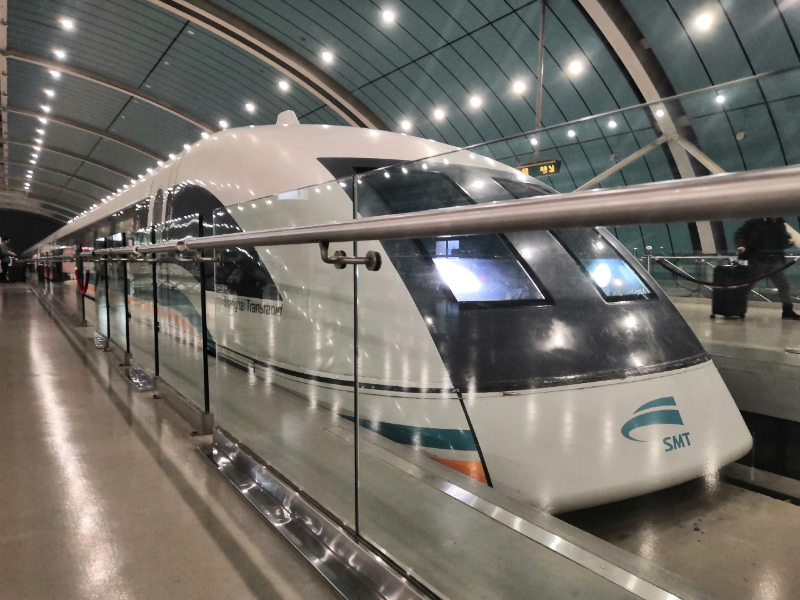
Maglev + Metro Line 2
Visitors can first take the Maglev train from Pudong Airport to Longyang Road Station, then transfer to Metro Line 2. Alternatively, they can take Line 2 from Hongqiao Airport, get off at Longyang Road Station, and transfer to the Maglev to reach Pudong Airport. The Maglev one-way trip takes less than 8 minutes, saving nearly half an hour of travel time.
Train
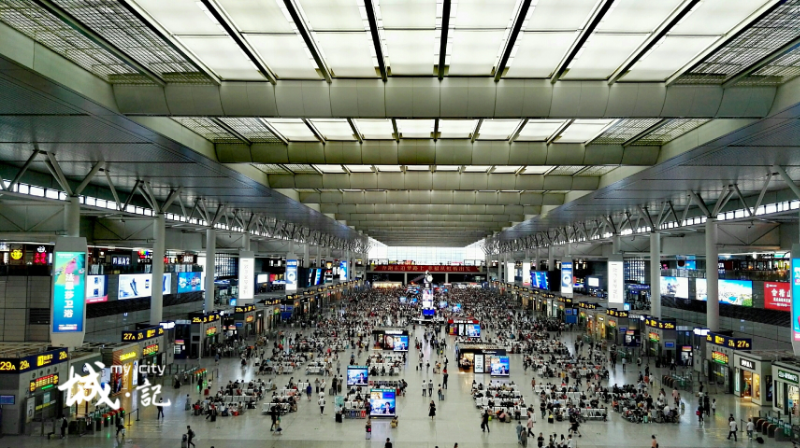
Shanghai has four railway passenger stations: Shanghai Railway Station (also known as the New Railway Station), Shanghai South Railway Station, Shanghai Hongqiao Railway Station, and Shanghai West Railway Station.
Shanghai Hongqiao Railway Station
Primarily operates high-speed and bullet trains from Shanghai to various destinations across the country. Trains arriving in Shanghai from Guangzhou, Beijing, Nanjing, and Hangzhou all stop at Shanghai Hongqiao Station.
Passengers can transfer internally between Shanghai Hongqiao Railway Station and Shanghai Hongqiao Airport.
Shanghai Railway Station
Shanghai Railway Station is the main passenger station, locally referred to as the New Railway Station. It operates over 70 pairs of trains daily to major and medium-sized cities nationwide, including sleeper bullet trains to Beijing, direct express trains to Tianjin, and through trains to Hong Kong.
Shanghai South Railway Station
Shanghai South Railway Station operates over 30 pairs of trains daily, mostly long-distance trains heading south and short-distance trains to Jiangsu and Zhejiang provinces. It also has a few trains to destinations such as Yantai, Baotou, and Lanzhou.
Shanghai West Railway Station
Shanghai West Railway Station mainly serves the Shanghai-Nanjing Intercity High-Speed Railway, with trains originating from or heading to Shanghai, Wuxi, Suzhou, and Nanjing.
Long-distance bus
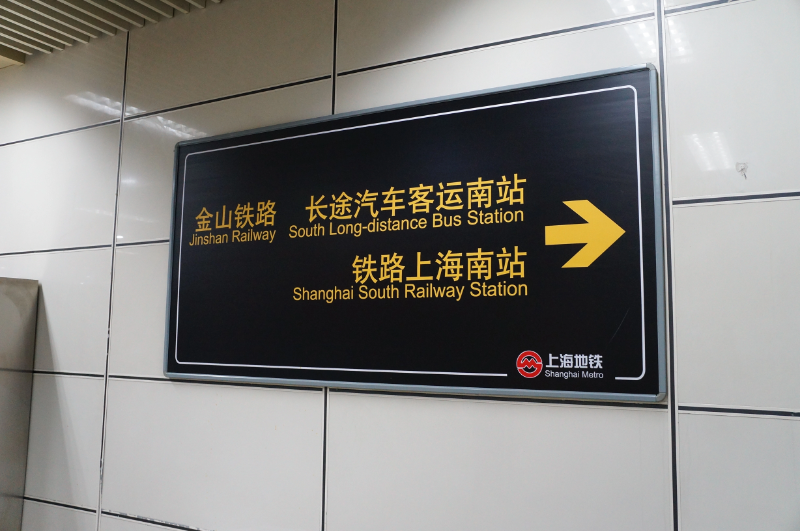
Shanghai has over 40 long-distance bus stations, with the main ones being Shanghai Long-Distance Bus Terminal, Shanghai South Long-Distance Bus Station, and Hengfeng Road Bus Station. Buses to various provinces in East China can be found at these three stations, especially with frequent services to nearby areas like Jiangsu and Zhejiang. The vehicles are mostly luxury coaches, offering great convenience and comfort. Meanwhile, the Shanghai Tourist Distribution Center operates shuttle buses to short-distance tourist destinations around Shanghai.
Ferry
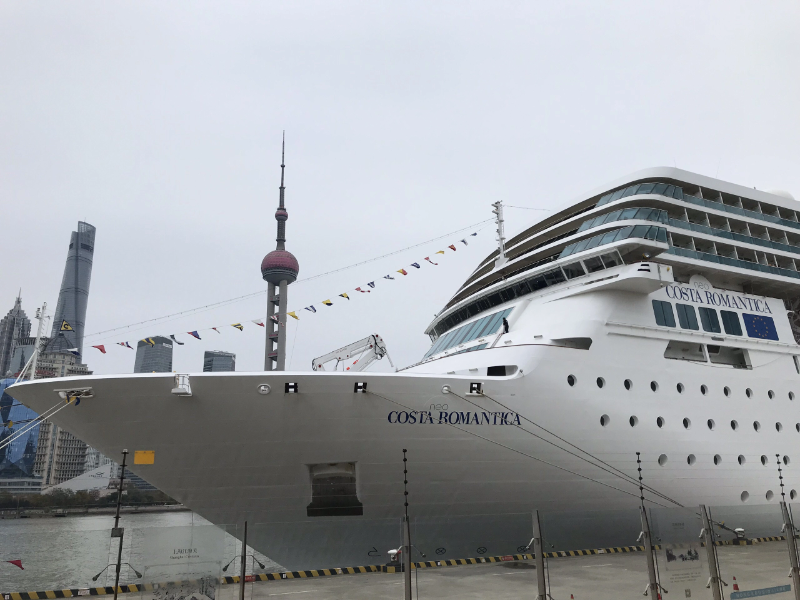
Shanghai is a significant port for domestic passenger ships and international cruise liners. Currently, there are two international passenger terminals in Shanghai: the Shanghai Port International Passenger Terminal and the Wusongkou International Cruise Terminal.
The Shanghai Port International Passenger Terminal offers routes to Japan, South Korea, Taiwan, Europe, and Southeast Asia, as well as domestic connections to ports such as Dalian, Ningbo, and Hankou.
The Wusongkou International Cruise Terminal currently consists of three parts: the Shanghai coastal passenger terminal, the Shanghai Three Islands (Chongming, Changxing, and Hengsha) passenger terminal, and the Shanghai Three Islands car and passenger ferry terminal. It operates multiple routes to destinations such as Dinghai, Putuoshan, Nantong, Zhoushan, Daishan, and cities along the Yangtze River.
Shanghai Local Transportation
Common Basic Transportation
Ride-hailing services and taxis in Shanghai are very convenient with major ride-hailing platforms allowing for smooth bookings. The bus and subway systems are highly developed with 14 subway lines currently in operation. Shared bicycles can be seen everywhere.
Using Alipay Ride Code allows you to smoothly take buses and subways in Shanghai.
Spring and Autumn Urban Sightseeing Bus
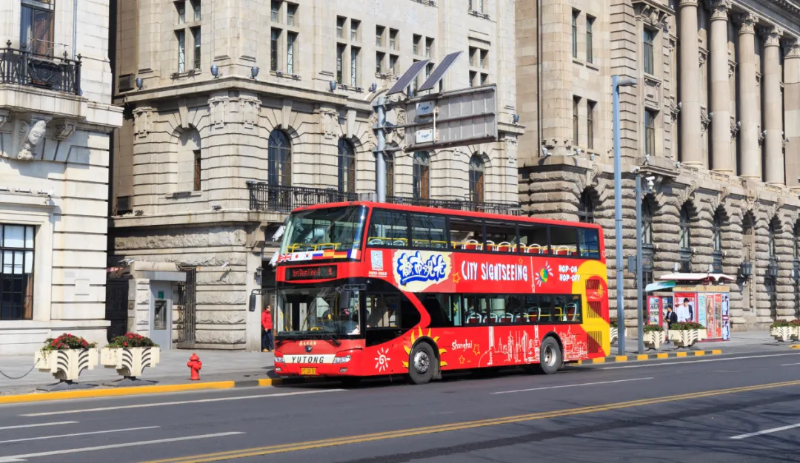
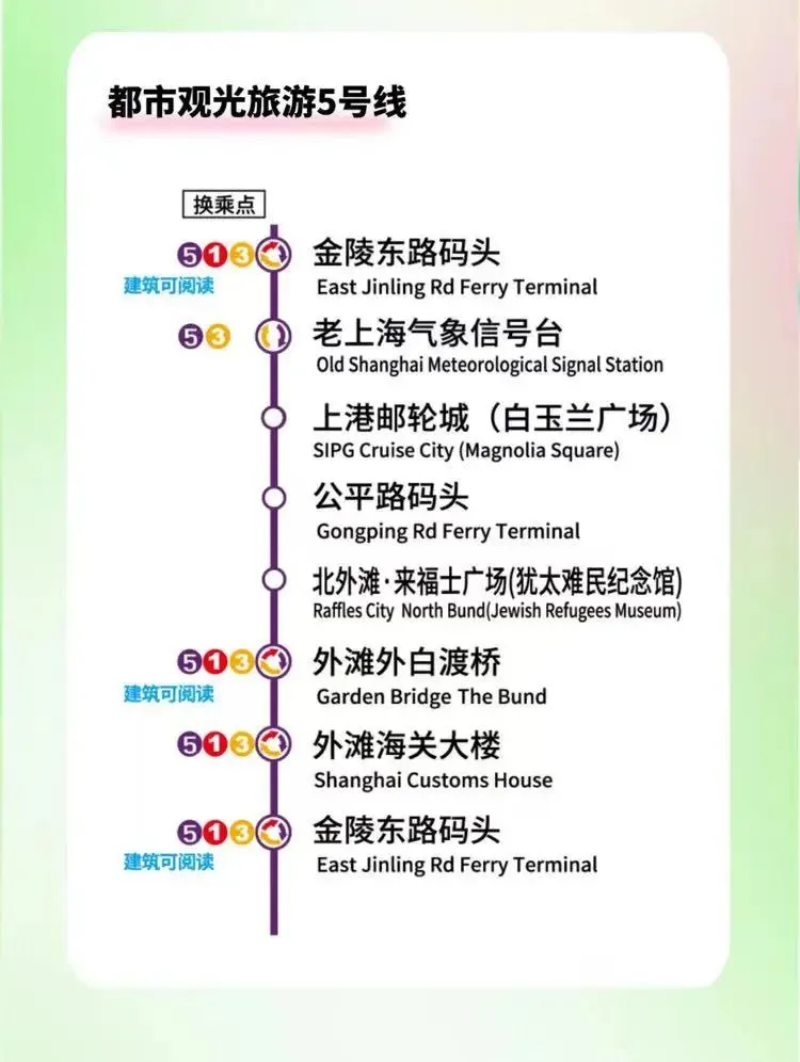
Experience Shanghai by taking a sightseeing bus a highly popular way to explore the city. This Spring and Autumn urban sightseeing bus is a double-decker open-top red bus offering four sightseeing routes (1 2 3 and 5) and two tourist routes.
4 sightseeing routes
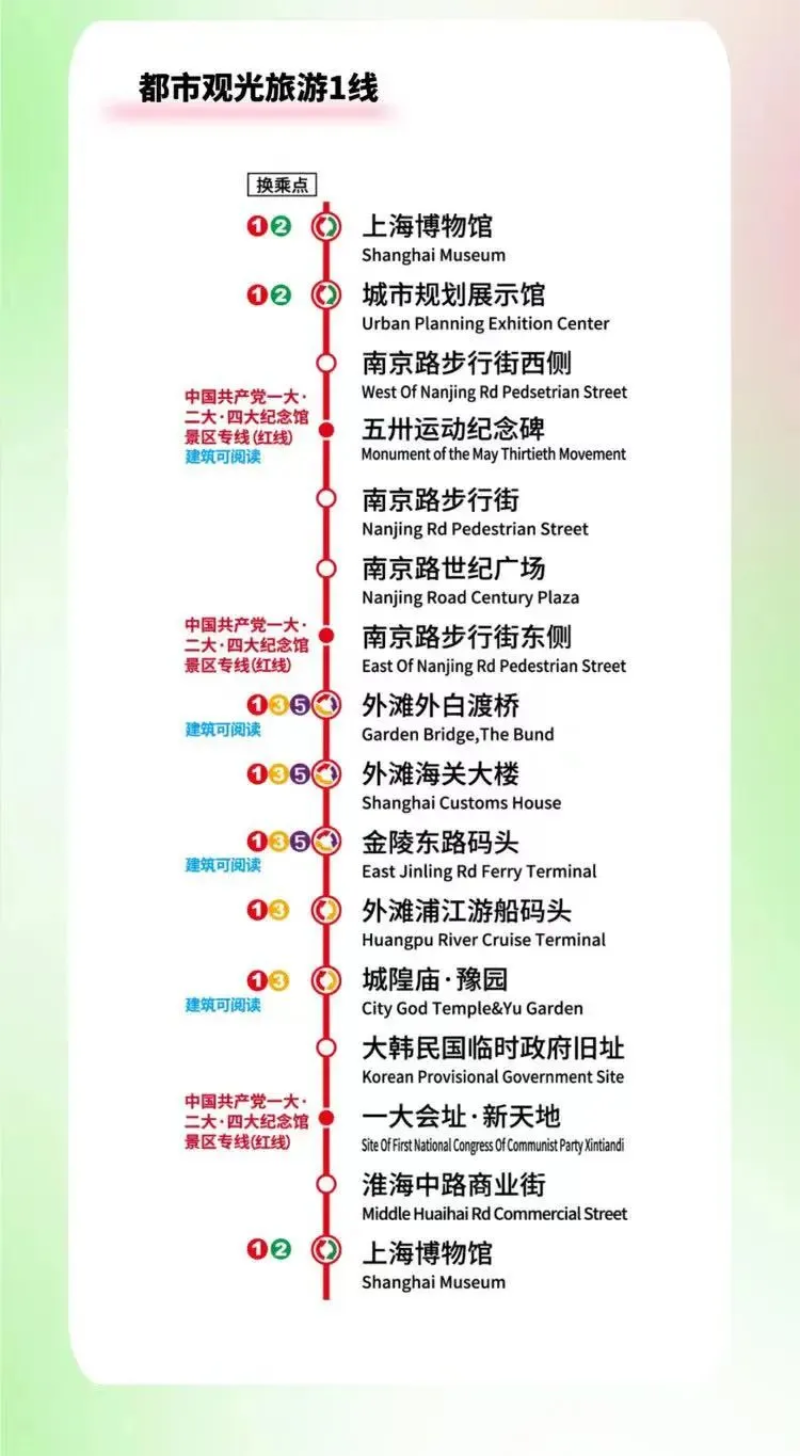
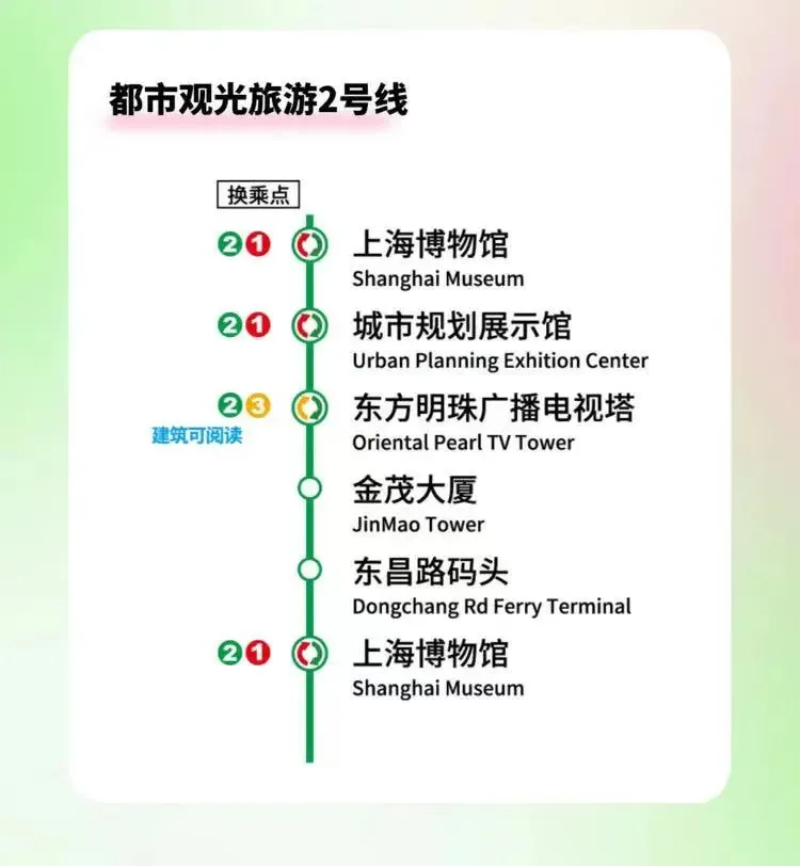
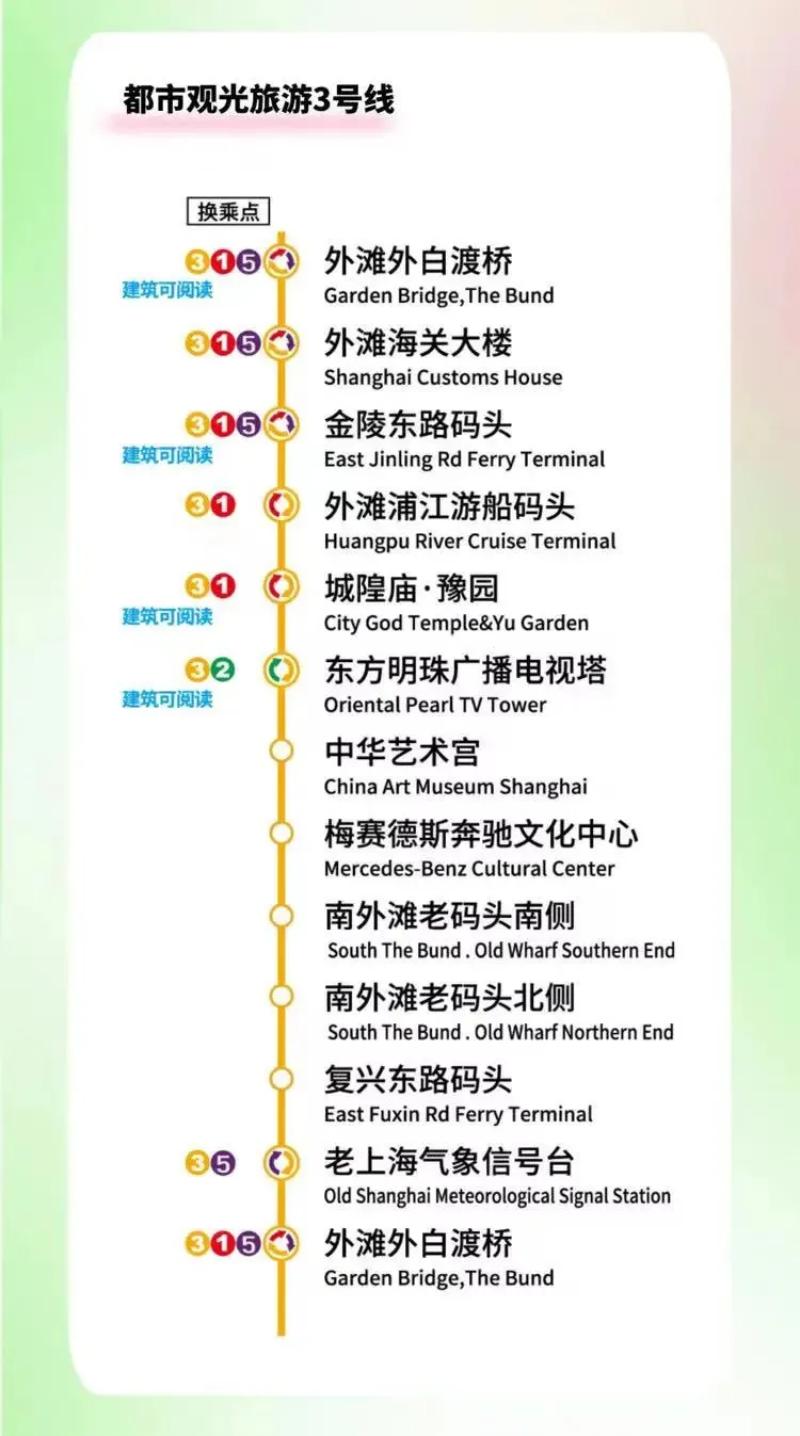
BUS TOUR
The Shanghai BUS TOUR offers three routes: the Red Line, Green Line, and Blue Line, with departures every half hour. The Red and Green Lines operate in Puxi, while the Blue Line serves Pudong.
Red Line
Operating Hours: 9:00~21:00 (Full-line ticket includes night view ticket)
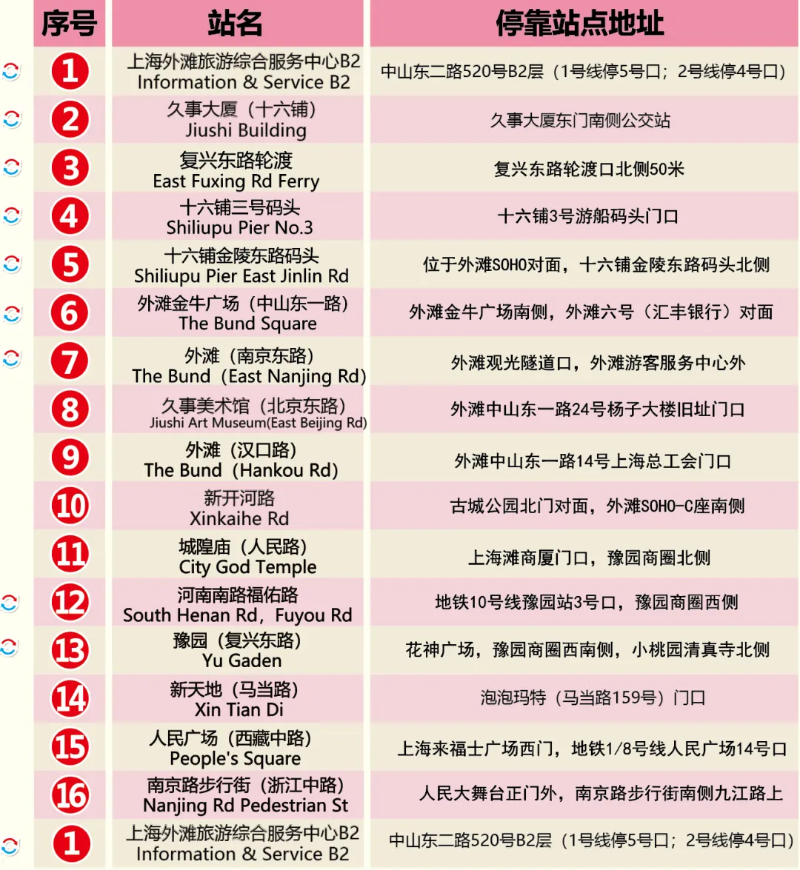
Stops: Nanjing Road (New World City), People's Square, People's Park, Nanjing Road Pedestrian Street, Shiliupu (Pujiang Cruise Terminal), The Bund (Bund Sightseeing Tunnel), The Bund (Federation of Trade Unions), Yu Garden, Xintiandi, Nanjing Road (New World City)
Blue Line
Operating Hours: 9:30~17:30
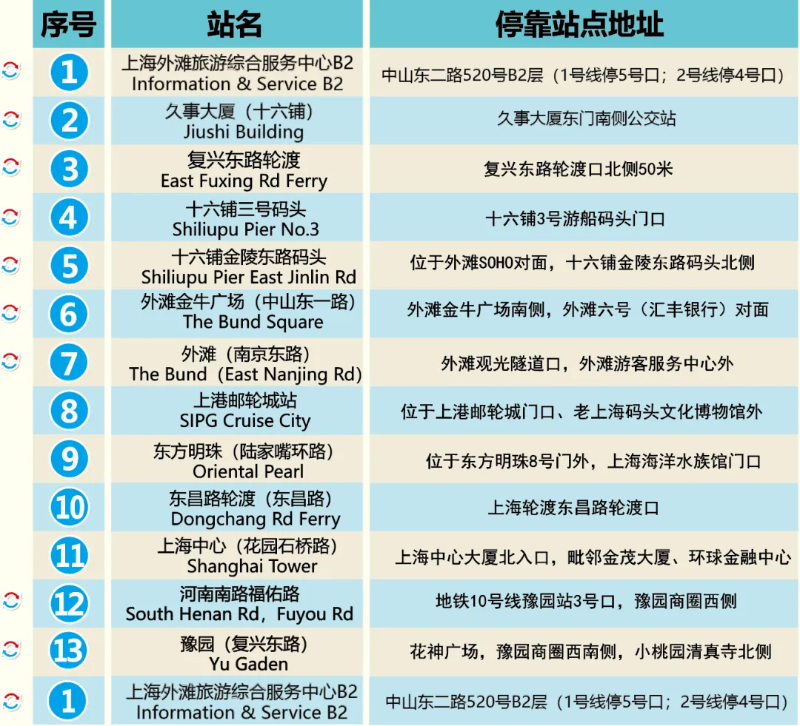
Stops: The Bund (Bund Sightseeing Tunnel), The Bund (Federation of Trade Unions), Oriental Pearl Tower, Shanghai Tower, Jin Mao Tower, Old Wharf, Shiliupu (Pujiang Cruise Terminal), The Bund (Bund Sightseeing Tunnel)
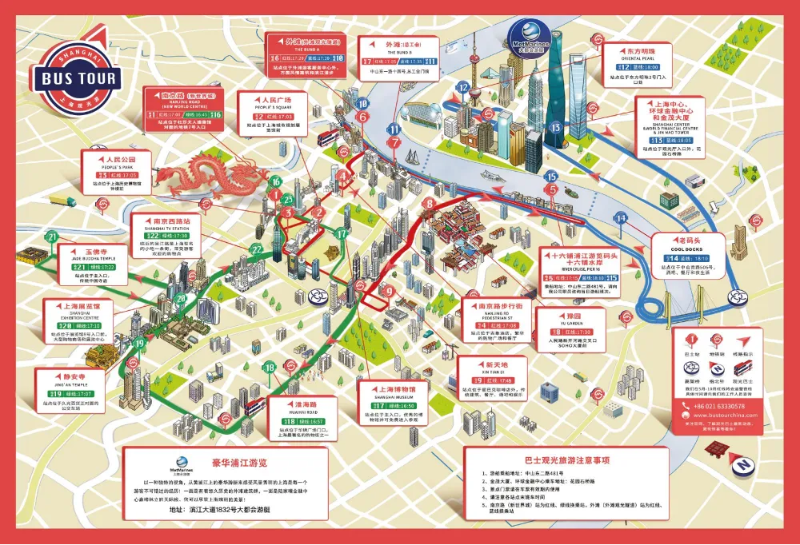
Green Line
Operating Hours: 9:15 AM - 4:45 PM
Stops: Nanjing Road (New World City), Shanghai Museum, Huaihai Road, Jing'an Temple, Shanghai Exhibition Center, Taikoo Hui, West Nanjing Road, People's Park, Nanjing Road (New World City)
Reference Price: One-day ticket 100 yuan (unlimited rides within 24 hours); Two-day ticket 180 yuan (unlimited rides within 48 hours)
Shencheng Sightseeing
The sightseeing double-decker buses in Shanghai offer 2 tour routes, which basically cover the most important attractions in the city, allowing for easy transfers between them.
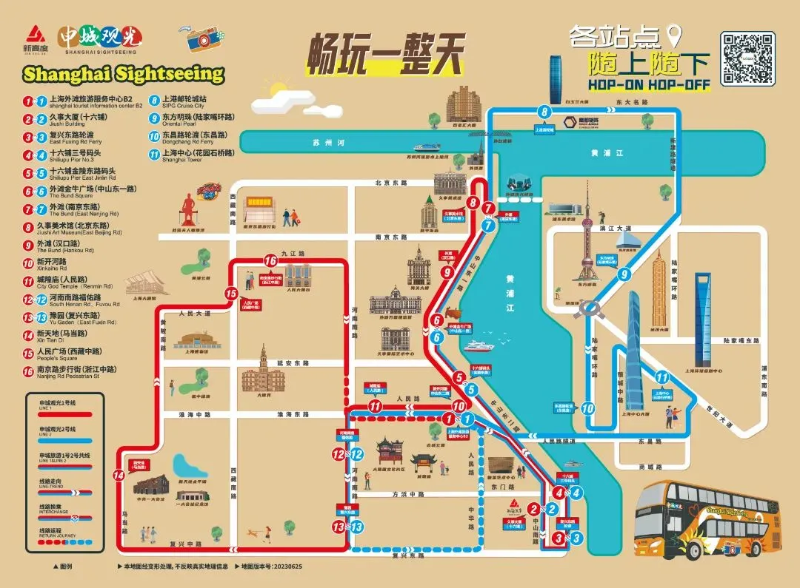
How to Purchase Tickets:
Board at any station along the route and purchase directly from the driver.
Friendly Reminder:
Onboard commentary is provided; for additional information, please follow the WeChat official account "Shencheng Sightseeing."
Donbar
"Donbar," originally named the "Lujiazui Tourist Loop," utilizes double-decker British-style buses as its mode of transport. It operates on a fixed route with unlimited boarding and alighting at designated stops. The service includes professional tour guide commentary, complimentary coffee, onboard WiFi, and in-vehicle charging facilities.
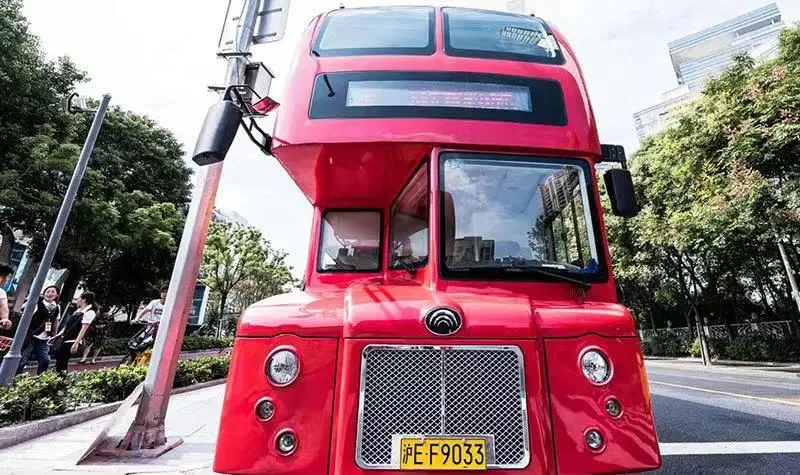
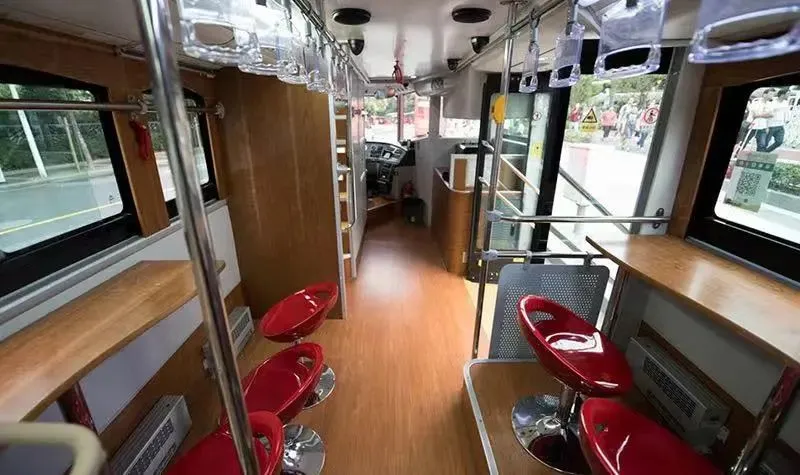
Fixed Route: Dongchang Road Ferry (connecting to Chenghuang Temple and the Bund) - Jin Mao Tower, Shanghai Tower, Shanghai World Financial Center - Oriental Pearl Tower (Line 2 of the Metro) - Shanghai Ocean Aquarium - Dongchang Road Ferry
Operating Hours: 09:00~20:30
Ferry
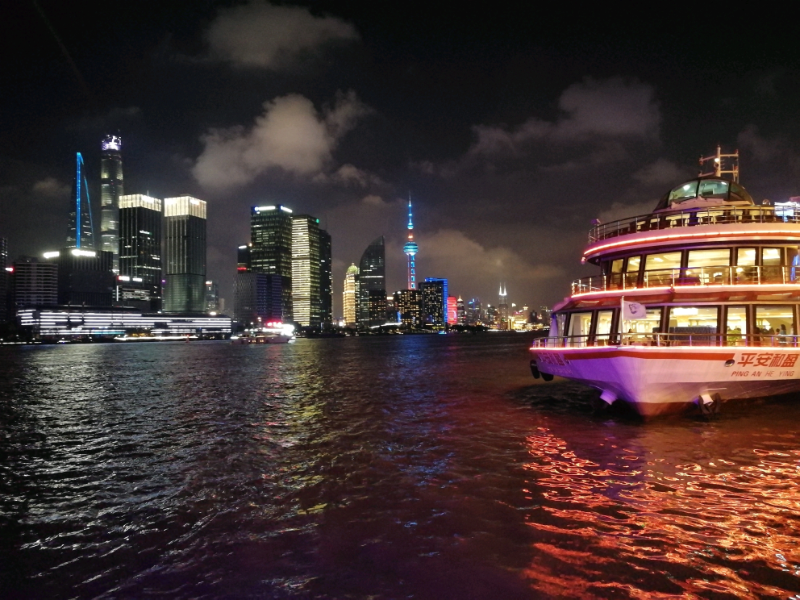
Along the Huangpu River, Shanghai has multiple ferry crossings connecting both banks, currently operating 17 routes. The ferries accept Shanghai public transportation cards. Nowadays, ferries are no longer the primary mode of transportation, but if you're interested, taking a ferry ride can be a very Shanghai-style experience.
Fares: Pedestrians 2 yuan, Electric Bicycles/Bicycles 2.8 yuan, Motorcycles 4 yuan; You can follow the WeChat official account "Shanghai Ferry" to check ferry terminal and route information.
Cruise
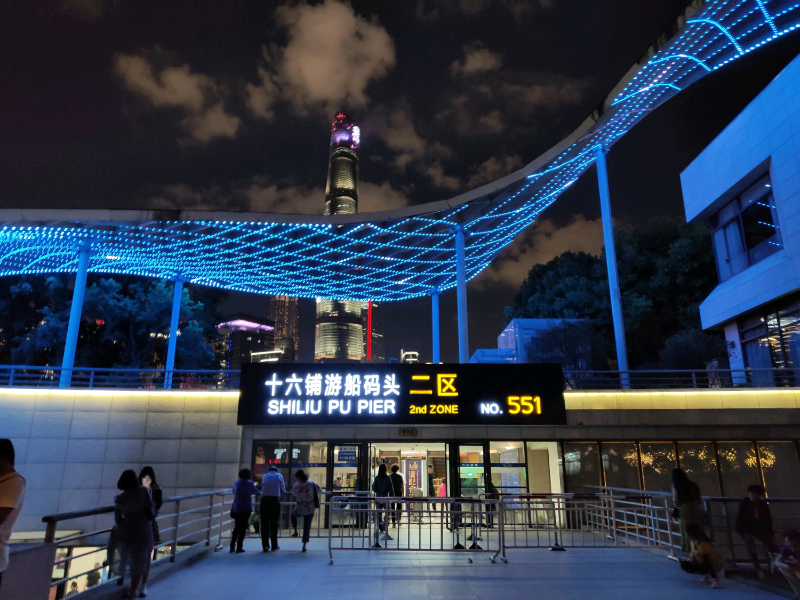
The Huangpu River is the mother river of Shanghai, and the Shanghai Huangpu River Ferry Center offers cruise services for sightseeing on the Huangpu River.
Boarding Pier: No. 89 Waima Road (Gate 3 of Shiliupu Tourist Center), south of Dongmen Road Ferry Station
Contact: 021-61028992
Address: No. 171 Zhongshan South Road, Shiliupu Water Tourism Center, Shanghai
Transportation: Shiliupu Pier – Bus Routes 33, 55, 307
Ticket Price: 100 yuan
Follow the WeChat Official Account Shanghai Huangpu River Cruise Booking Center - Services - Ticket Booking
Best Time to Travel
How to Get to Shanghai
Shanghai Local Transportation