Compared with rows of Western-style buildings and trendy art districts, the old city area often gets less attention from travelers. In reality, this is where old Shanghai life was most deeply rooted.
Centered around People’s Square and moving south, you enter Shanghai’s Old Town, often called “Nanshi” by locals. At night, the glowing Yu Garden; the lively, slightly commercial City God Temple; and the steaming old alleyways at breakfast time all reveal a different side of the city. Even as redevelopment reshapes the area, the human warmth and local texture are still worth slowing down for.
Yu Garden: A Classical Garden in the Middle of the City
Yu Garden is more than 400 years old. It began as a private garden commissioned by Ming official Pan Yunduan for his father’s retirement. The character “Yu” implies comfort and ease. Over the centuries, the garden changed hands many times. It served as a base during the Small Swords Society uprising, suffered occupation and damage, and saw many buildings burned. Large-scale restoration after 1949 helped bring it to the public in the form visitors see today.

Great Rockery
Yu Garden covers more than thirty acres, with numerous scenic spots and buildings worth visiting. Among them, the most famous is the Great Rockery opposite the Jingguan Hall, constructed from thousands of tons of yellow stones, each uniquely shaped. It is the only surviving work of the renowned Ming Dynasty rockery artist Zhang Nanyang. Additionally, the Wangjiang Pavilion atop the rockery offers an excellent vantage point for overlooking the garden.
Jade Exquisite
Known as the treasure of Yuyuan Garden, Yulinglong is located beside the Guantao Pavilion within the garden. This stone peak, with its graceful form and numerous holes resembling a honeycomb, is one of the "Three Famous Peaks of Jiangnan." Legend has it that it is also a remnant stone from the construction of Genyue by Emperor Huizong of the Song Dynasty.
Ancient Stage
The 7-meter-high ancient stage in the garden can accommodate over 200 spectators and has been hailed as the "Number One Stage in Jiangnan." The stage is adorned with intricate carvings of dragons, phoenixes, lions, and other exquisite patterns, all covered in gold leaf. Upon closer inspection, one can also find the calligraphy of the renowned opera artist Mr. Yu Zhenfei on the stone pillars at the back.
Jishui Jade Corridor
The Jishui Jade Corridor connecting the Huijing Tower and the Hanbi Tower is one of the longest water corridors in the classical gardens of Jiangnan. Beneath the bridge golden fish occasionally swim by while pavilions and towers stand on either side of the corridor. Such a beautiful Jiangnan scene is absolutely not to be missed.
To provide a one-stop experience for tourists, the antique-style shopping mall next to Yu Garden has become an integral part of the scenic area. However, due to the large number of visitors, the mall can be quite crowded and noisy. If you’re only looking to buy some souvenirs, a quick visit inside will suffice.
【Practical Information】
Address: No. 279, Yuyuan Old Street, Huangpu District, Shanghai
Opening Hours: Tuesday-Sunday 09:00-16:30, Closed on Monday
Ticket Price: High Season 40 CNY (April-June, September-November); Low Season 30 CNY (July-August, December-March)
City God Temple: The Taoist Shrine at Shanghai’s Core
When people mention the City God Temple next to Yu Garden, they often think first of the nearby food street. But the Taoist temple itself—more than 600 years old and even older than Yu Garden—is absolutely worth exploring.
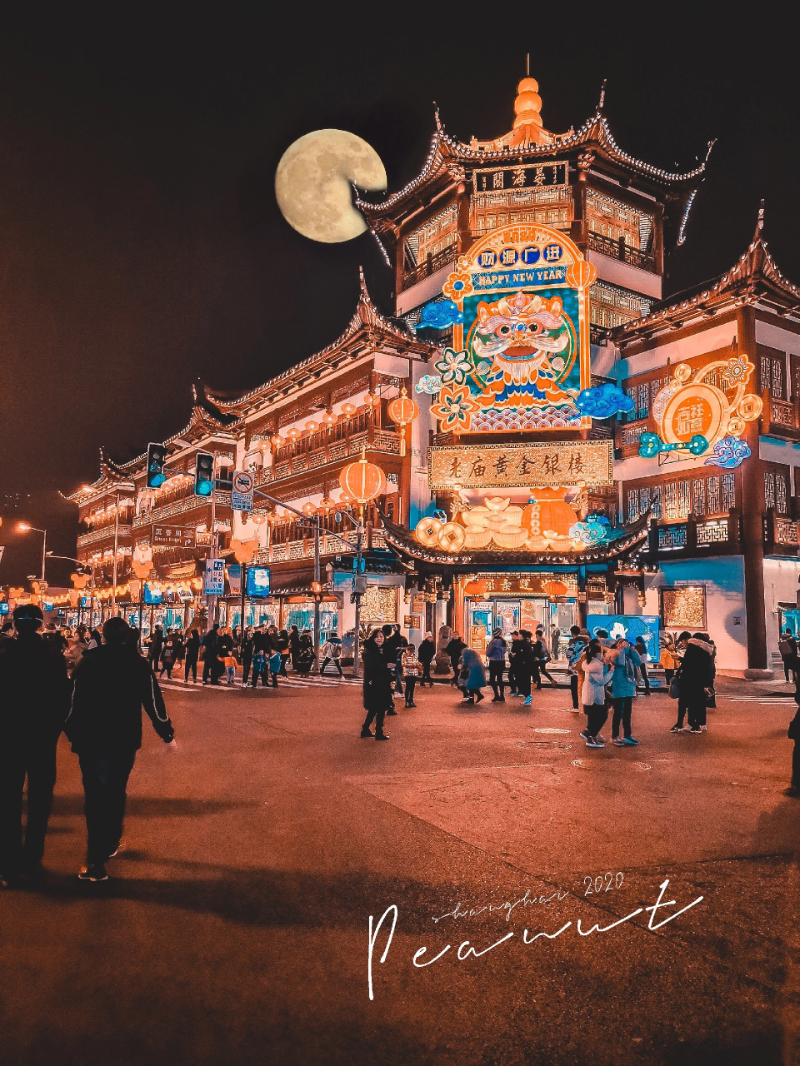
The City God Temple in Shanghai was built during the Yongle era of the Ming Dynasty and has undergone multiple renovations and reconstructions. Currently, the temple complex houses nine halls. The Front Hall features a plaque inscribed with "City God Temple" above its main entrance, and inside, it enshrines a seated statue of General Huo Guang from the Western Han Dynasty. The last hall in the temple is the City God Hall, which enshrines Qin Yubo, who was appointed by Emperor Zhu Yuanzhang, the founder of the Ming Dynasty, as the City God of Shanghai County. Inside the hall, Qin Yubo is depicted with a red face, long beard, and a dignified seated posture, exuding an air of solemnity.
In addition, the temple complex includes the Cihang Hall for praying for peace, the Wealth God Hall for praying for prosperity, and the Wenchang Hall for praying for academic success... If time permits, all of these are worth visiting.
Every visitor entering the City God Temple can receive complimentary incense at the entrance.
【Practical Information】 Address: No. 249, Fangbang Middle Road, Huangpu District, Shanghai Business Hours: 8:00-21:00 Admission: 10 yuan
Laoximen: Shanghai’s Fading Alleyway World
In Shanghai’s old city, alleyway culture is essential. Narrow lanes, exposed wires, and laundry hanging overhead tell the story at a glance. Many of these older alleys cluster between Laoximen and Xiaonanmen. Even though many houses are now empty and awaiting renovation or demolition, the memory of everyday life here remains strong for many Shanghainese.
Longmen Village
Longmen Village is currently the longest new-style alleyway in Shanghai, with the large inscriptions "1935" and "Longmen Village" still clearly visible on the archway to this day. As early as the Qianlong and Jiaqing periods of the Qing Dynasty, this land was purchased to build a private garden, which was later converted into an academy named "Longmen Academy," the predecessor of Shanghai High School. In 1935, when Shanghai High School relocated, the site became what is now known as Longmen Village.
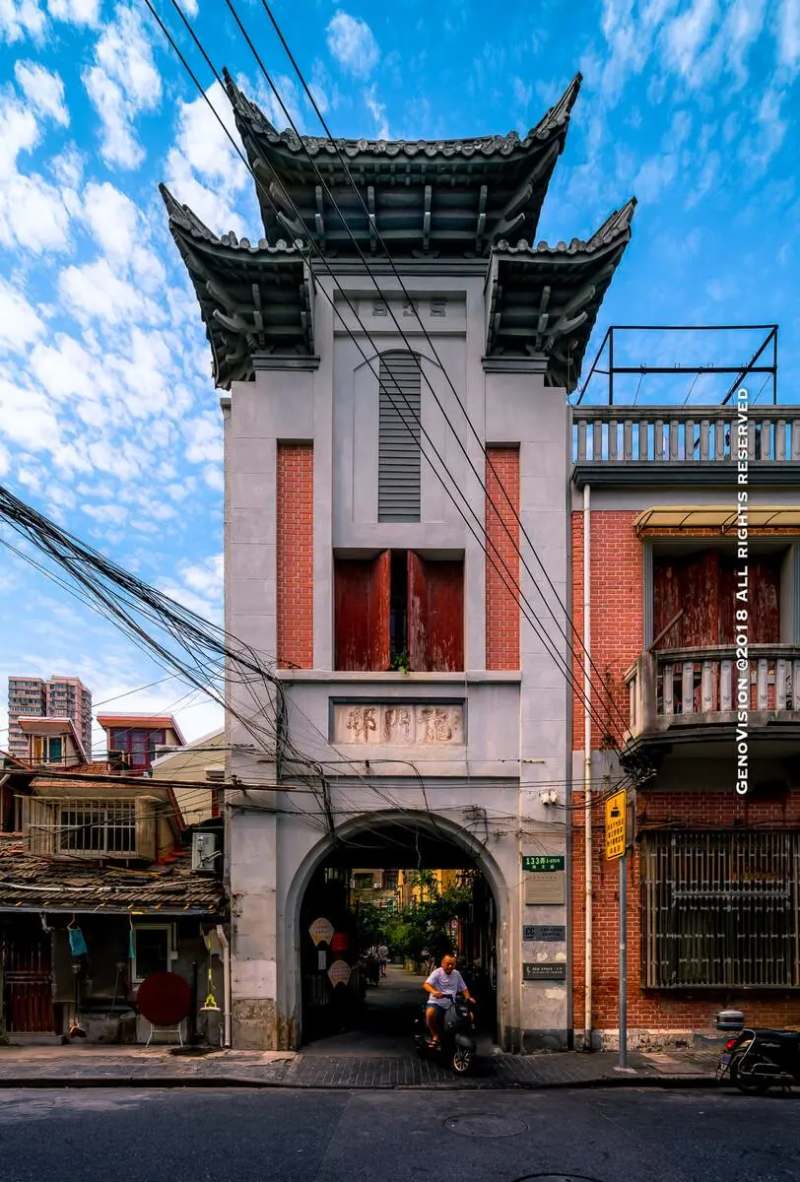
Compared to other old alleyways, Longmen Village has wider roads and more orderly house arrangements. The buildings, originally constructed with green and red bricks, have largely retained their original appearance, with only the facades being repainted. Even the carvings on the doorways have been remarkably well-preserved. Around the corner, you can still see the old barbershop. Among the residences, No. 10 and No. 30 are particularly exquisite and worth a detailed visit. Due to its early construction period, Longmen Village retains more Chinese elements compared to other Shikumen buildings with numerous Western features, offering a more authentic glimpse of old Shanghai.
Currently, a small number of residents still live in Longmen Village. When visiting, please be mindful not to disturb the local inhabitants.
【Practical Information】
Address: Lane 133, Shangwen Road, Huangpu District, Shanghai
If you want to explore more of Shanghai's alleyways, you can also take a stroll around Dahuali, Fuqingli, and Yongyeli near Laoximen Metro Station. Alternatively, head to the Shikumen Wulixiang Museum near Xintiandi to learn about the layout and items in 1920s residences and experience the alleyway life of old Shanghai.