The Three Gorges stretch from Fengjie in Chongqing to Yichang in Hubei, and include Qutang Gorge, Wu Gorge, and Xiling Gorge. Each section has its own highlights and distinct cultural landscape.
Since the construction and impoundment of the Three Gorges Dam, the region has changed dramatically. Many villages and historic sites—like those seen in the film Still Life—disappeared beneath the waterline, replaced by new cities and modern landscapes. The old poetry of small-boat travel has largely given way to the comfort of cruise ships. Today, many visits combine a sense of reverence with the desire to experience river life in a modern way.

How to get to the Three Gorges?
Depending on your location and the city you are in, you can choose to travel by plane or train to Yichang or Chongqing. From these two cities, you can then proceed to the Three Gorges.
Airplane
1) Chongqing Jiangbei Airport: You can take the airport shuttle bus (15 RMB/person) or the light rail to the city center. For specific schedules and information, please check the official website. Light rail operating hours: 6:30—22:30.
2) Yichang Sanxia Airport: To get to the city center, you can take a shuttle bus for 20 RMB/person. For specific schedules, please call 0717-6910888. You can also take a taxi from the city center to the New Century Pier for approximately 30 RMB.
Train
1) Chongqing Railway Station and Chongqing North Railway Station: You can reach Chaotianmen Pier by taxi or bus. From Chongqing Railway Station, you can walk to Caiyuanba Station and take bus routes 112, 608, 503, or 120, and get off at Chaotianmen Station, then walk to the pier. From the North Station, take Metro Line 3 and get off at Lianglukou Station, then transfer to Metro Line 1 and get off at Xiaoshizi Station, and walk to the pier.
2) Yichang Railway Station: Walk to Yiling Square and take bus route 10 to Sanyoudong Station.
From Yichang East Railway Station, take bus B9 or B1 and then transfer to bus route 10 to Sanyoudong Station.
If you need to take a boat from Wanzhou Railway Station to Fengjie, you can transfer by train or long-distance bus from Chongqing.
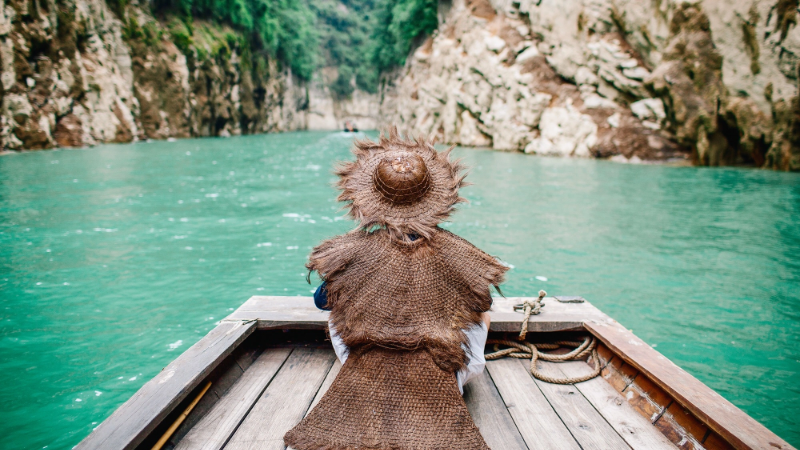

Which three gorges are included in the "Three Gorges"?
Qutang Gorge
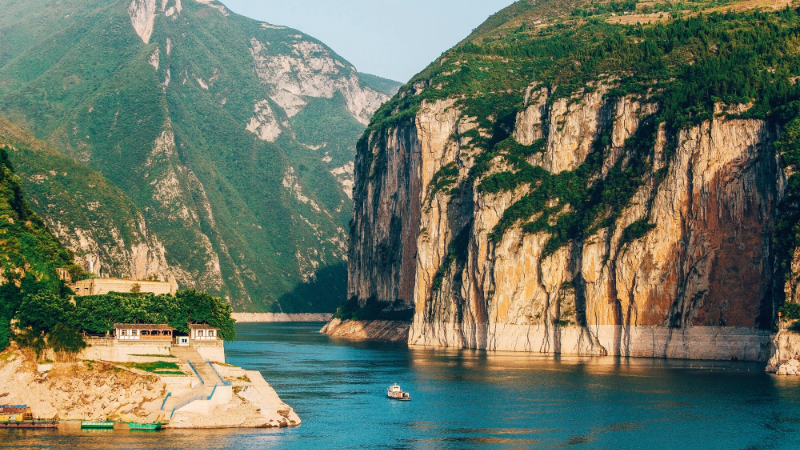
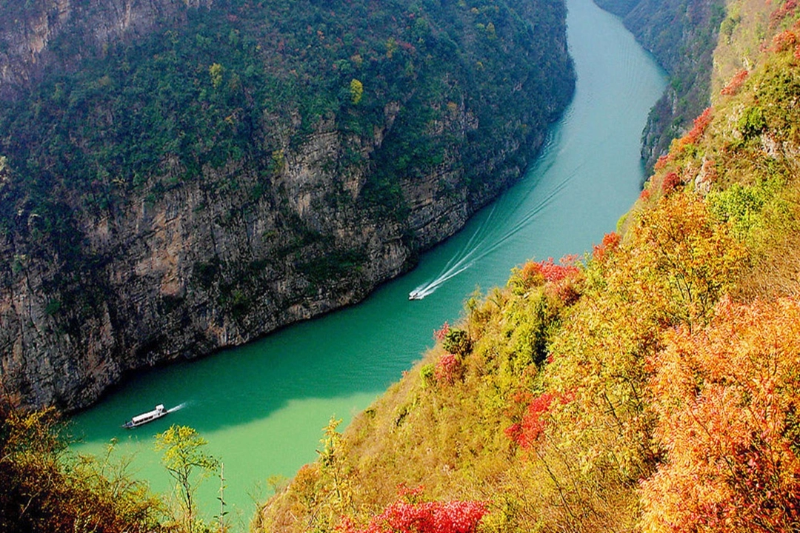
The Qutang Gorge stretches from Baidi Mountain in Fengjie County to Daxi Town in Wushan County. It is most famously remembered as the background image on the 10 yuan note of the fifth series of the Renminbi.
Main Attractions Along the Way: Fengjie Ancient City, Eight Formation Diagram, Yufu Pagoda, Baidi City, Ancient Plank Road, Wind Box Gorge, Pink Wall, Mengliang Ladder, Daxi Cultural Site, and more.
The water scenery of Qutang Gorge is absolutely unparalleled, an unexpected delight. Unfortunately, we didn't make it to the summit of the Three Gorges Peak. Friends who enjoy hiking can trek from Qutang Gorge to the Three Gorges Peak, a one-way journey of about 10 kilometers, taking 4-5 hours. However, the scenery along the way is undoubtedly worth it!
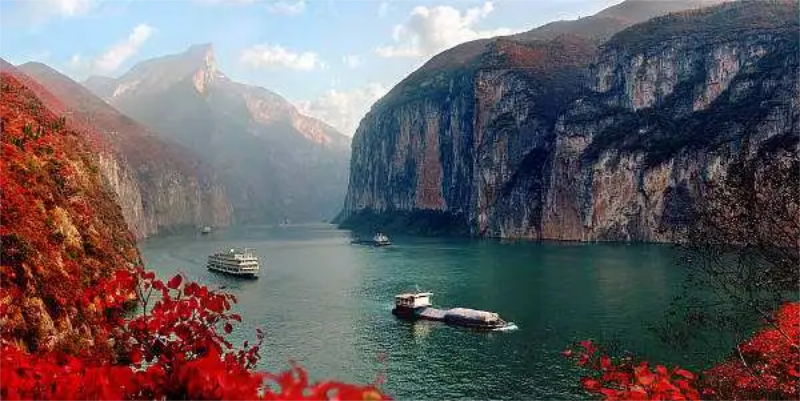
Wu Gorge
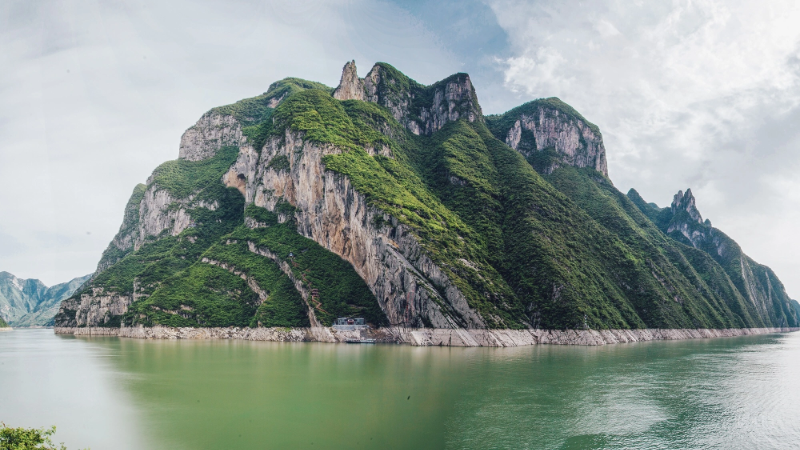
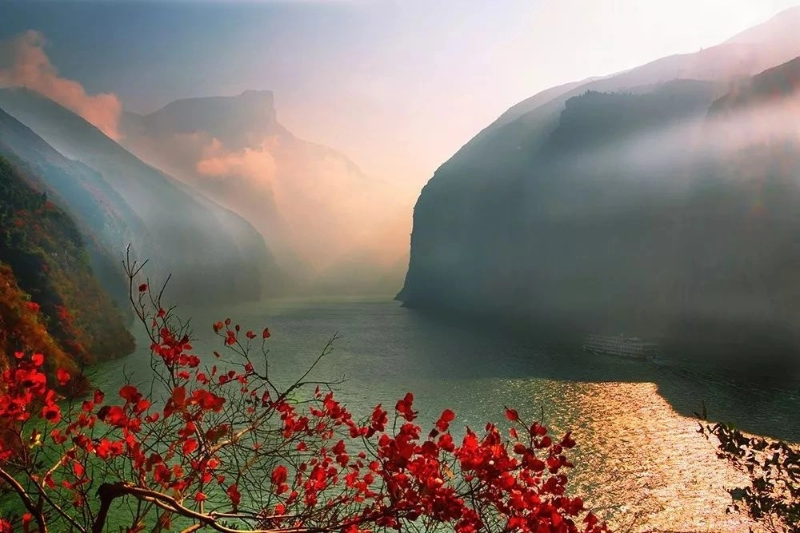
Starting from the Daning River east of Wushan County town and ending at Guandukou in Badong County, the most famous landscape of the Wu Gorge is the Twelve Peaks of Wushan on both the north and south banks, with the Goddess Peak being the most well-known among them.
The Goddess Peak can only be seen on clear days. At first glance, those two peaks are not the Goddess Peak; the small black dot beside them is the actual Goddess Peak. Make sure not to mistake it. After thousands of years of erosion, the Goddess Peak has been reduced to just this tiny dot.
Main Attractions Along the Way: Goddess Stream, Shamurang Stream, Bianyu Stream, Xiao Stream, Lianzi Stream, Lu You Ancient Cave, Dayu's Book-Giving Platform, Goddess Temple Ruins, Kongming Stone Tablet, etc.
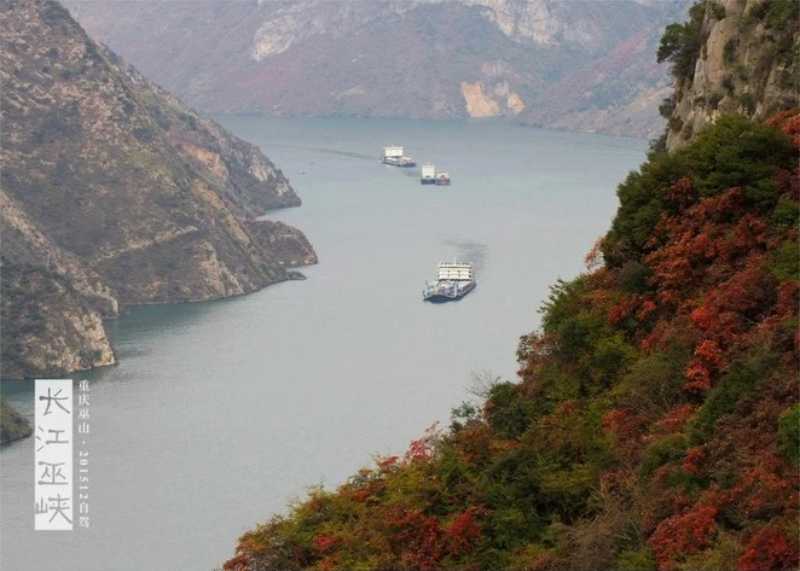
Xiling Gorge
Xiling Gorge stretches from the Xiangxi River estuary in Zigui County in the west to Nanjin Pass in Yichang City in the east, making it the longest gorge among the Three Gorges of the Yangtze River.
Main Attractions Along the Way: Xiling Gorge Scenic Area, Three Gorges Dam, Three Gorges Tribe, Xiling Gorge Viewing Platform, Hometown of Qu Yuan, Bingshu Baojian Gorge, and more.
The cultures of Ba and Chu intermingle, thrive, and develop here. Stilted houses, black-canopied boats, and sailing vessels, together with the picturesque landscapes of Xiling Gorge, form the unique symbols of the waterborne communities of the Three Gorges and the 'imprint of the Yangtze River.'
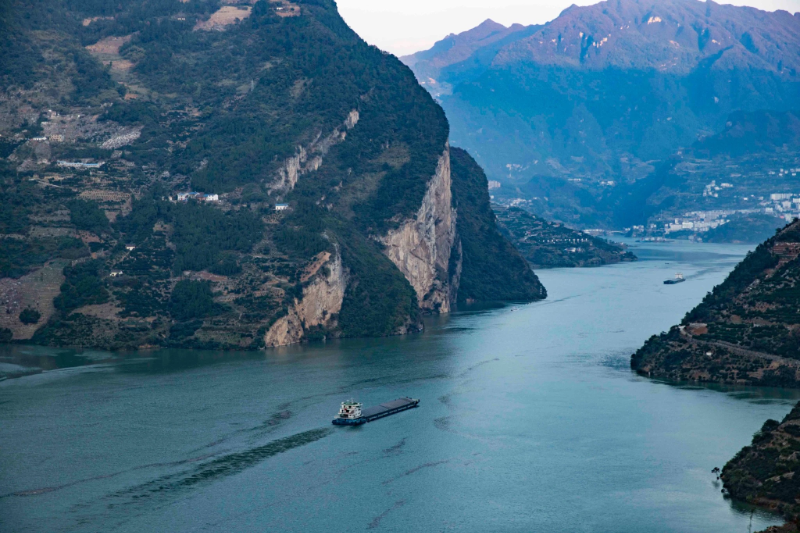
This museum along the way is worth visiting.
Three Gorges Museum
Because of the Three Gorges Dam, the rescue of the Three Gorges cultural relics was made possible, and thus the Three Gorges Museum came into being. The Three Gorges Museum houses 10 major treasures: the Wuyang Han Que, the fossilized left mandible of "Wushan Man," the bronze bird-shaped zun, the gold seal of the General of the Left, Tang Yin's copy of the "Night Revels of Han Xizai" scroll, the bronze three-goat zun, the Guanyin statue made by He Chaozong, the martyr Jiang Zhuyun's last letter, the bronze tiger-button chunyu, and the Jingyun Stele of the Ba County Quren Magistrate. Be sure not to miss these when you visit.
Admission: Free
Opening Hours: 9:00-17:00, closed on Mondays.
The Three Gorges Museum offers a rich and diverse array of exhibits. The audio guide available on the official WeChat account is free to use, and they have thoughtfully considered data usage concerns. The guide even includes a reminder that 100MB of free data is provided, which is truly considerate.
How can you explore the Three Gorges?
Land-based adventures
The entire expressway is now fully connected, allowing you to drive along the cities by the Three Gorges: Chongqing—Fuling—Fengdu—Zhongxian—Wanzhou—Yunyang—Fengjie—Wushan—Badong—Guizhou—Maoping—Yichang. You can choose to take county roads or stay on the expressway the whole way. For self-driving, it is relatively convenient. However, public transportation can be a bit more complicated. If you would like to drive, please ask our advisor for more detailed information.
Waterway Adventures
Traveling by waterway offers a more leisurely experience compared to the fatigue of driving, and the duration is relatively shorter. The main departure points for boat trips are Chongqing, Fengjie, Wanzhou, and Yichang. The journey from Yichang to Chongqing is upstream, while the trip from Chongqing to Yichang is downstream, typically lasting 5 days and 4 nights. Departures from Fengjie and Wanzhou usually involve a 2-day or 3-day itinerary.
Number of Days Itinerary Arrangement
Taking the upstream direction as an example, the basic cruise itinerary and shore excursion attractions vary according to the number of days as follows:
【Wanzhou Route】 There are both one-way and round-trip options. The Wanzhou Route is a short itinerary that allows for a complete tour of the Three Gorges. Ordinary cruise ships usually board directly at night, while luxury cruises typically combine land and water travel. Luxury cruises generally involve a day of land travel from Chongqing to Wanzhou, passing through Changshou Ancient Town, before boarding the ship in Wanzhou. One-way ordinary cruise: 2 days and 3 nights; Day 1: Board the ship around 6 PM; Day 2: Wanzhou—Qutang Gorge—Little Three Gorges—Wushan—Xiling Gorge; Day 3: Qu Yuan’s Hometown—Three Gorges Dam—Yichang. For round-trip itineraries, return from Yichang to Wanzhou.
【Fengjie Route】 This route is the most direct and time-efficient, suitable for travelers with tight schedules, but the downside is passing through Qutang Gorge at night. One-way: 1 night and 2 days; Day 1: Board the ship around 8 PM, pass through Qutang Gorge at night; Day 2: Goddess Stream—Qu Yuan’s Hometown—Three Gorges Dam.
【Chongqing Route】 A complete Three Gorges waterway experience, but during the dry season, it requires a land transfer to Fengdu before boarding the ship. The entire journey takes 4 days and 3 nights. In this itinerary, luxury cruises are entirely on water, while ordinary cruises use land transportation from Chongqing to Fengdu. Day 1 (boarding at night): Chongqing—Fengdu; Day 2: Fengdu—Zhongxian—Fengjie; Day 3: Fengjie—Wushan—Maoping (Three Gorges Dam); Day 4: Maoping—Yichang.
Best time to visit
Cruise Tourism
Starting from March each year, the peak seasons for overseas tour groups are from March to April, May, and September to October, when there are more foreign tourists. June to August marks the peak travel season for domestic summer vacations. Particularly, the Wushan Red Leaves Viewing Period from November to January offers the most stunning scenery.