Chongqing is a marvel of contrasts: rugged yet grand, intense yet deeply lived-in. Its character shows up everywhere—in obvious ways and in subtle details.
Where the two rivers meet, the city grew upward into the stilted houses typical of the Bayu region. The steep terrain also produced famously “hardcore” transportation: routes that climb into the sky, dive underground, pass through buildings, and cross rivers. By night, the city shifts into sleepless mode, with neon-lit skylines that feel almost unreal.
If it’s your first time in Chongqing, start with these eight classic highlights to get a fast, vivid feel for the mountain city.

Hongya Cave: A Real-Life “Spirited Away” Scene
Located on the lower section of Cangbai Road, Hongya Cave sits on a dramatic cliff above the river. Built into a roughly 75-meter drop, it showcases Chongqing’s signature stilt-house style while blending Bayu folk culture, mountain-dwelling architecture, and old wharf culture. At night, the entire complex lights up and looks strikingly similar to the bathhouse in “Spirited Away.”
The Hongya Cave scenic area has a total of 11 floors. Floors 4-8 are dedicated to a food zone, floors 9-10 feature a coffee and bar street, and the other floors house shops selling small commodities.
How to Shoot
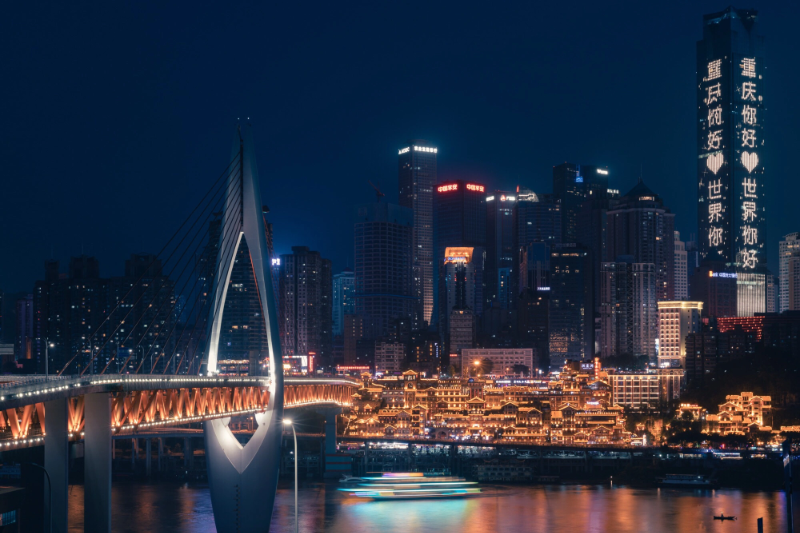
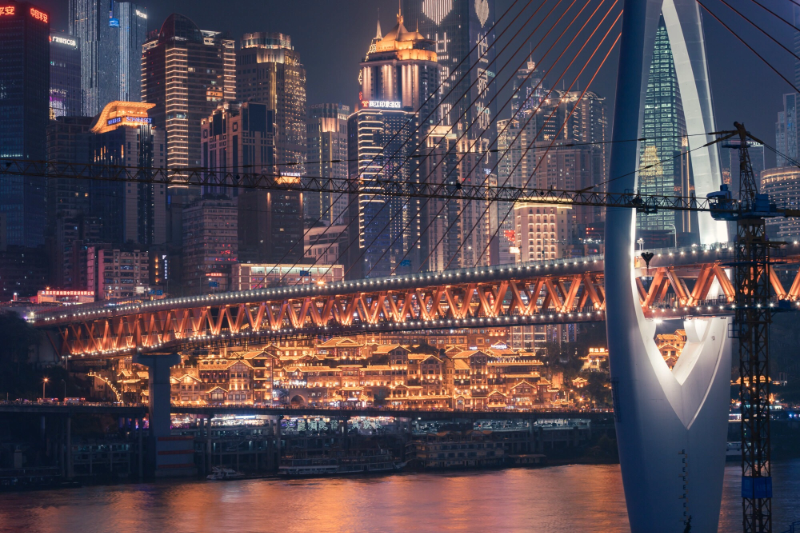
Panoramic Viewpoint: Qiansimen Bridge
The mid-bridge position offers the best angle, perfectly framing the river scenery and the entire Hongyadong panorama in one shot.
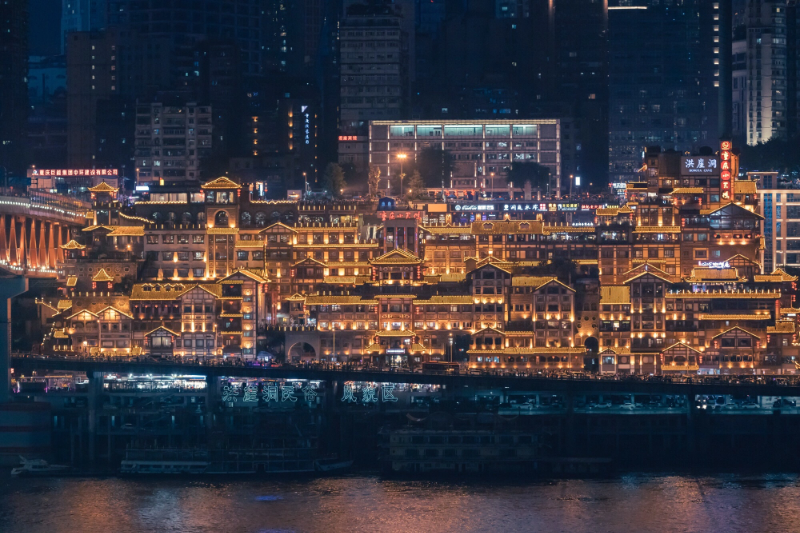
Chihiro's Spot: Jiabin Road
By shooting from the opposite side of the road near the riverside, you can capture the same effect as in Spirited Away.
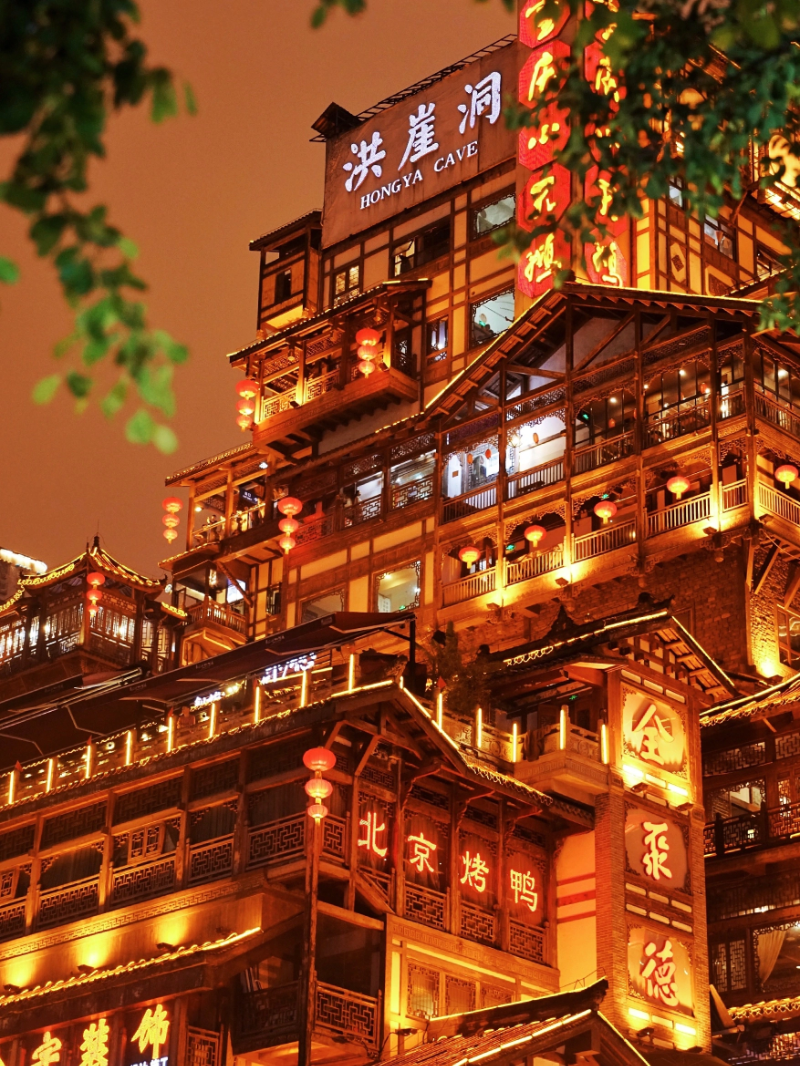
INS Spot: First Floor Roadside
First, head to the ground floor roadside, then walk under the Qiansimen Bridge. Use a 16-35mm wide-angle lens to shoot vertically, and a stunning photo will be instantly created.
How to Get There
Rail Transit: Take Line 2 and get off at Linjiangmen Station / Take Line 1 or Line 6 and get off at Xiaoshizi Station
Bus: Get off at "Hongyadong" Station, "Hongyadong Tourist Ferry Terminal" Station, or "Xiaoshizi" Station
Practical Information
Lighting Hours: Currently from 18:00 to 23:00 (recommended best viewing time is around 21:00).
Ciqikou: Chongqing’s Most Bustling Ancient Town
Located along the Jialing River, Ciqikou dates back to the Song Dynasty. Its layout is often summarized as “one river, two streams, three hills, and four streets,” forming a natural harbor and a historically important river port.
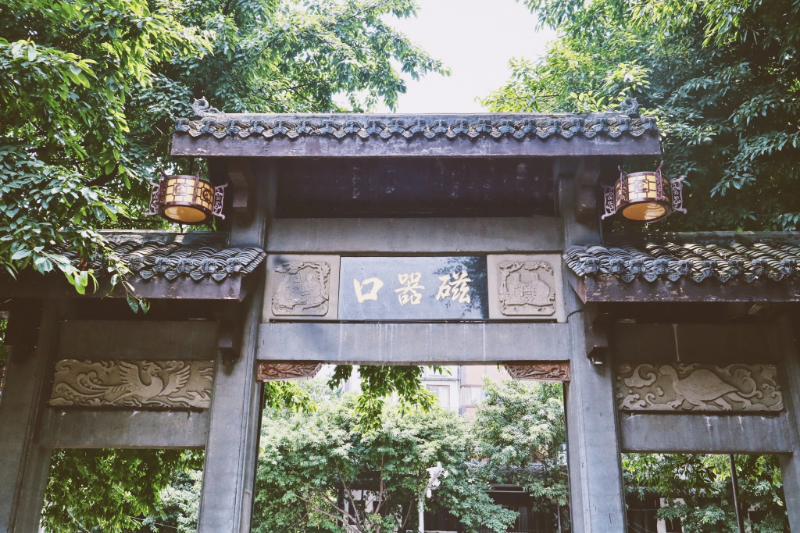
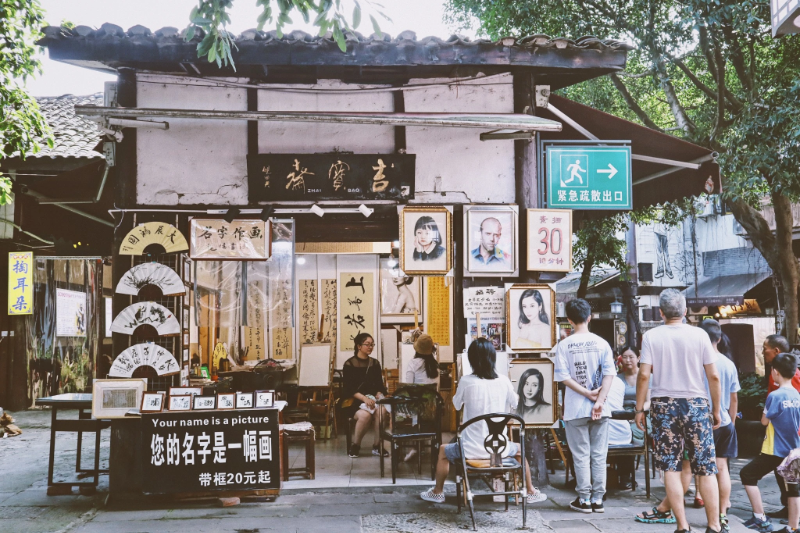
With its stone-paved lanes, Ciqikou is often called the epitome of old Chongqing—sometimes even “Little Chongqing.” You’ll regularly see traditional crafts and performances here, including oil pressing, silk reeling, sugar making, dough figurines, and Sichuan opera, alongside countless snacks and teahouses.
How to Explore
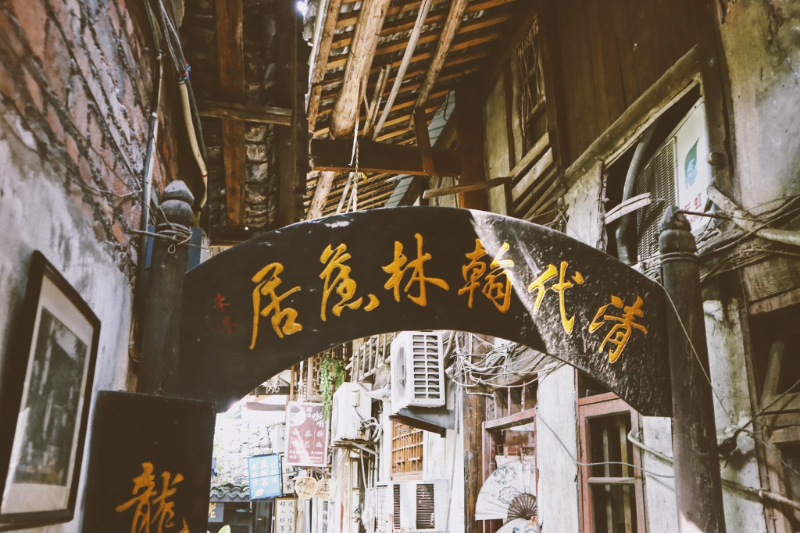
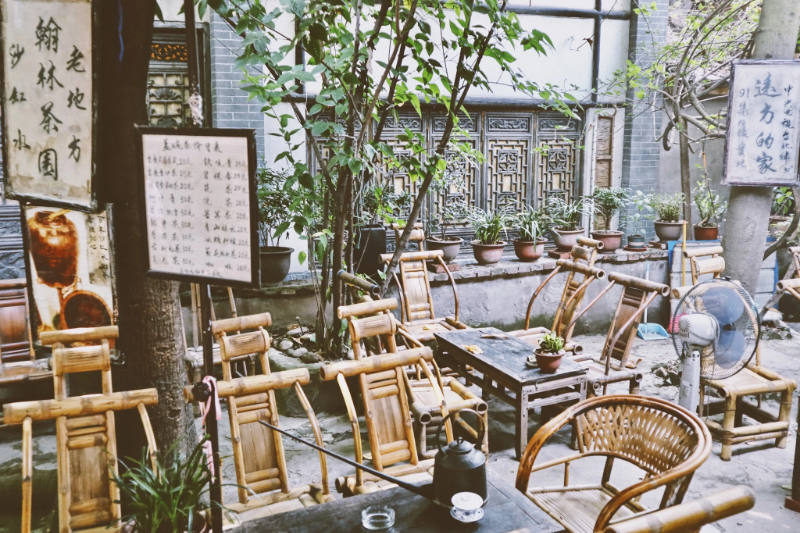
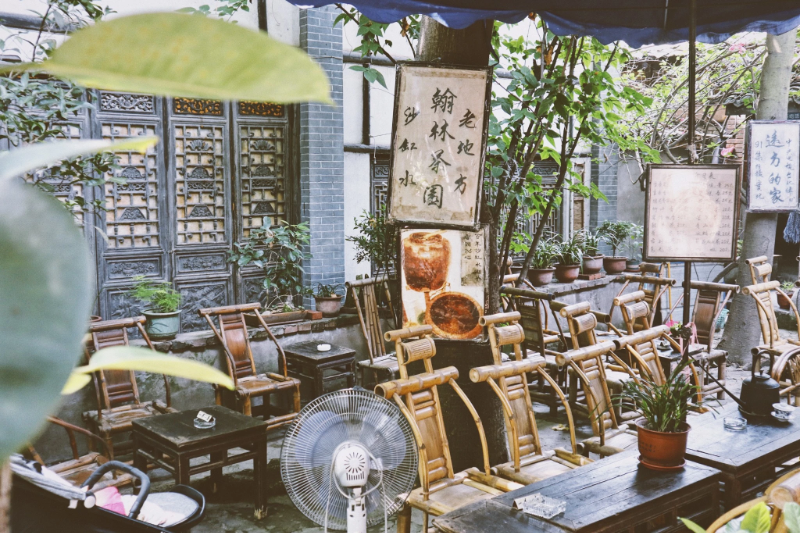
Checkpoint 1: Hanlin Academy
Originally known as the Li Family Schoolhouse, during the late Qing Dynasty, the Sun family operated a school here, making it a sought-after destination for scholars of the time.
Checkpoint 2: Bayu Folk House Museum
The museum encapsulates the essence of ancient town architecture, transcending time and space to lead visitors into a corridor of memories. Experience the construction of wood, stone, and brick, the enclosed spaces, and the tranquil courtyards.
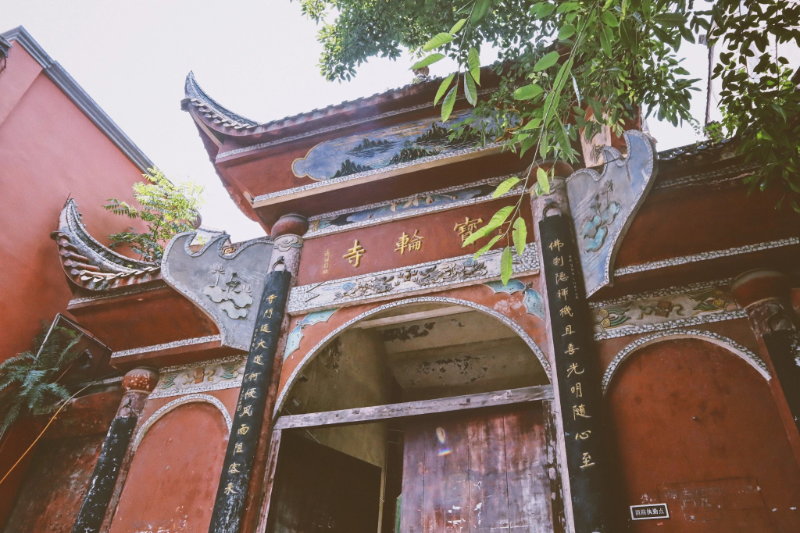
Checkpoint 3: Baolun Temple
This temple served as a refuge for Emperor Jianwen of the Ming Dynasty during his exile.
Checkpoint 4: Deep Well
One of the well-preserved Ming Dynasty relics in the ancient town.
Checkpoint 5: Baoshan Palace
Inside Baoshan Palace, visitors can explore the Ceramic Museum to learn about the entire pottery-making process.
How to Shoot
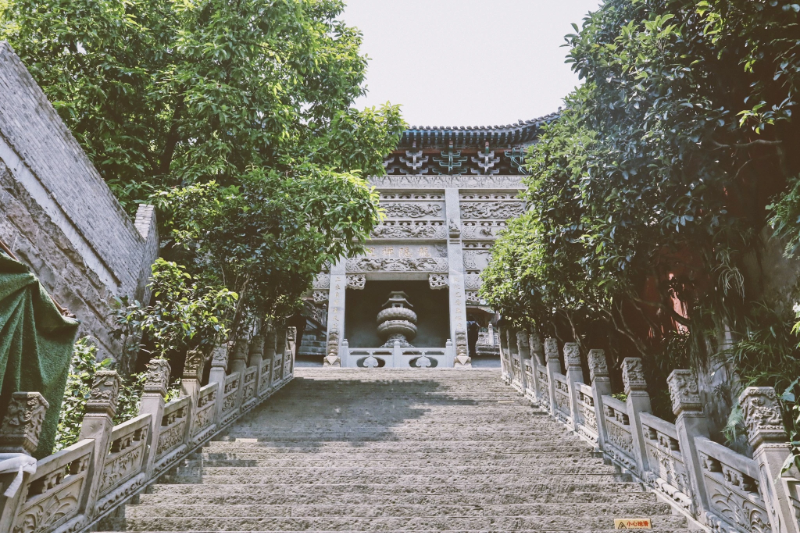
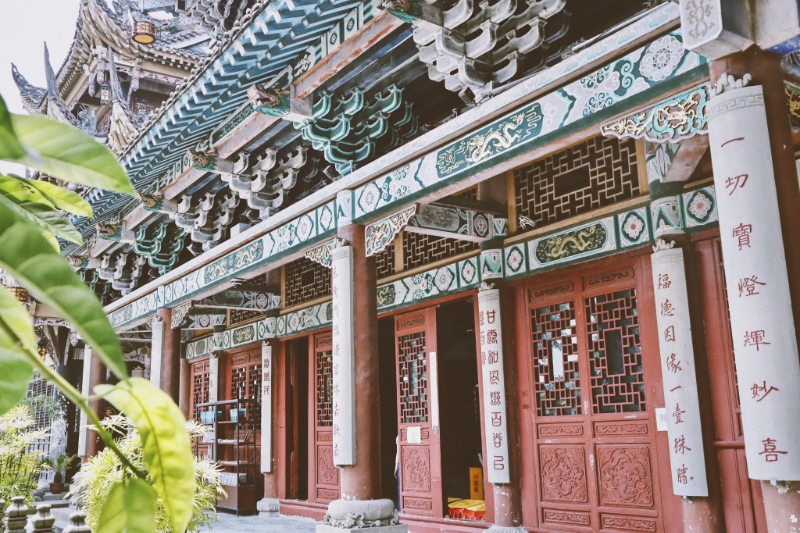
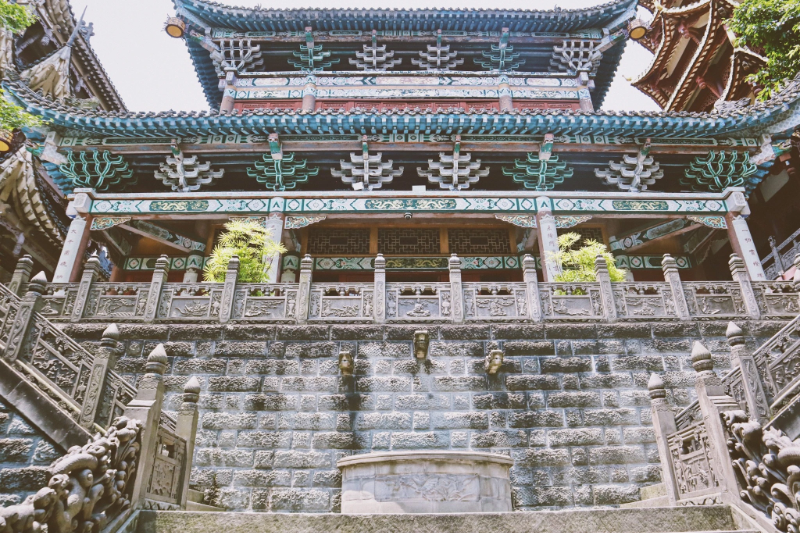
Baolun Temple is considered a hidden gem within Ciqikou. Both the interior of the temple and the old streets outside are exceptionally picturesque. When the lights are turned on at night, Baolun Temple glows brilliantly. In autumn, the ginkgo trees within the temple turn golden, making it a perfect spot for photography.
How to Get There
Take the bus/rail transit and get off at the "Ciqi Kou" station, then walk to your destination. The foot traffic in Ciqikou Ancient Town is particularly heavy. It's best to avoid visiting on holidays or weekends. Recommended to arrive before 8 a.m.
Practical Information
Admission: Free
Opening Hours: Open all day
The scenic area has 4 entrances and exits⬇️
【Huangjueping Main Gate】Entry only. Visitors arriving by car or bus enter here.
【Jinrong Gate】Both entry and exit. Visitors arriving by metro enter here.
【Qingshui Gate Square Shaci Ancient Road】Both entry and exit. Visitors arriving by car enter here.
【Caijiawan (Opposite No. 69 Middle School)】Exit only. Visitors can leave from here.
Liberation Monument: The Classic Commercial Core
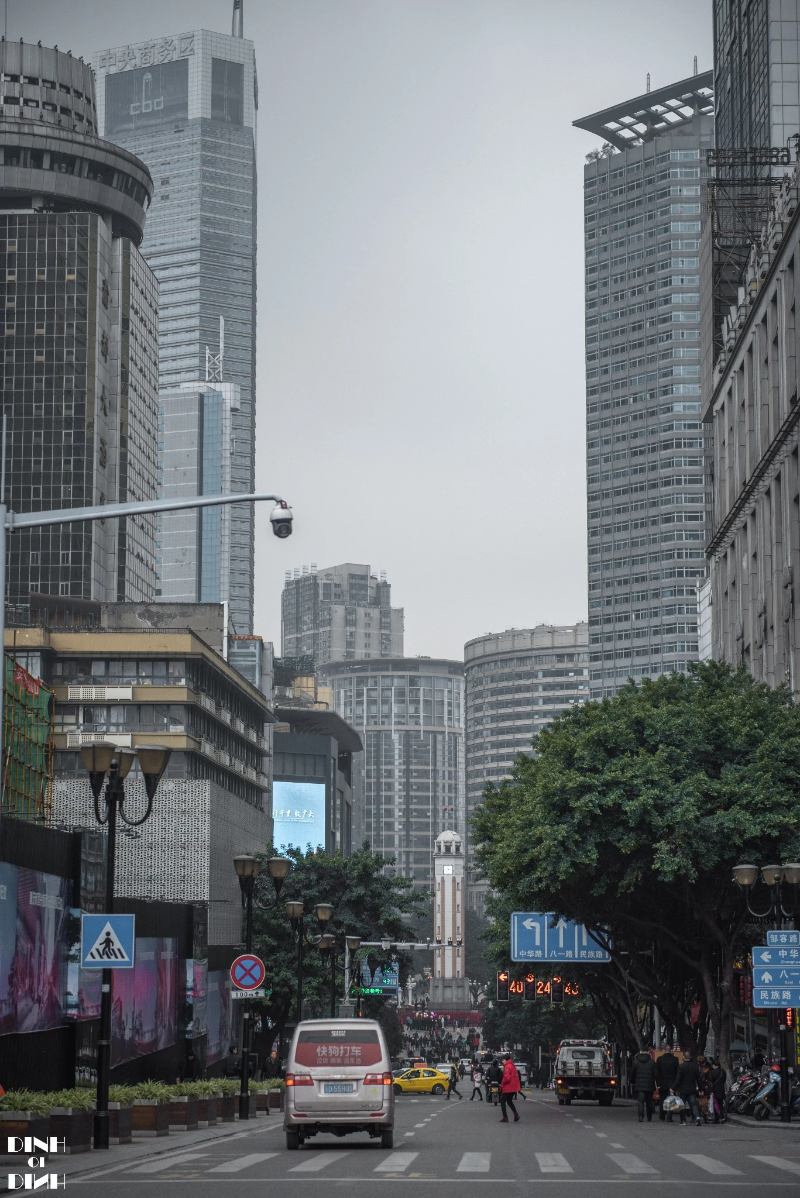
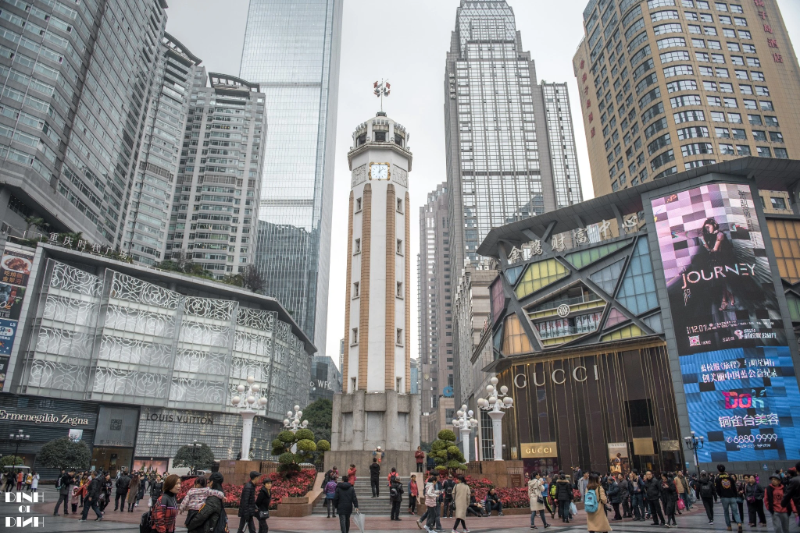
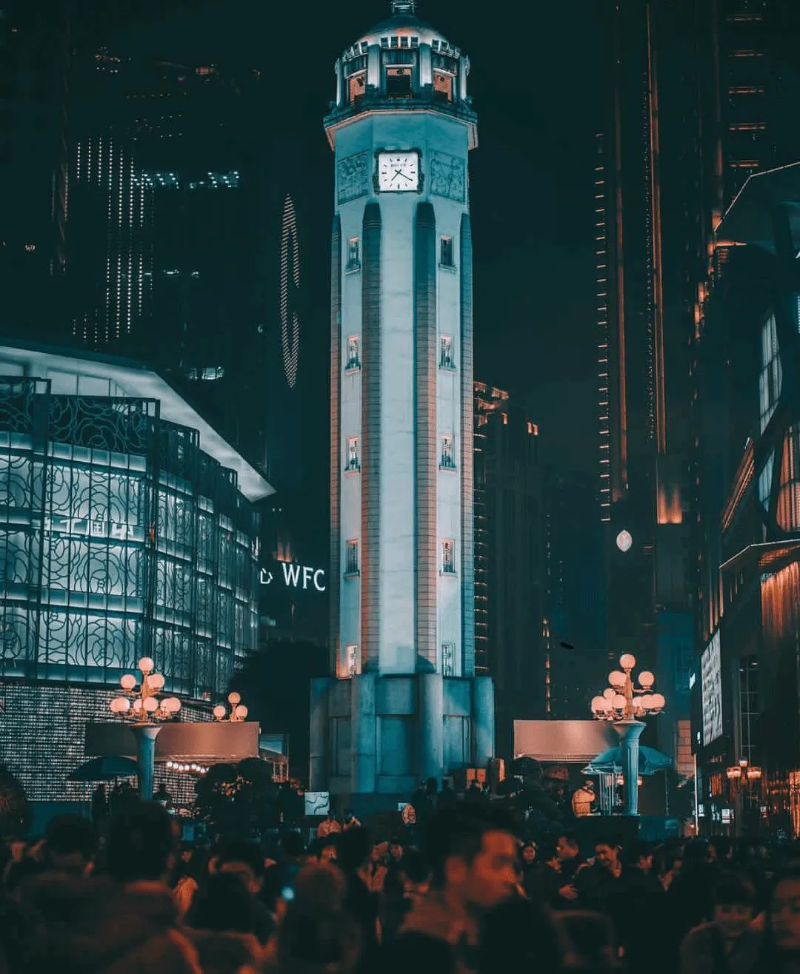
Skipping Liberation Monument is like visiting Chongqing without eating hot pot. This area is the city’s historic commercial core and a major landmark, tied to wartime victory memory and modern urban identity. Today it’s all skyscrapers, major malls, and nonstop street energy.
How to Explore
Traditional Route: Victory Against Japanese Aggression Memorial Monument — Luohan Temple — Bayi Delicious Street — Jiaochangkou Night Market
Art Route: Guotai Art Center — Chongqing Art Museum — Qianye Art Museum — Mountain City Trail
Historic Architecture Route: Former Site of the Sino-British Liaison Office — Former Site of the Xinhua Daily Business Department — Tongyuan Gate — St. Joseph's Cathedral — Former Site of the Provisional Government of the Republic of Korea — Daijia Lane
Shopping Route: Metropolitan Plaza — Chongqing Times Square — Riyueguang Center Plaza — Chongqing Department Store — Yingli International Shopping Center — Raffles City Shopping Center
Ferry Route: Nostalgic Ferry (Liangjiang Small Ferry)
Nostalgic Ferry Ride Guide ⬇️
Boarding Locations: Hongyadong Passenger Pier or Danzishi Pier
Fare: 15 yuan/one way
Ticket Purchase: Please refer to the official website https://www.liangjiangyou.com/news/187.html
Duration: Approximately 15 minutes
How to Shoot
Sci-Fi Bridge Spot: Located on the 13th floor of Jiefangbei Daronghui, the massive spherical building resembles a futuristic world straight out of a sci-fi movie.
Skyline Pool Spot: On the 54th floor of the Westin Hotel in Chongqing's Jiefangbei, order a floating afternoon tea by the skyline pool at sunset, and you can capture a New York-like vibe from the glass observation deck. However, this spot is only open from June to August.
How to Get There
Rail Transit: Get off at "Linjiangmen" Station (Exit B)
Bus: Get off at "Jiefangbei" Station
Yangtze River Cableway: A Bird’s-Eye View of Chongqing
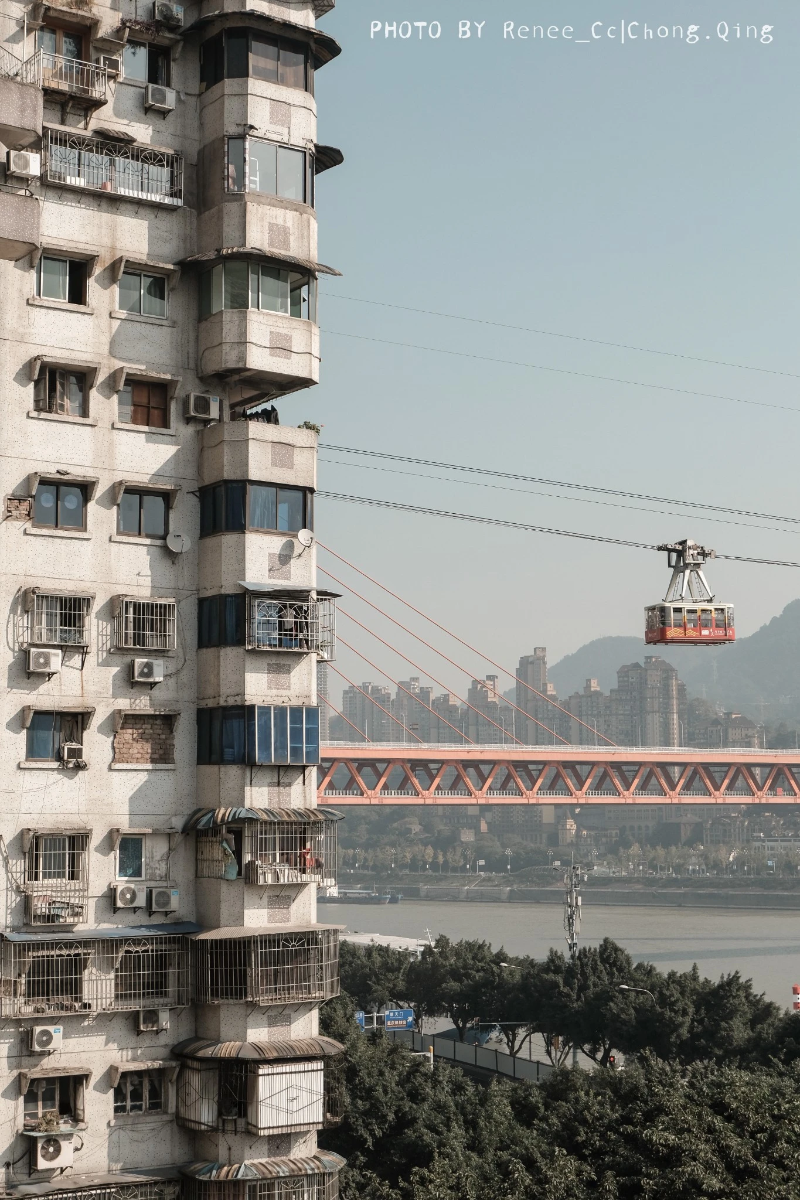
In December 1980, Chongqing began building the country’s first urban cableway (the Jialing River Cableway). Five years later, the Yangtze River Cableway followed. It has since appeared in many films, including Crazy Stone, The Door, Zhou Yu’s Train, and Chongqing Blues.
How to Shoot
Camera Position One
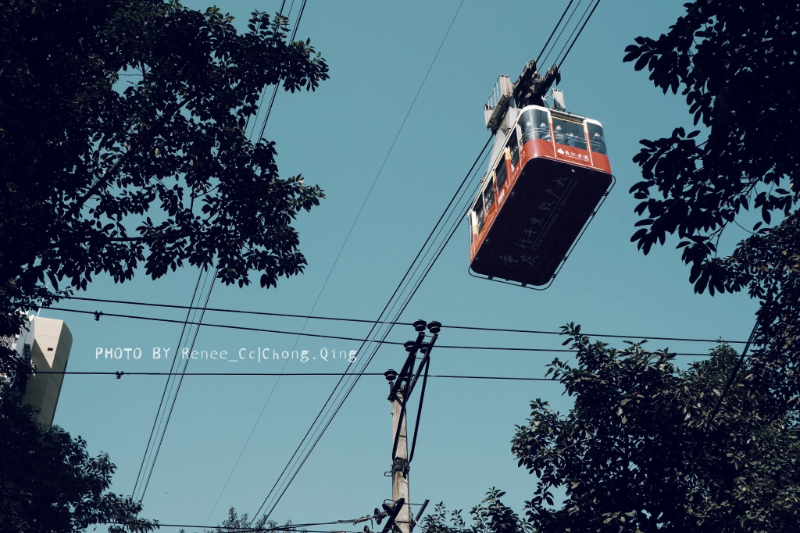
Head down the small path to the right of the ticket office at Xinhua Road·North Cableway Station. At the corner of the steps, look up, and you’ll see the cableway passing overhead.
Camera Position Two
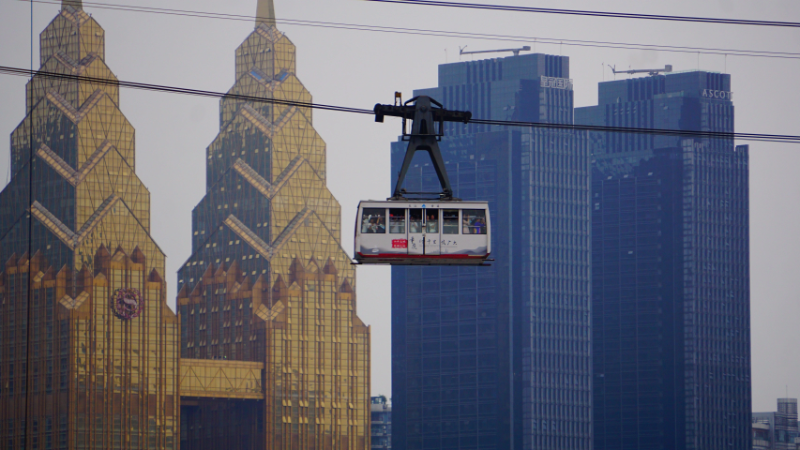
By the riverside of Nanbin Road, you can capture the cable car passing through the cables of the Dongshuimen Bridge, as well as weaving between the skyscrapers of the Twin Towers.
Practical Guide
Fare: One-way 30 yuan, round-trip 50 yuan. International visitors and Hong Kong/Macao visitors should purchase tickets at the Visitor Center with valid documents, then queue by number and scan to ride.
Hours: 8:00 - 22:00
Frequency and Capacity: Approximately every 6 minutes, with each trip accommodating 50 passengers.
The Yangtze River Cableway has two entrances: the North Entrance and the South Entrance.
【North Entrance】
Advantages: Close to Liberation Monument and Hongya Cave, with convenient transportation and easy to find.
Disadvantages: The queue is much longer compared to the South Entrance!
【South Entrance】
Advantages: The queue is relatively shorter compared to the North Entrance.
Disadvantages: Transportation is less convenient than the North Entrance, and it’s a bit harder to find.
How to Get There
The Yangtze River Cableway has two stations: "Xinhua Road·North Cableway Station" and "Shangxin Street·South Cableway Station".
- Take Metro Line 6 to Xiaoshizi Station, exit from Exit 5B, and walk to Xinhua Road·North Cableway Station.
- Take the Loop Line (towards Erlang) to Shangxin Street Station, exit from Exit 2, and walk to Shangxin Street·South Cableway Station.
Jiaotong Teahouse: Local Life in One Room
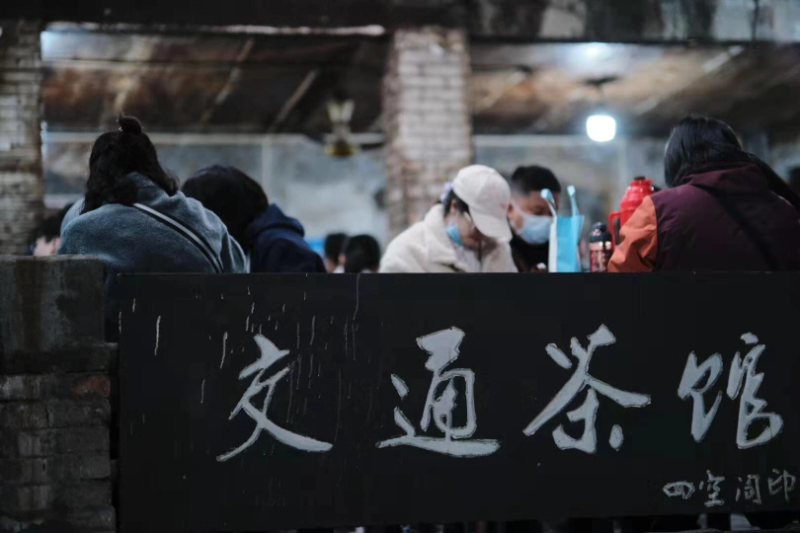
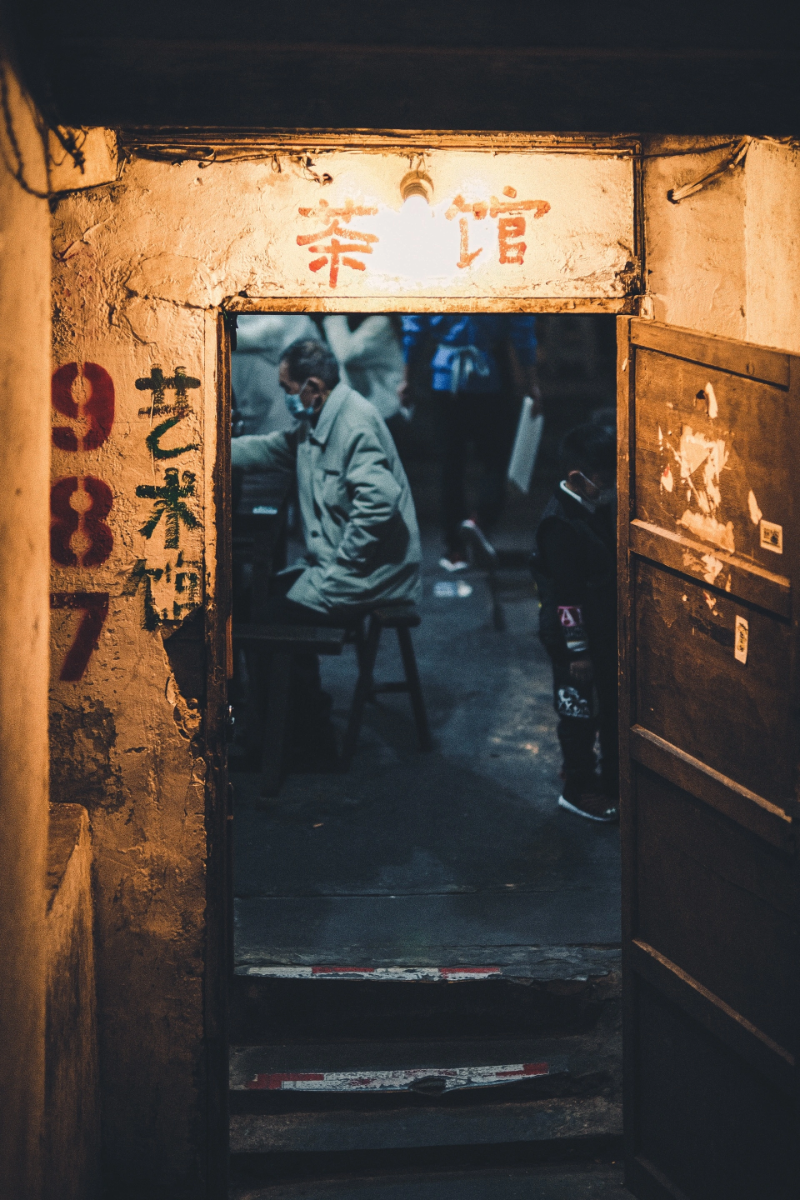
The famous Jiaotong Teahouse sits in Huangjueping (home of the graffiti street) and is often described as the only old teahouse in Chongqing that still preserves a strong 1980s feel.
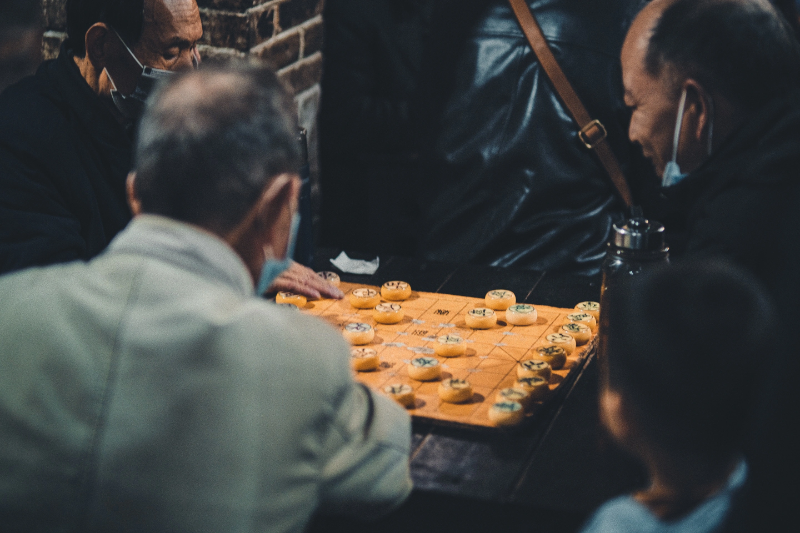
Before 1987, this was just a canteen. It later became a teahouse for social gatherings, and because it was affiliated with the Transportation Bureau, it took the name “Jiaotong.” Step inside today and you still feel time slow down—chess, cards, mahjong, and long glossy benches that look unchanged for decades.
How to Explore
In the teahouse, you can drink tea, chat, play chess, cards, or mahjong. If you only want to take photos, you must still make a purchase. When you exit the teahouse and turn right, you'll find a graffiti street, projecting a wild and artistic atmosphere.
The local elderly here are very fond of ordering a bowl of noodles from the neighboring "Old Noodle Shop." This noodle shop, which has been in operation since 1992, offers flavors that are very characteristic of Chongqing, with its "Knife-Cut Noodles" and "Chongqing Noodles" being particularly popular. Inside the teahouse, there is a small window from the noodle shop where customers can directly place their orders and enjoy their meal in the teahouse.
How to Shoot
Outfit: Recommend a cheongsam or retro suit.
Props: Chinese-style folding fan, round-frame sunglasses.
Camera Angle: The table directly facing the black plaque is the best spot for photos, but make sure to arrive early to secure that table.
How to Get There
Get off the bus at the "Huangjueping Main Street" station.
(After its upgrade at the end of September 2021, Huangjueping Graffiti Art Street will feature more works by renowned artists. When you visit this street, you’ll be able to see even more stunning artworks. It’s perfect for taking photos!)
Practical Information
Time: 07:00-19:00
Reference Price: Tea 10 yuan
Eling Erchang: From Printing Factory to Creative Park
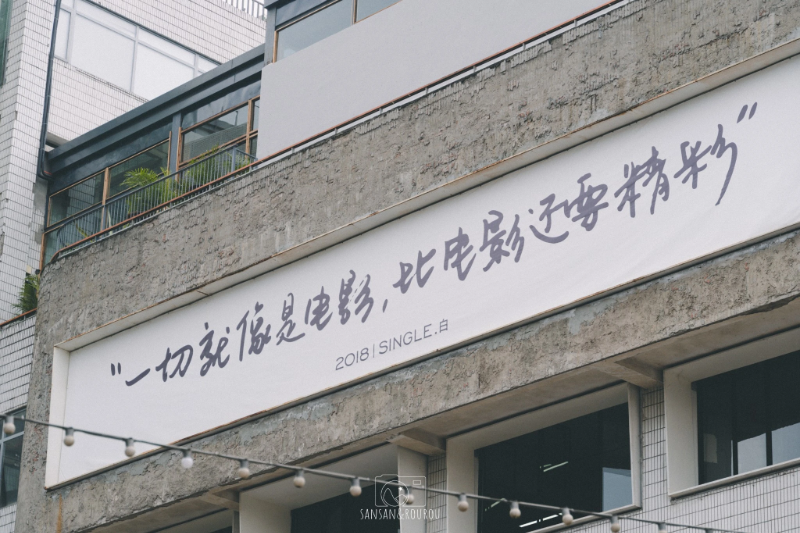
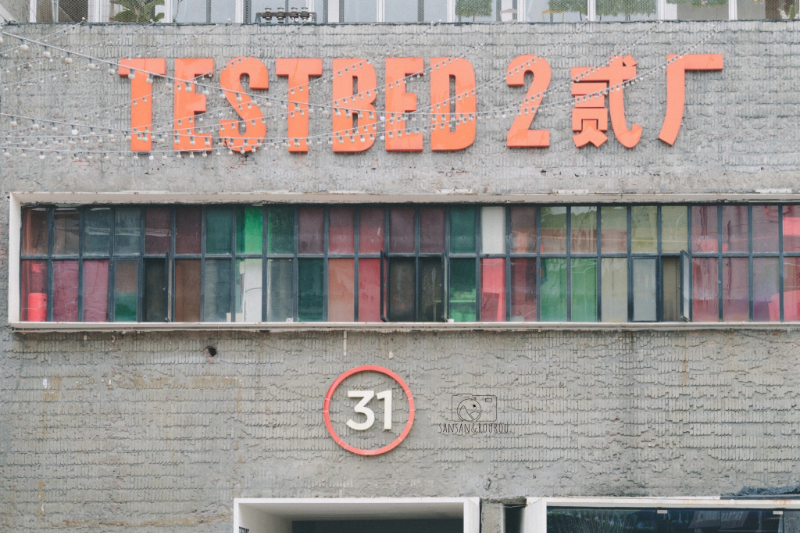
This site began as the Central Bank Printing Machinery Factory during the Republic of China era. It later became Chongqing Printing Factory No. 2 and handled much of the city’s color printing from the 1950s to the 1970s. After renovation, it reopened as TESTBED2, a creative park that now attracts art- and design-minded visitors.
How to Shoot
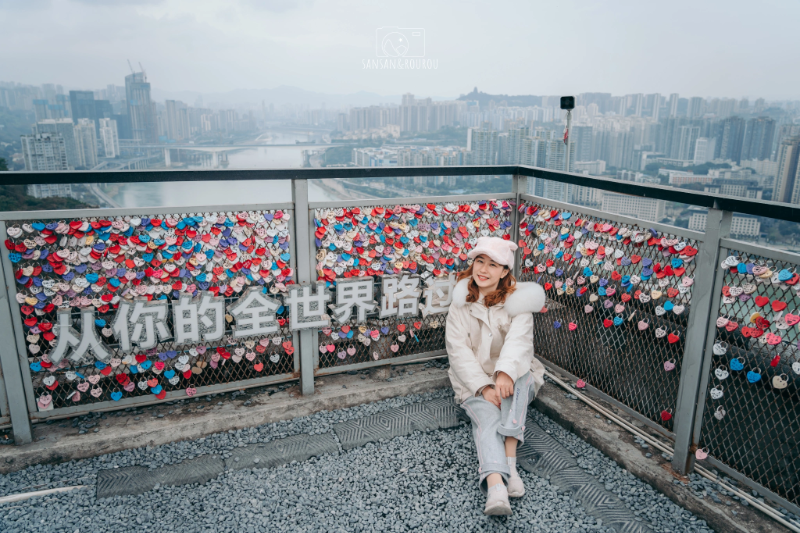
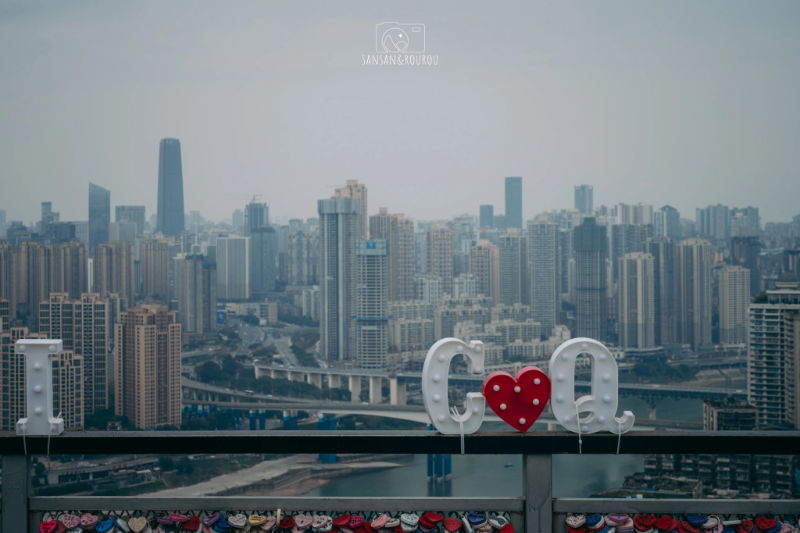
【Aerial View Spots】
- CITYRADIO Movie Rooftop is the original rooftop from the film "I Belonged to You," located at the entrance on the 6th floor of Building H.
- SKYLINE THAI, featuring an infinity pool paired with the city skyline, is on the 6th floor of Building H (inside the Skyline Pool Restaurant).
- Little Days Rooftop offers a 270-degree view of the nightscape over the two rivers, situated on the 5th floor of Building 31.
【Retro Photo Spots】
- The Erchang Warehouse Door is a popular backdrop for photos. Located between Building 2 and Building 4 at the site of the former Republic of China banknote printing factory, there is a spot nearby where you can sit and take portraits. It’s on the G floor of Building 9.
- Tongling Alley has two photo spots: one is the 318 road sign, and the other is a graffiti wall.
【Installation Photo Spots】
- The Computer Installation Wall, the coolest cyberpunk-style backdrop, is on the basement level of Building 1 (Sunken Plaza).
- The Light Installation Tire Wall is located in the small square.
- Mirror Encounter Alley, filled with mirrors, is situated between Building 2 and Building 4.
How to Get There
Rail Transit: To "Eling" Station, then walk for more than ten minutes after exiting the station.
Bus: To "Yinzhi Erchang Station."
Shuttle Bus: Operates daily from 10:00 to 20:00, departing from the main square of the Erchang Park to Exit A of Fotuguan Station on Line 2. The route passes by No. 1 Jiankang Road of Chongqing Emergency Medical Center, Exit B of Liziba Station on Line 2, and Liziba Liangshanji Park Store. The fare is 5 yuan.
Huguang Guild Hall: Quiet History in the Middle of the City
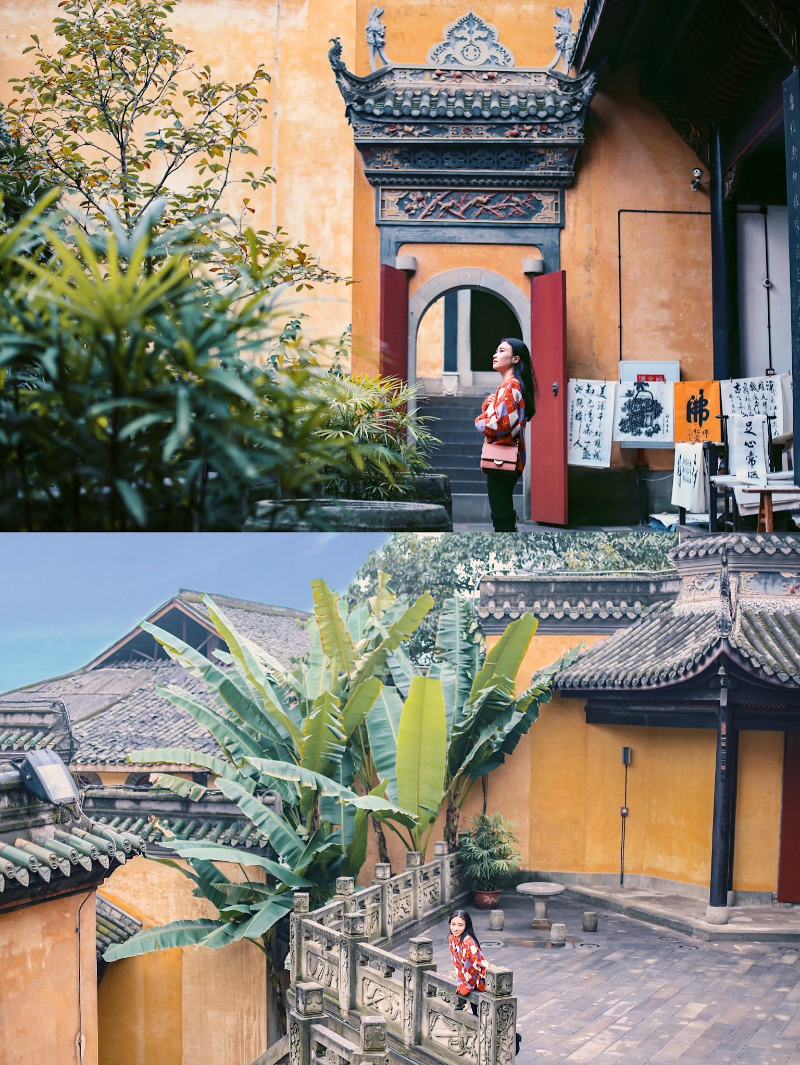
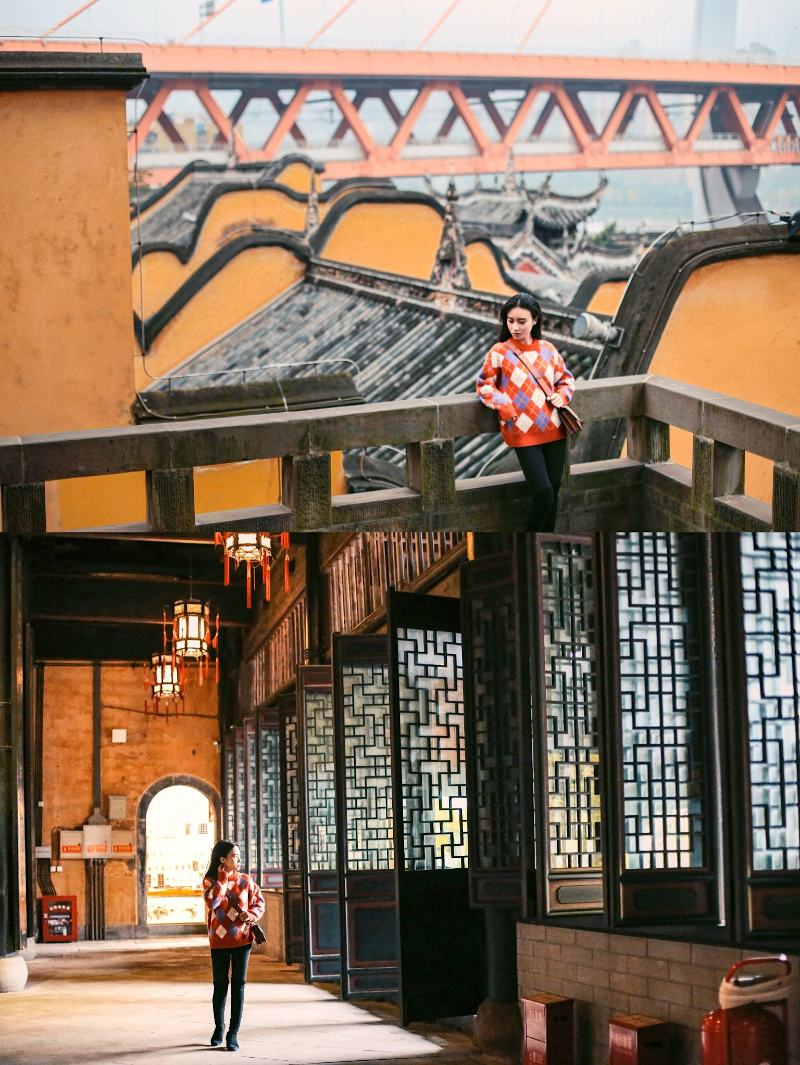
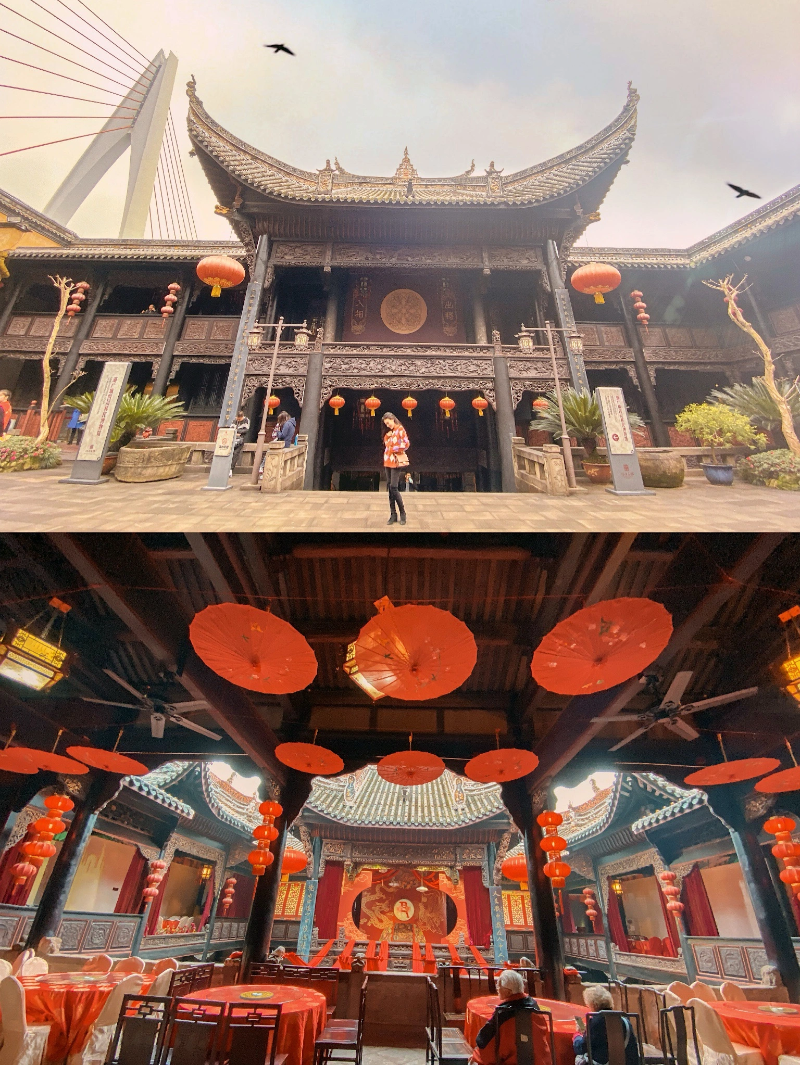
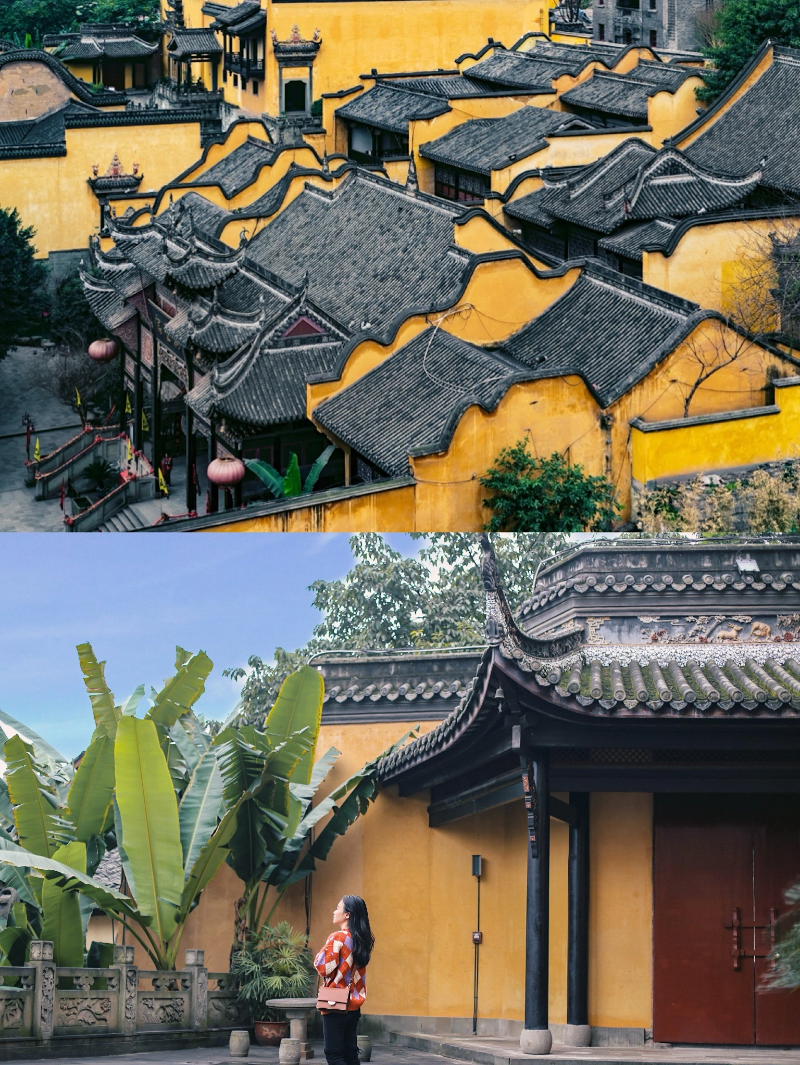
Established in the Kangxi era, Huguang Guild Hall has more than 300 years of history and feels like a pocket of calm inside the busy Yuzhong Peninsula. The complex features carved railings, painted beams, and courtyard layouts typical of Ming–Qing architecture, giving it strong historical and architectural value. From a distance, the layered yellow walls even hint at Jiangnan garden aesthetics.
How to Explore
Check-in Point One: Yu Wang Palace Within the Yu Wang Palace, built along the mountain, stands a 5-meter-high bronze statue of the Great Yu, weighing 2 tons. Majestic and imposing, it is a concentrated display of Qing Dynasty architectural style.
Check-in Point Two: Guangdong Guild Hall The largest theater building within the guild hall is located here. The theater features a wooden structure with a gable and hip roof, adorned with light green and yellow glazed tiles. The railings around the stage are intricately carved with scenes from traditional Chinese operas such as "Journey to the West" and "The Romance of the West Chamber," all vividly depicted.
Check-in Point Three: Qi'an Guild Hall The Qi'an Guild Hall was built by people from Huangzhou, Hubei, during the Qing Dynasty, with funds raised in Chongqing. It is the best-preserved building within the Chongqing Huguang Guild Hall complex. Among the exquisite wood carvings surrounding the theater, "Apricot Blossom Village" is particularly worth savoring.
How to Shoot
After leaving the guild hall, walk straight to the "Gangyu Building," then take the elevator to the 8th floor. After that, navigate to the Dongshuimen Bridge, where you can capture a panoramic view of the Huguang Guild Hall from the bridge.
How to Get There
Subway🚇
Get off at "Xiaoshizi" Station (Exit 4B)
Bus🚌
Get off at "Huguang Guild Hall" Station or "Daomenkou" Station
Practical Information
Opening Hours: 09:00-16:00 (Closes at 17:00)
Admission: 30 RMB (58 RMB for Bayu Cultural Performance)
Liziba Station: The Train-Through-a-Building Landmark
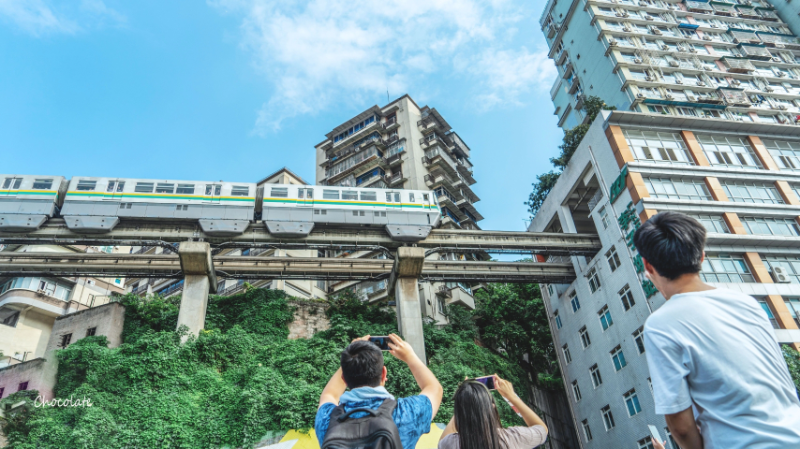
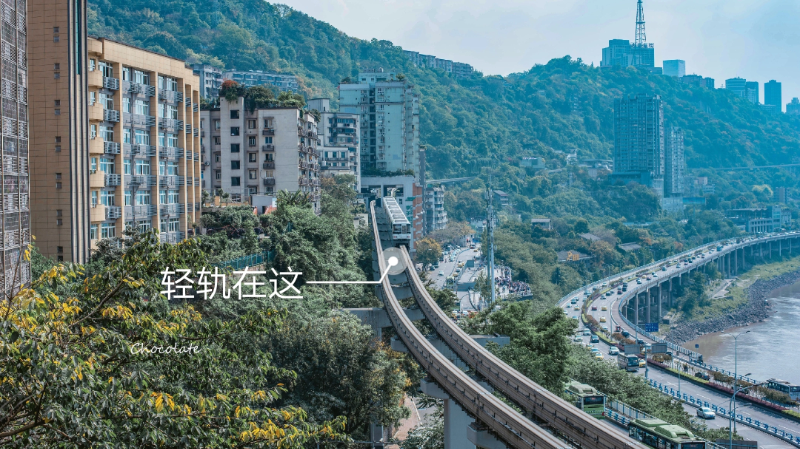
Liziba Station is one of Chongqing’s most famous “internet landmarks,” thanks to the iconic image of a train passing through a residential building. It sits at the intersection of Jialing New Road and Guihua Garden Road in Yuzhong District, near the Jialing River. The platform runs through the 6th to 8th floors of a 19-story structure, and the novelty has made it a must-see stop for many visitors.
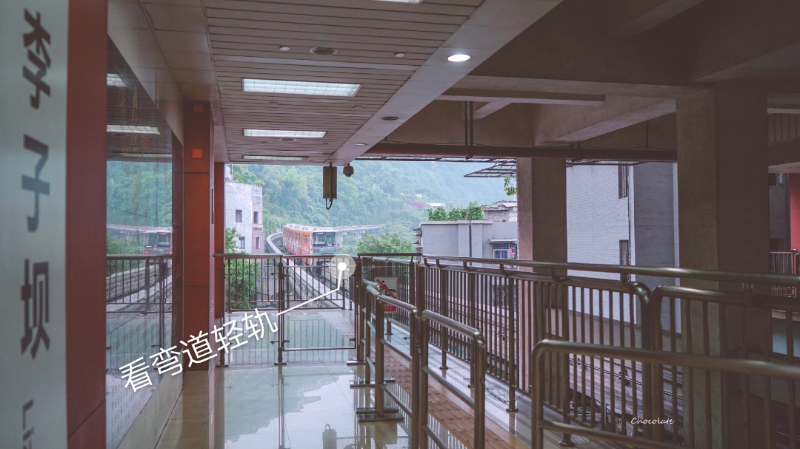
How to Explore
Starting from Niujiaotuo, take Line 2 to Liziba to experience the thrill of passing through a building, with a length of 132 meters. After exiting the station, go down one level to find the Bayu Historical News Museum, which displays historical records documenting major events in Bayu over the past sixty years since its opening as a port.
At 9:30, 11:30, 13:30, and 15:30, dedicated guides will provide explanations to visitors from three aspects: "Introduction to the Bayu Historical News Museum, Overview of Liziba Station, and the Planning of Under-Construction Lines." There is also a "self-service stamping point" at the counter where you can imprint the image of the train passing through the building in your notebook, which is quite amusing.
How to Shoot
Exit from Gate B, look up, and you can take a close-up shot of the building-piercing view.
Practical Information
Time: First bus at 06:30, last bus at 22:30.
Fare: Starting price is 2 yuan.
Chongqing 2-Day Itinerary
Day 1: Experience “Peak Chongqing”
Mountain City, 8D Magic, Urban, Modern, and a touch of the Jianghu spirit—these are all synonymous with Chongqing. How can you experience all these facets in the shortest time possible? Follow this one-day itinerary to capture the essence of Chongqing:
Start your day early by visiting the "Internet-famous Ciqikou" during off-peak hours, where you can uncover the unforgettable old times hidden within Chongqing's most bustling ancient town. Then, take a ride on the most impressive light rail at Liziba Station, experiencing the unique magic of Chongqing as the train passes through a building.
For lunch, follow the locals to savor some authentic Chongqing Jianghu cuisine. Afterward, make your way to the renowned Jiaotong Teahouse, order a pot of tea that embodies the essence of Sichuan and Chongqing, and observe the elderly locals playing chess or mahjong, immersing in the cultural and lively atmosphere.
Of course, you can't miss experiencing the mountain city's unique commuting method—taking a cable car to soar over the Yangtze River. If you're a movie enthusiast, be sure to visit Bai Xiangju, a location featured in numerous Chinese films.
Finally, as night falls, head to Chongqing's iconic business district, Jiefangbei, to explore another side of the city: one that is extravagantly glamorous and modern.
Day 2: Explore Beyond the City Center
After getting acquainted with the urban landscape of Chongqing on the first day, you can set out to explore the surrounding areas on the second day, choosing to visit one of the following: Wulong, Baidi City in Fengjie, or the Dazu Rock Carvings.
About the Chongqing Sightseeing Bus
In the 8D city of Chongqing, visitors with a poor sense of direction can check out the "Chongqing Sightseeing Bus" official website, choose to take the sightseeing bus, and visit the core tourist attractions of Chongqing: Liberation Monument, Arhat Temple, Hongya Cave, Chaotianmen, Raffles City, Yangtze River Cableway, Huguang Guild Hall, Baixiang Street, Shancheng Lane, Eighteen Steps, Crown Escalator, Great Hall, Liziba, Grand Theater, Danzishi Old Street, Changjia Hui, Bell Tower, Thousand Buddha Temple, Ciyun Temple, Longmenhao Old Street, Sujiaba Interchange, Zhou Enlai's Former Residence, Hongyan Soul Square, Ciqikou, Bai Mansion, Zhazidong... and more than 20 other popular attractions are covered by the 5 sightseeing bus routes.