
Beijing’s central axis is the city’s defining north–south line, stretching from Yongding Gate in the south to the Bell and Drum Towers in the north. It’s not just an urban thoroughfare—it’s a living record of Chinese city planning and imperial history. For centuries, the landmarks along this line have told Beijing’s story, making the route essential for any visitor.
Yongdingmen
As the starting point of the old central axis, Yongding Gate was the main gate of Beijing’s outer city in the Ming and Qing dynasties—the grandest of the seven outer gates, symbolizing “eternal peace.” The restored gate tower stands at the square’s edge, its double eaves sharp against the sky. Below, children play and elders fly kites, and the city’s long history blends into everyday life.
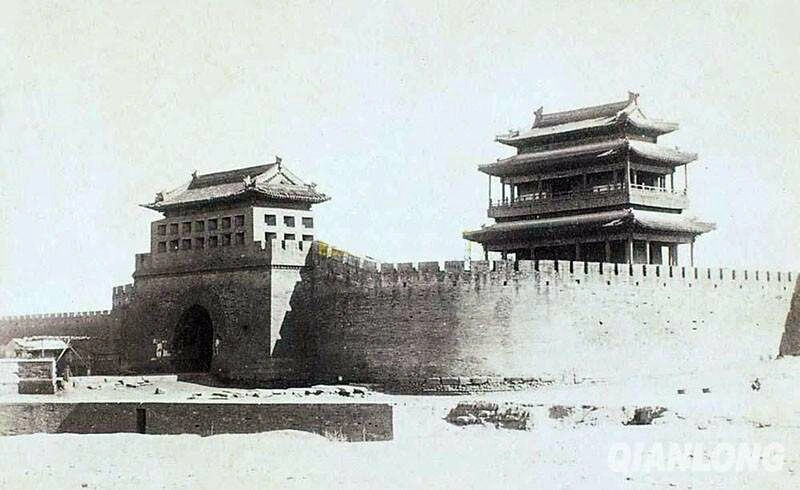
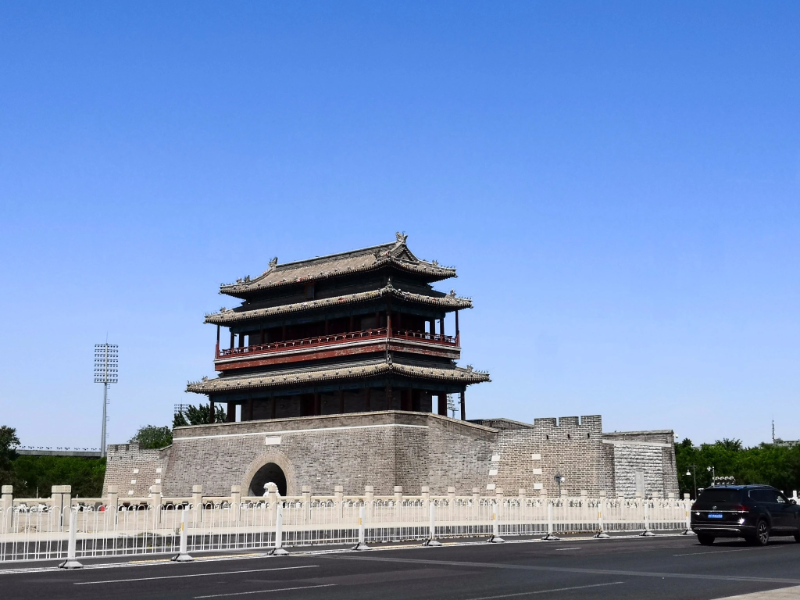
Address: No. 18, Yongdingmen Dongbinhe Road, Dongcheng District, Beijing
The Temple of Agriculture
Moving north along the axis, the Temple of Heaven and the Xiannong Altar sit opposite each other on the east and west sides. The Xiannong Altar lies to the west and was the royal site for worshipping the God of Agriculture. It is far less crowded than major attractions, yet no less impressive. Inside the red walls and green tiles, you can enjoy a quieter, more contemplative look at traditional architecture.
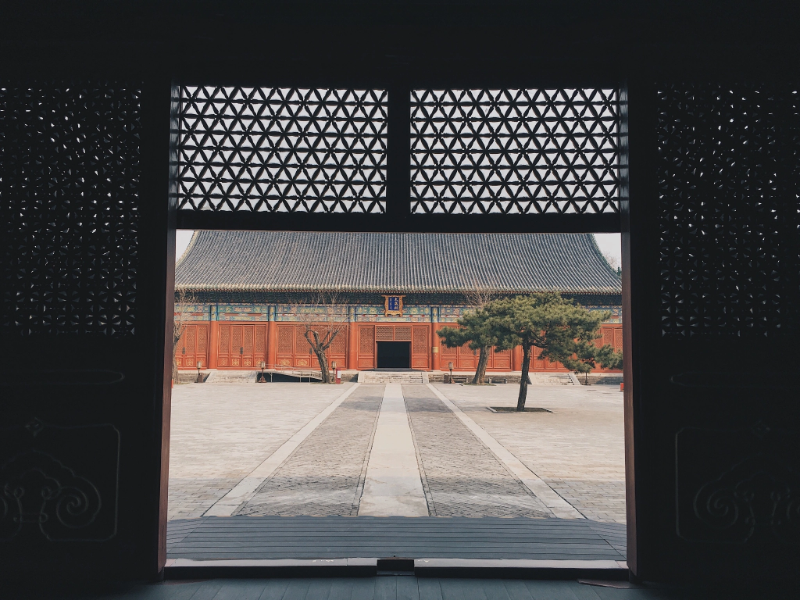
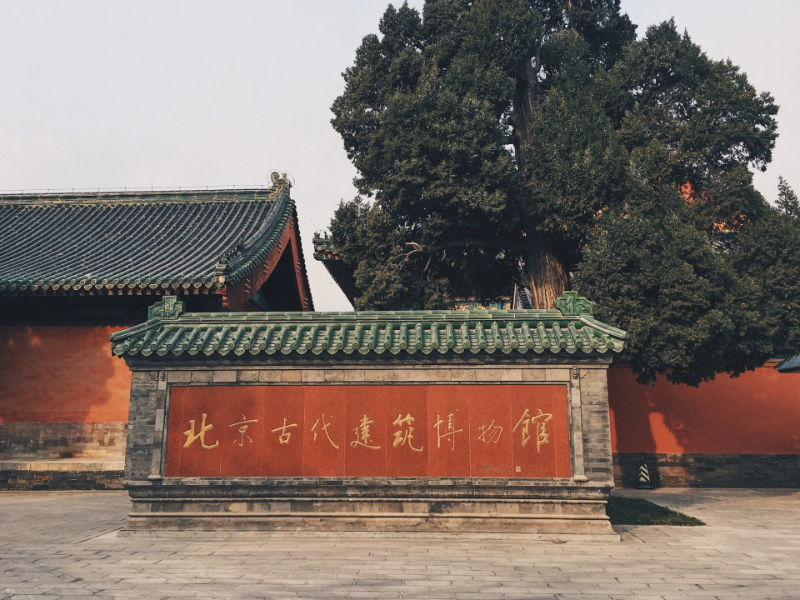
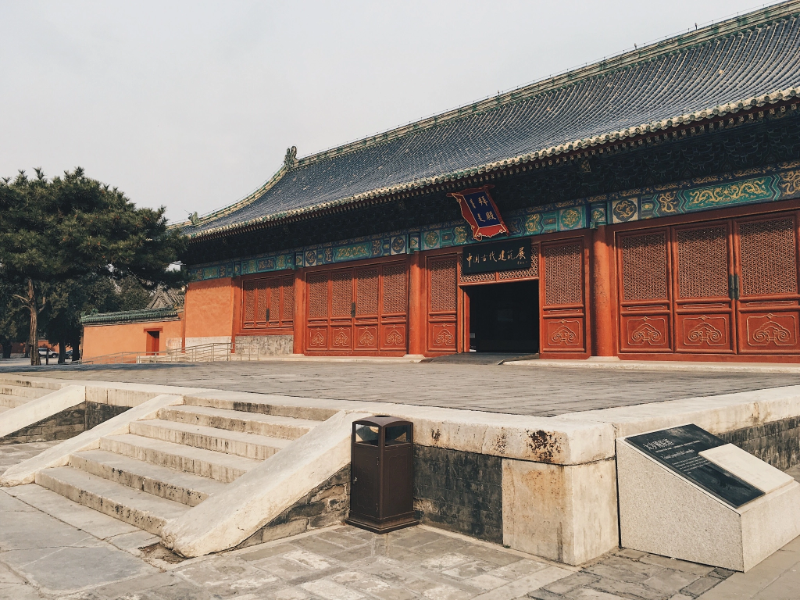
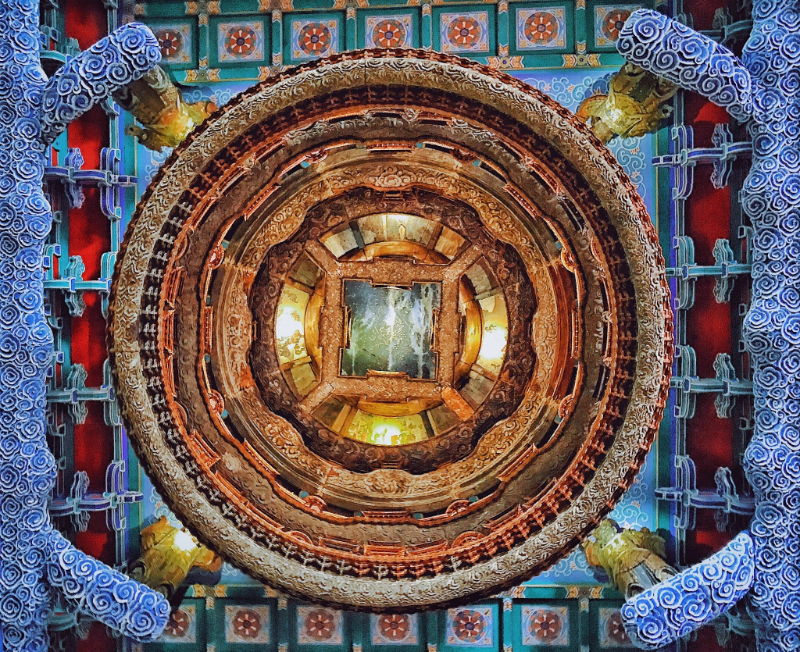
Address: No. 21 Dongjing Road, Xicheng District, Beijing (Beijing Ancient Architecture Museum)
Ticket Price: Adults 15 yuan/person, Students 8 yuan/person
Opening Hours: 9:00~17:00 (last entry at 16:30), Closed on Mondays
Temple of Heaven
The Temple of Heaven lies to the east of the central axis and was where emperors prayed for good harvests. Inside, a smaller north–south axis links the key sites: the Circular Mound Altar, the Echo Wall, the Imperial Vault of Heaven, and the Hall of Prayer for Good Harvests. Walking this line is like stepping into pages from childhood textbooks.
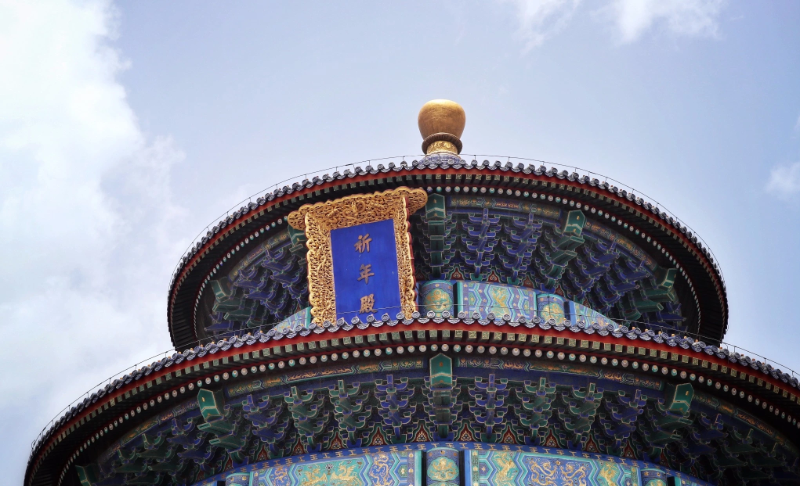
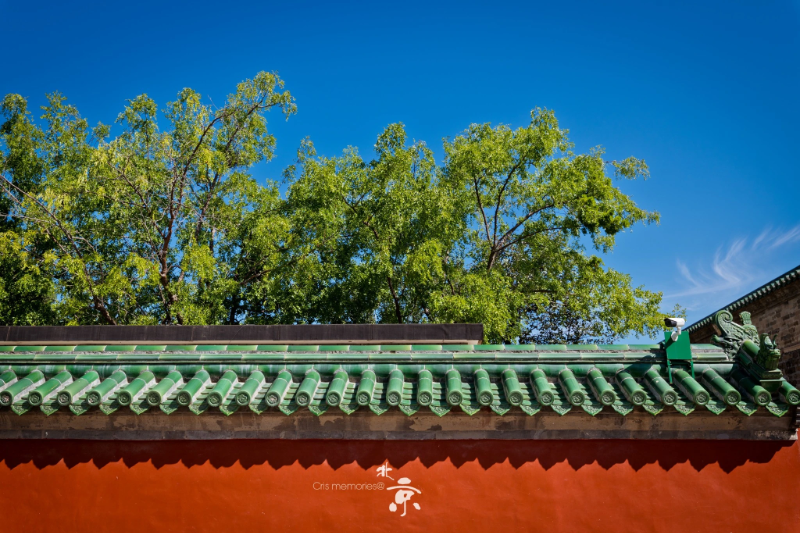
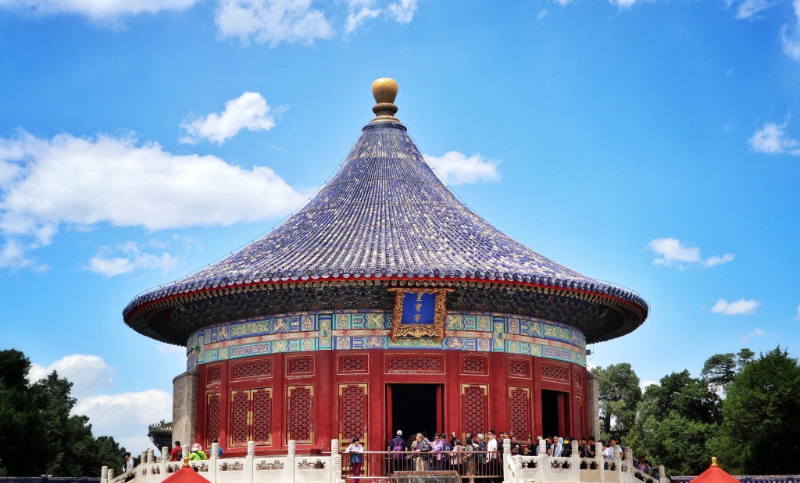
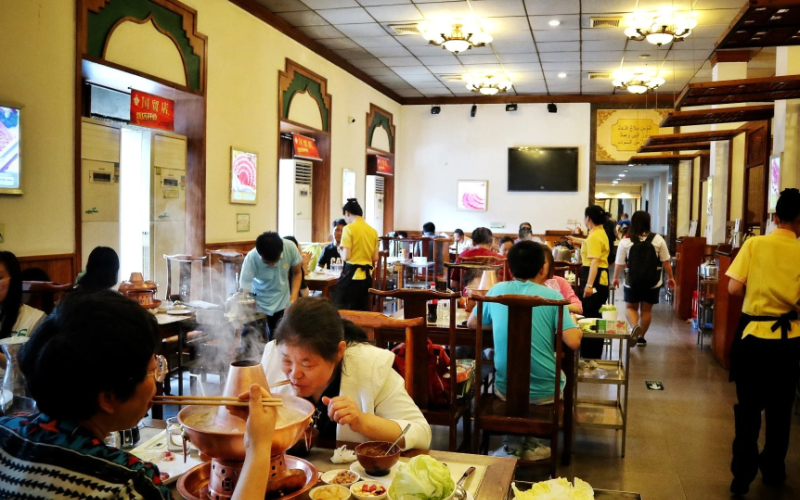
As a World Heritage site, the Temple of Heaven is a global symbol of Chinese culture. As a tree-filled park in the city center, it’s also a favorite spot for locals to cool off and relax. Nearby are classic Beijing flavors: Nanmen Shuanrou for copper-pot hot pot, the famously pungent douzhi shop near Ciqikou, plus Jinfang Snacks and zhizi barbecue—handy for a hearty lunch break.
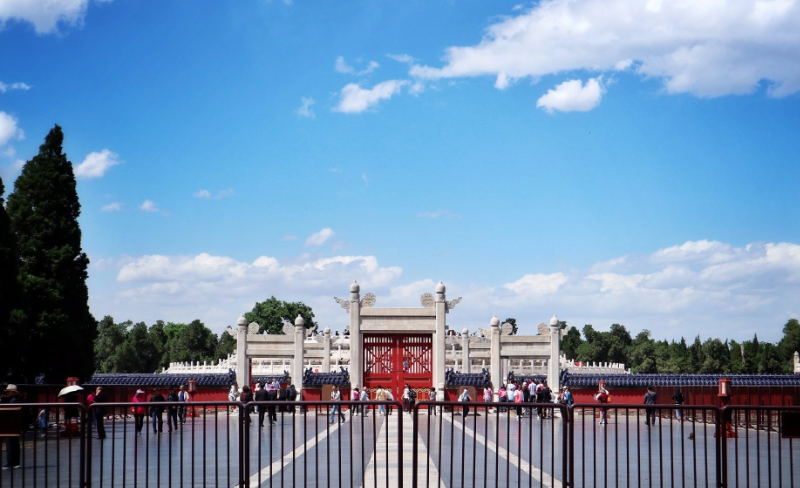
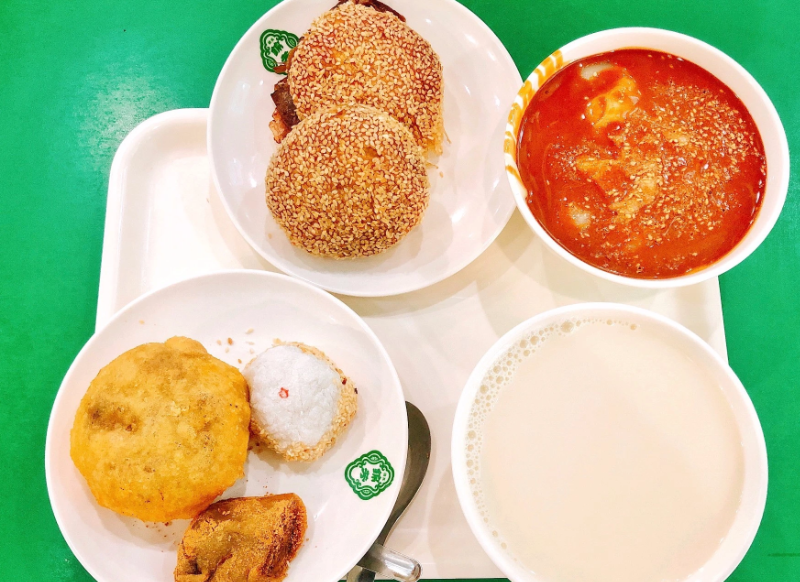
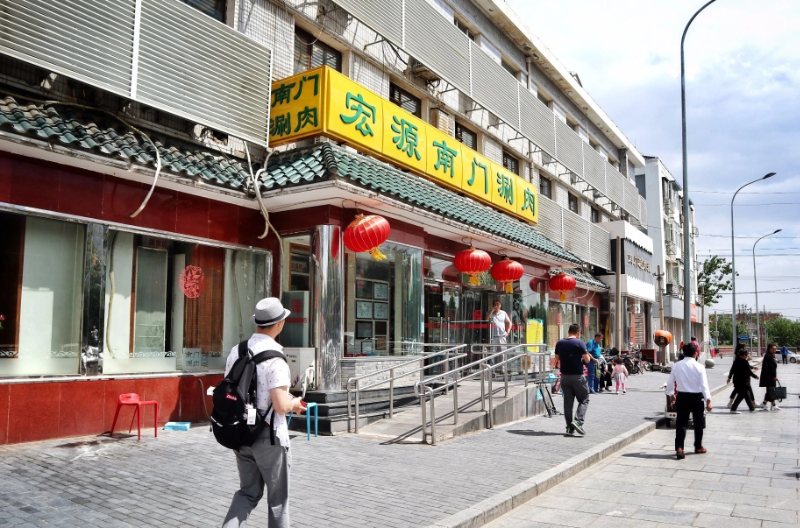
Address: No. 7, Tiantan Dongli, Dongcheng District
Ticket: Single ticket 15 yuan, Combo ticket 34 yuan (Reservation and purchase required via the official WeChat account "Tiantan")
Opening Hours: 6:00 AM to 10:00 PM
Qianmen
The TV series “Under the Zhengyang Gate” revived interest in old Beijing life at the foot of the imperial city. The real Zhengyang Gate—often called the “Front Gate Tower”—stands directly south of the Forbidden City. Historically, the complex combined a gate tower, arrow tower, and barbican into one defensive system, making it one of the best-preserved city gate ensembles in Beijing.
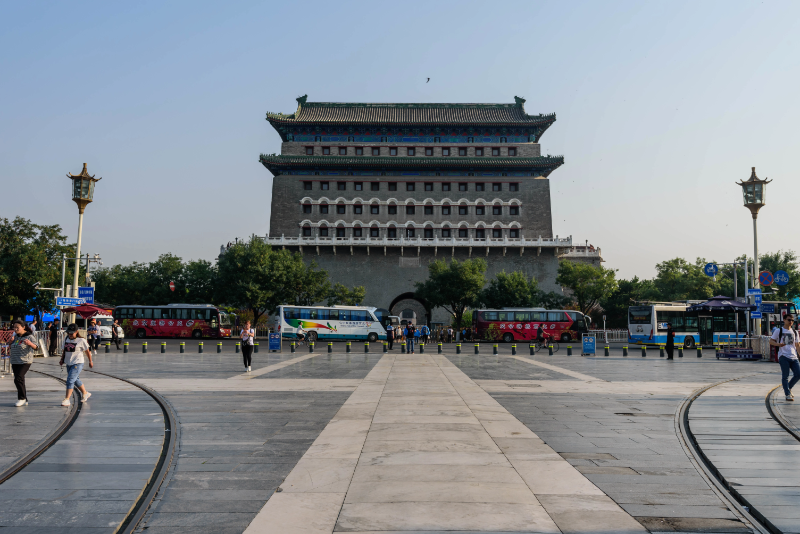
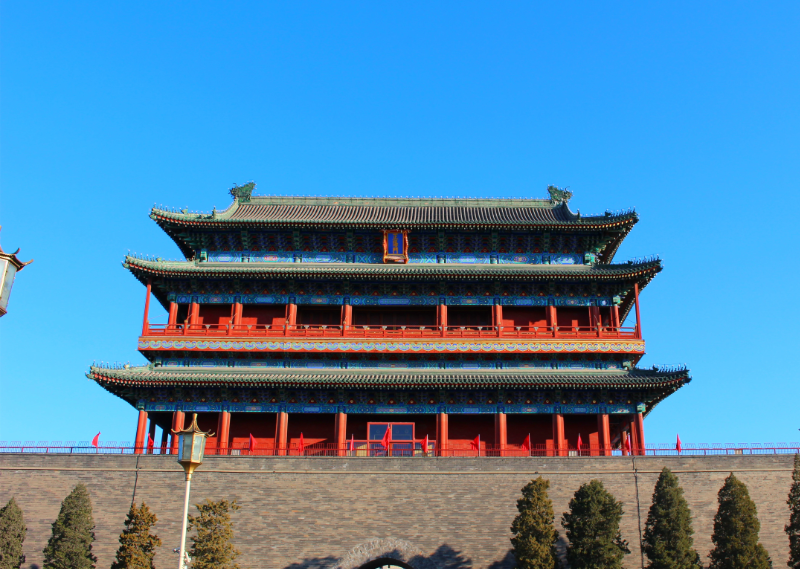
The gate tower and Arrow Tower stand at the southern end of Tiananmen Square. Beneath the gate tower is the “Zero Kilometer Marker,” carved with the Four Guardian Deities, marking the symbolic center point of Beijing’s road network.
Address: No. 2, Qianmen Street, Dongcheng District
Reservation Information: Currently, the gate tower is temporarily closed for climbing.
Tiananmen
Passing the front gate tower leads into Tiananmen Square. The Chairman Mao Memorial Hall sits to the south, and further north you’ll see the Monument to the People’s Heroes, with the National Museum to the east and the Great Hall of the People to the west. Together, these buildings frame the square’s role in modern Chinese history.
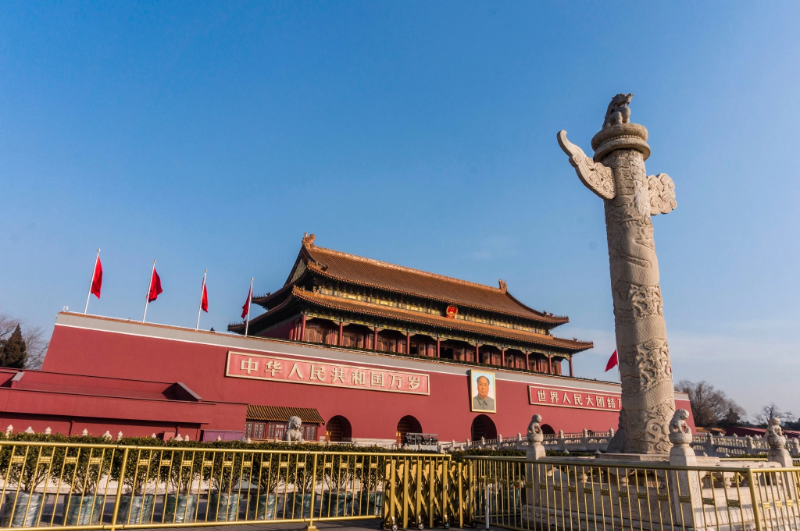
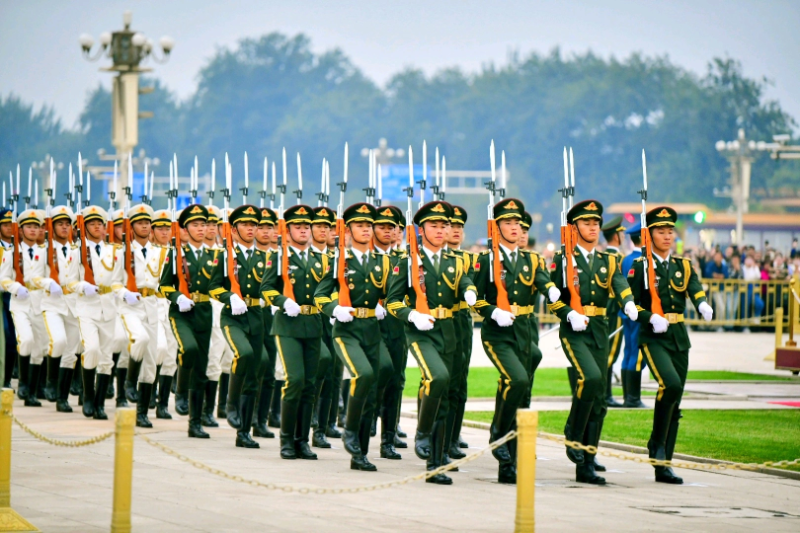
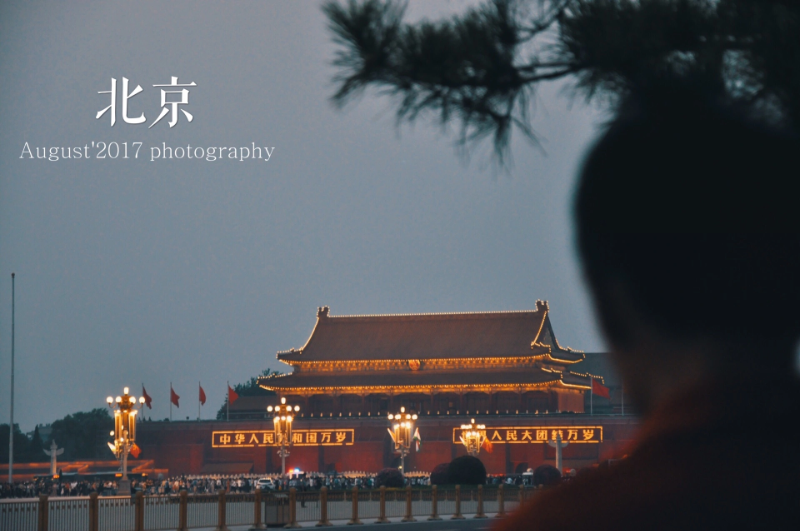
At the north end of the square stands the Tiananmen Rostrum, once the main gate of the imperial city during the Ming and Qing dynasties. It is deeply symbolic for many Chinese people and is often seen as a national emblem of the PRC. For countless families, a photo here has long been part of the Beijing visit ritual.
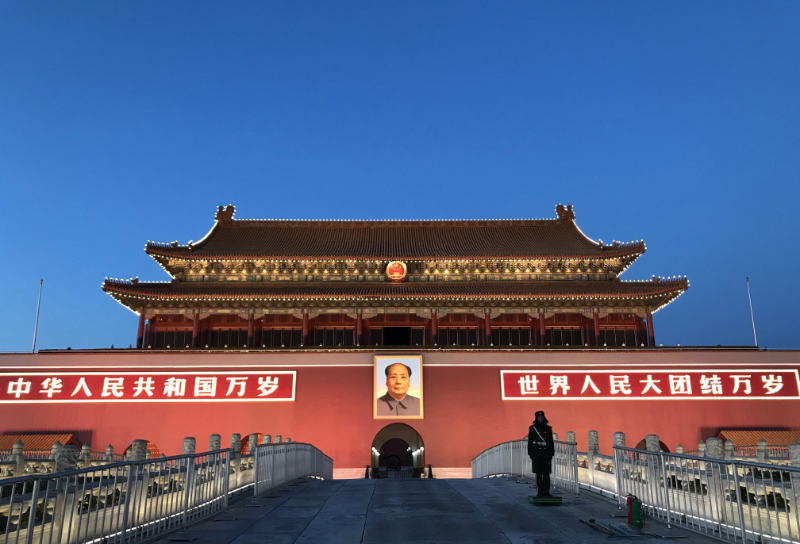
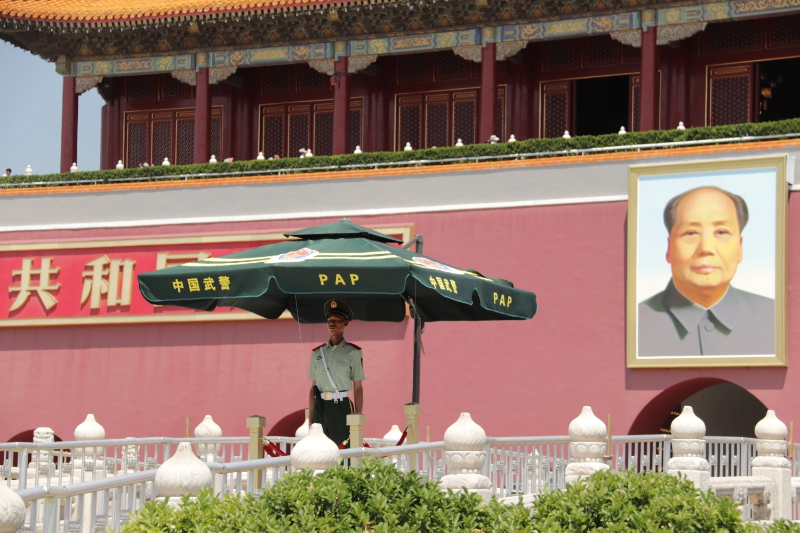
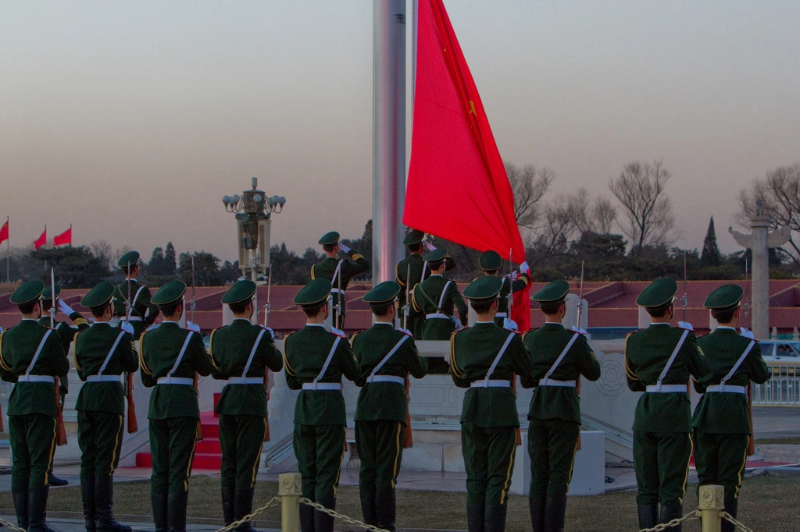
Address: North side of Chang'an Street, Dongcheng District
To enter Tiananmen Square, security checks are required. Be sure to bring your ID card, and do not carry knives or sharp objects.
The Forbidden City
Continuing north brings you to the Forbidden City, the imperial palace of the Ming and Qing dynasties. If you want to explore the Palace Museum thoroughly, plan for a full day.
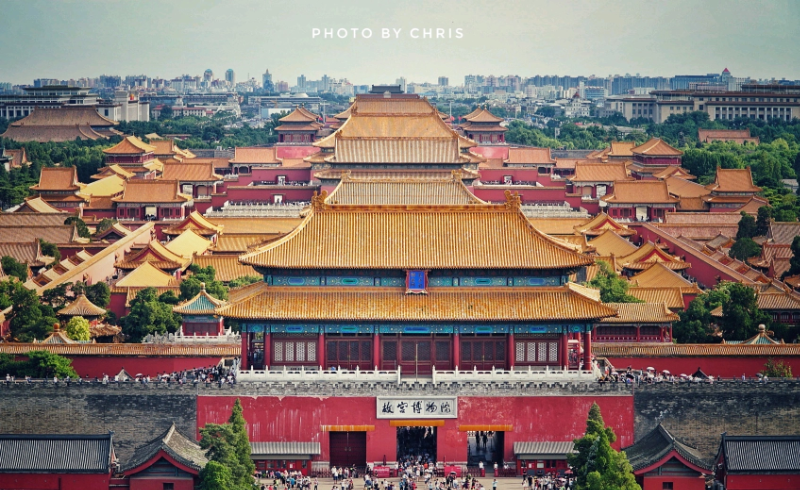
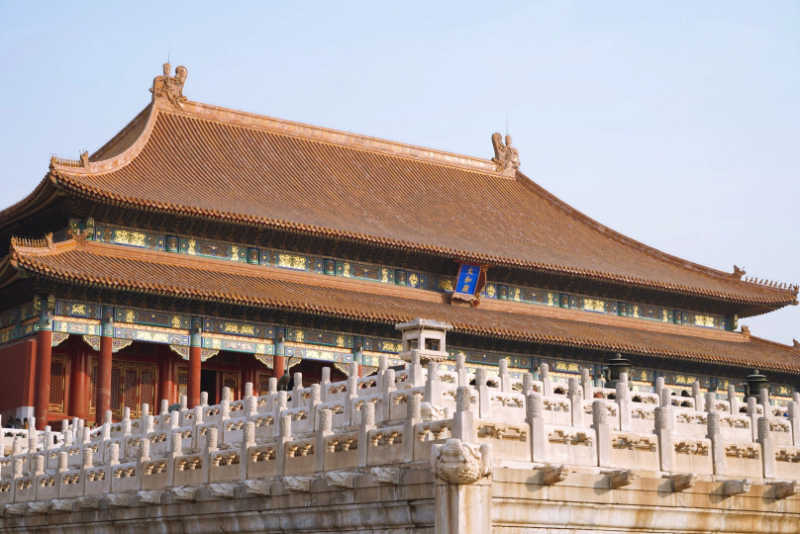
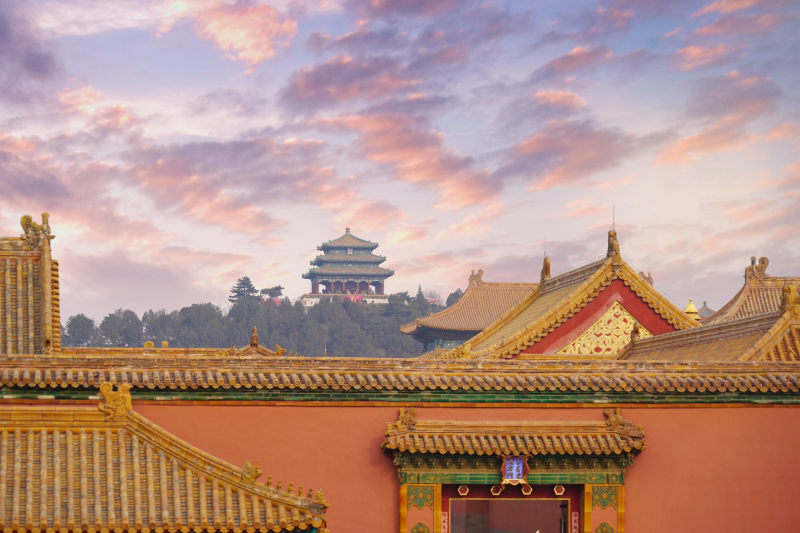
To keep your walking flow, take Nanchizi Street on the east side of the Forbidden City. You can follow the palace walls and moat to the corner tower, passing Pudu Temple and Four Seasons Minfu along the way. The riverside willows make this a pleasant afternoon stroll.
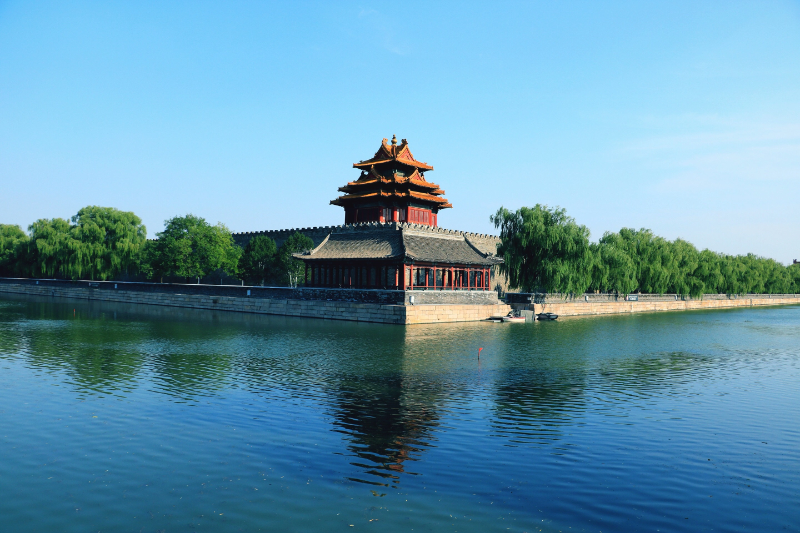
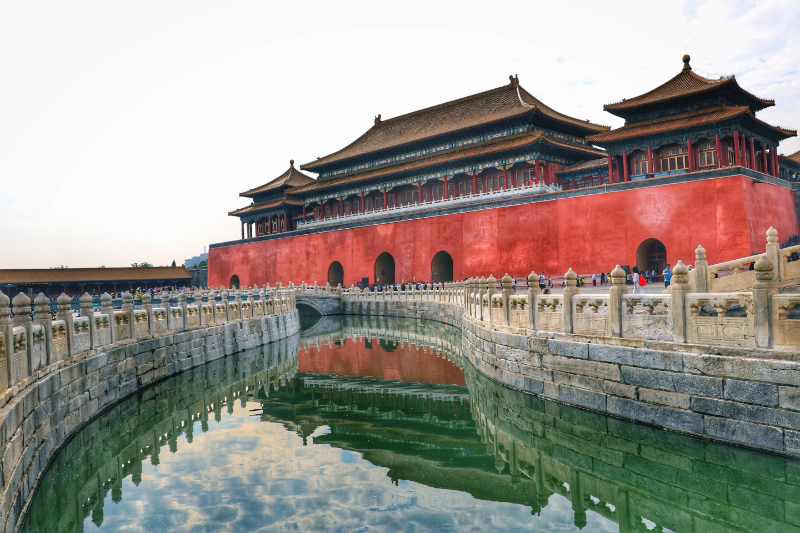
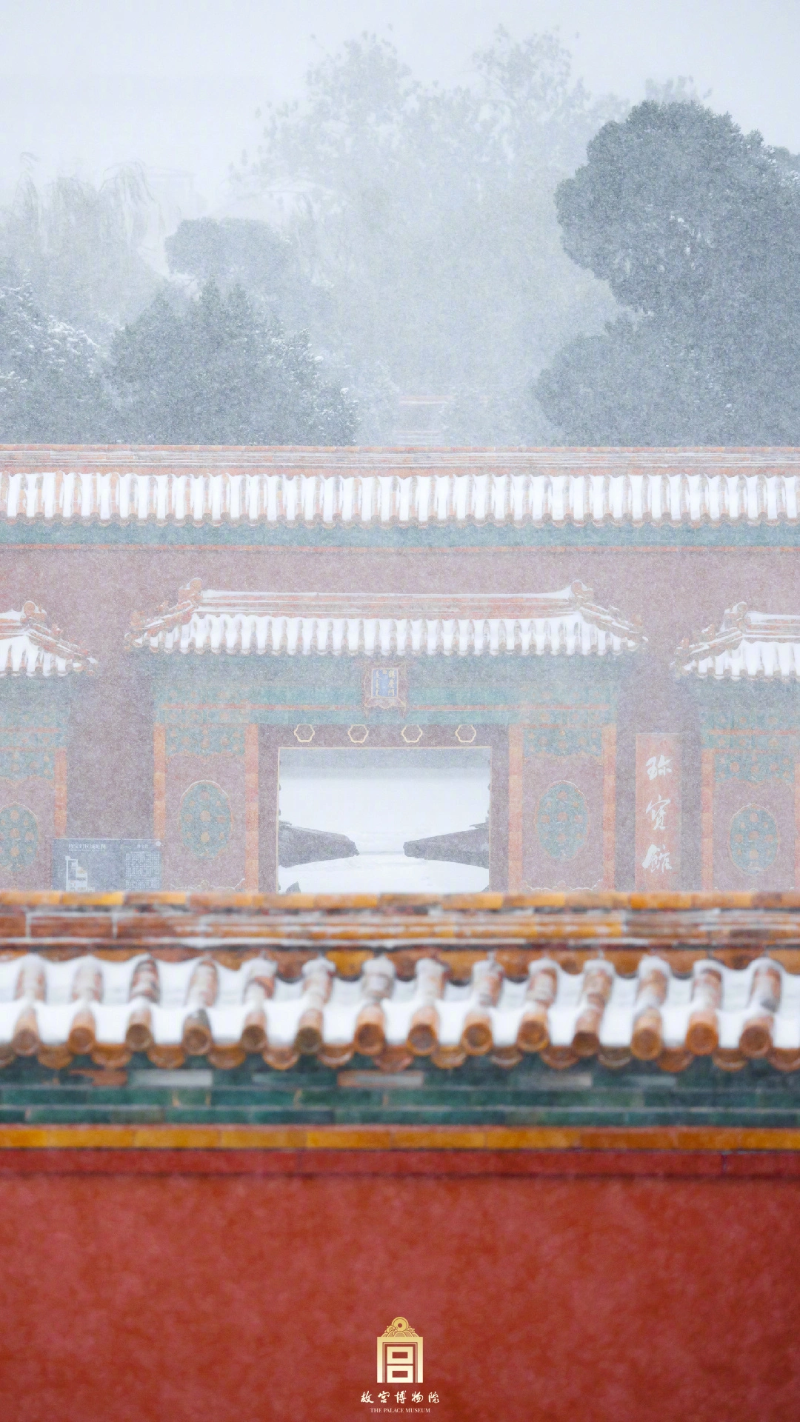
The Forbidden City in winter can be especially striking—many feel it looks most “forbidden” after a snowfall.
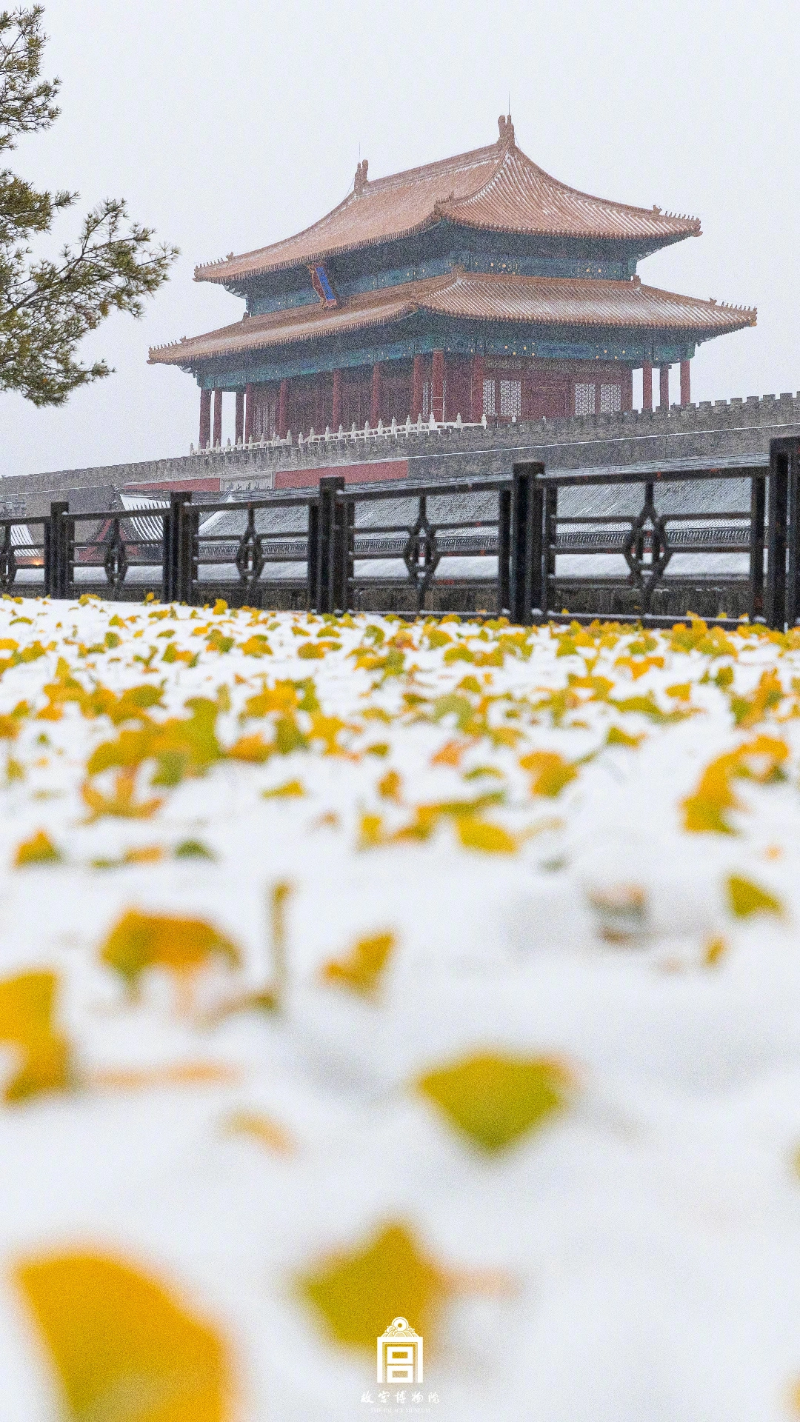
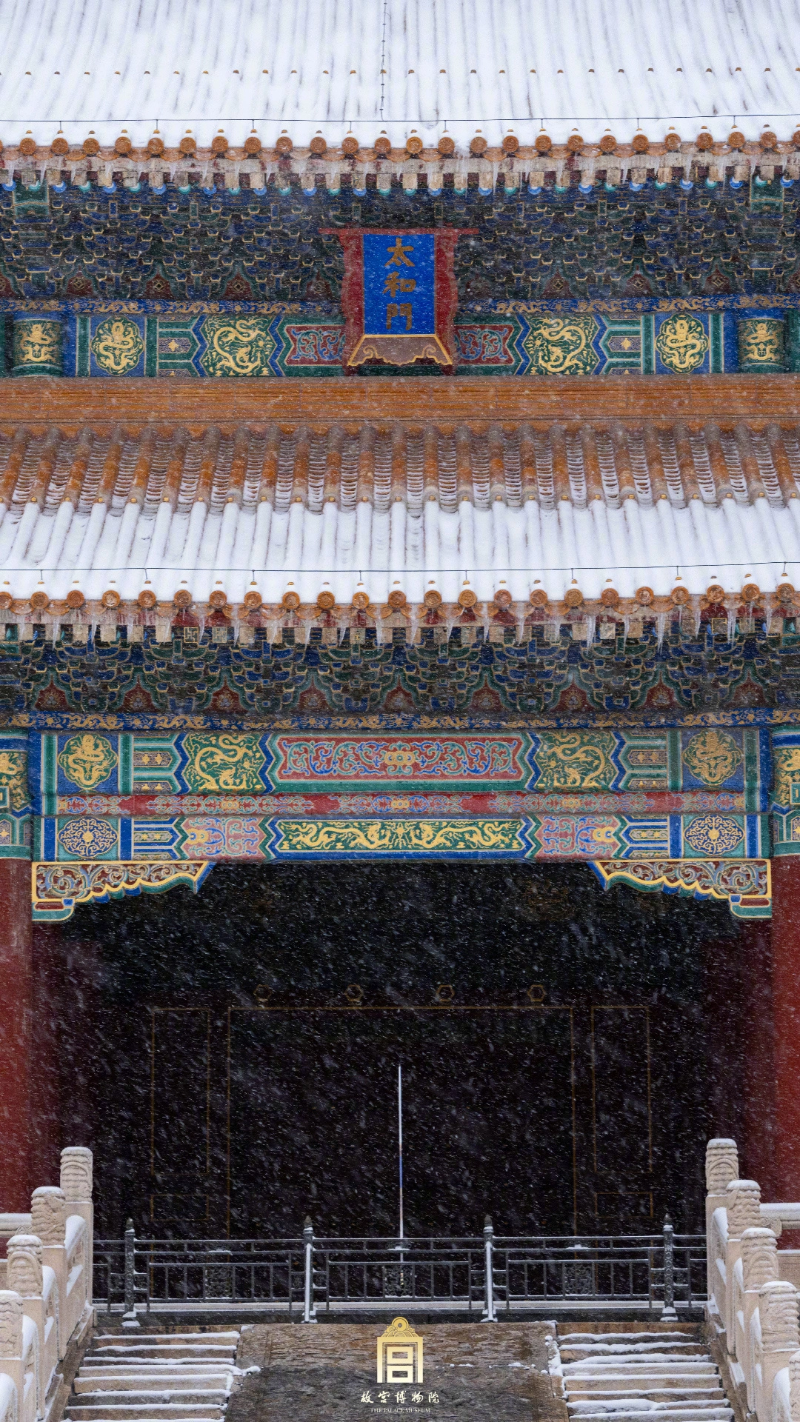
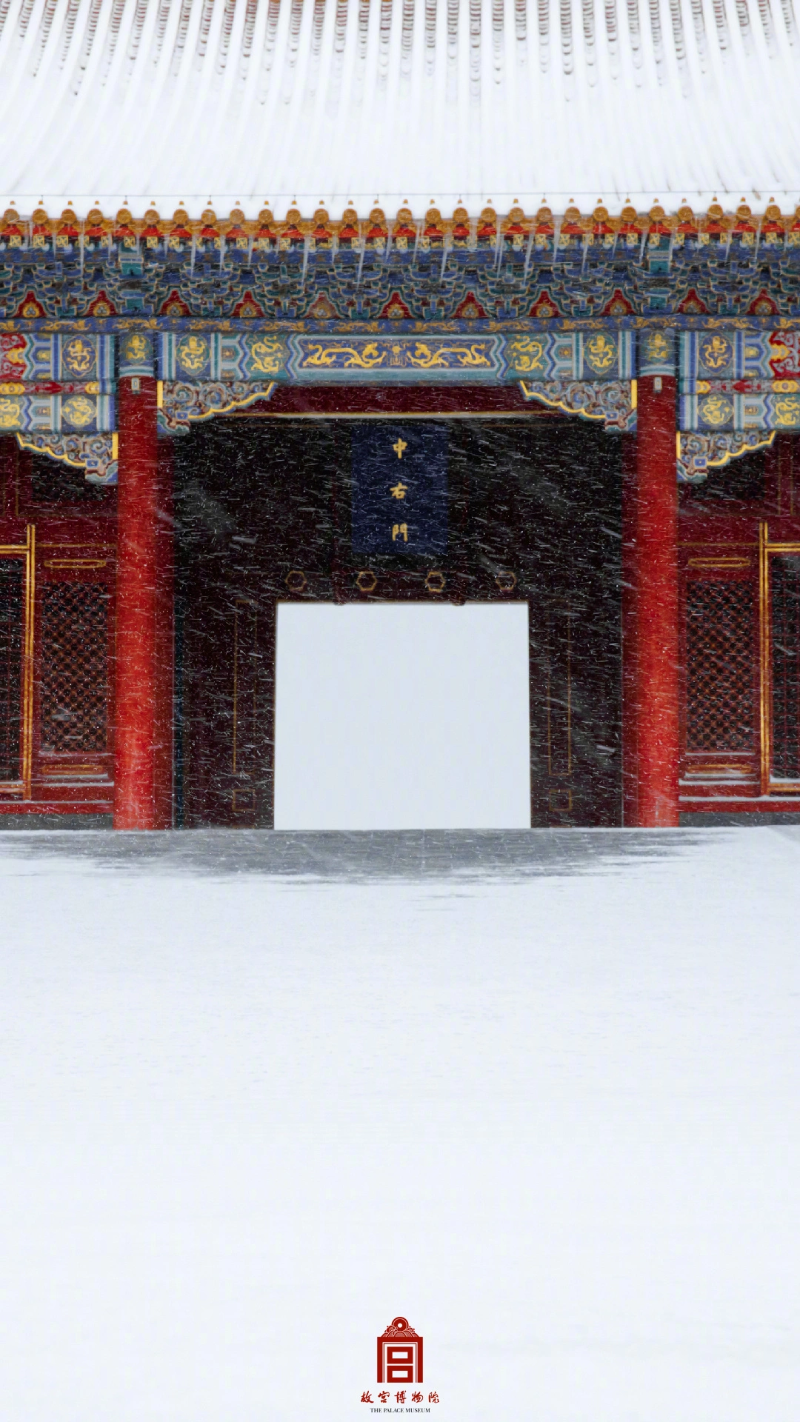
Address: No. 4, Jingshan Front Street, Dongcheng District
Opening Hours:
Low Season (November ~ March) 8:30 AM ~ 4:30 PM
Peak Season (April ~ October) 8:30 AM ~ 5:00 PM
Ticket Prices:
Main Gate: 60 RMB/person (Peak Season), 40 RMB/person (Low Season)
Treasure Gallery/Clock Gallery: 10 RMB/person
Advance reservation is required via the official WeChat account "Wei Gugong" or the official website of the Palace Museum.
Jingshan Park
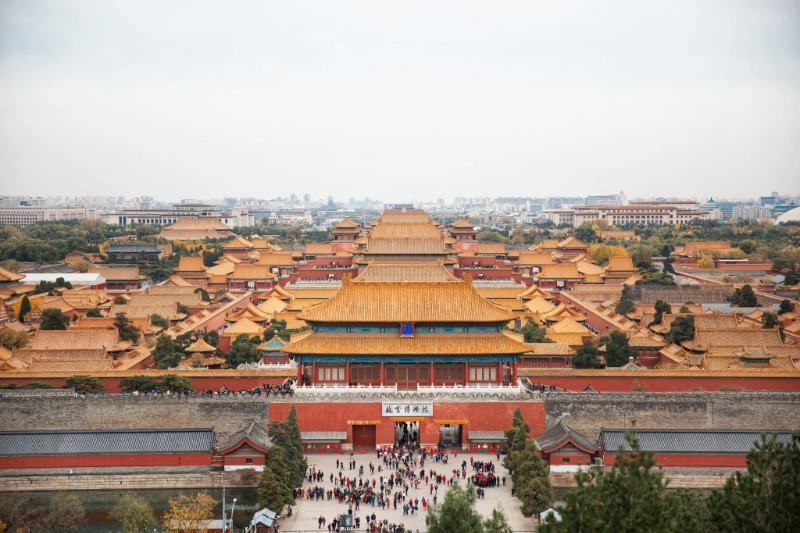
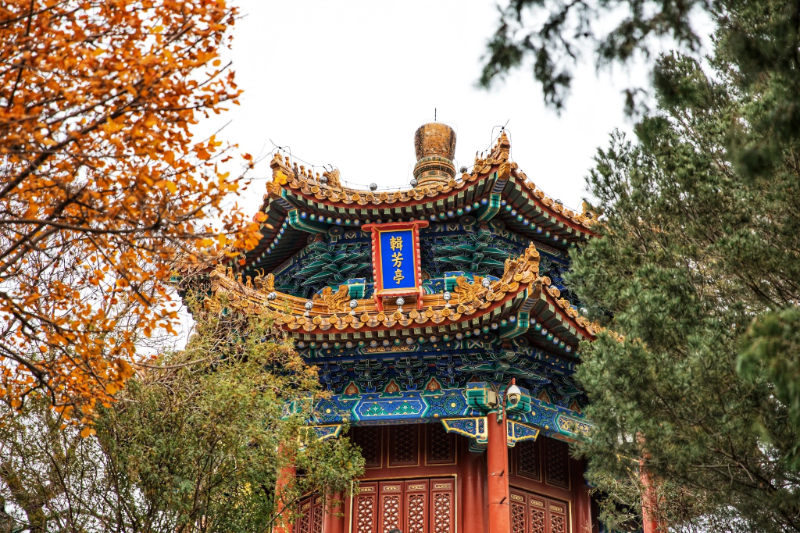
Jingshan Park sits directly across from the Forbidden City’s corner tower. Once a royal garden, it’s now one of Beijing’s best sunset viewpoints. Climb to Wanchun Pavilion for a full view over the palace; on clear days, modern skyscrapers rise behind the ancient roofs, creating a layered cityscape.
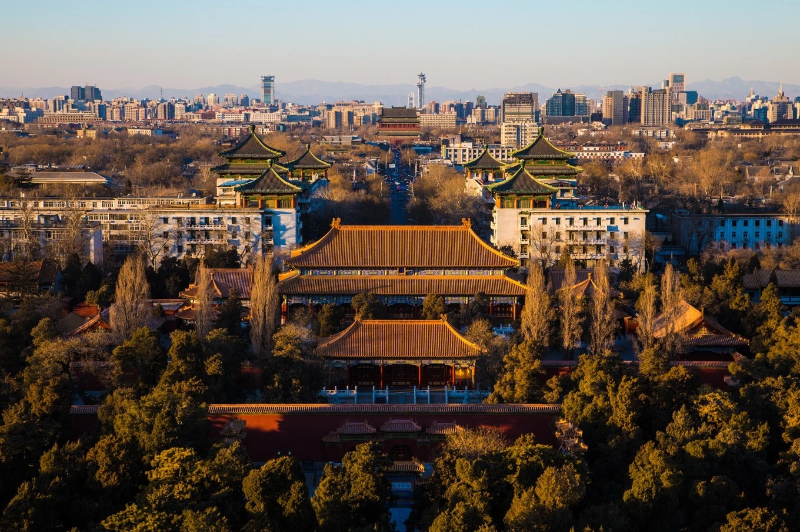
Address: 44 Jingshan West Street, Xicheng District
Opening Hours: 6:00 AM - 8:30 PM
Admission Fee: 2 yuan
Bell and Drum Tower
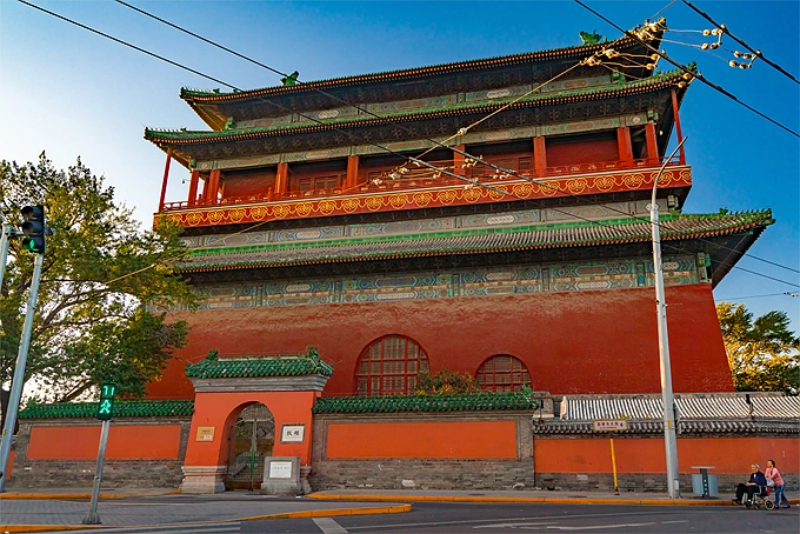
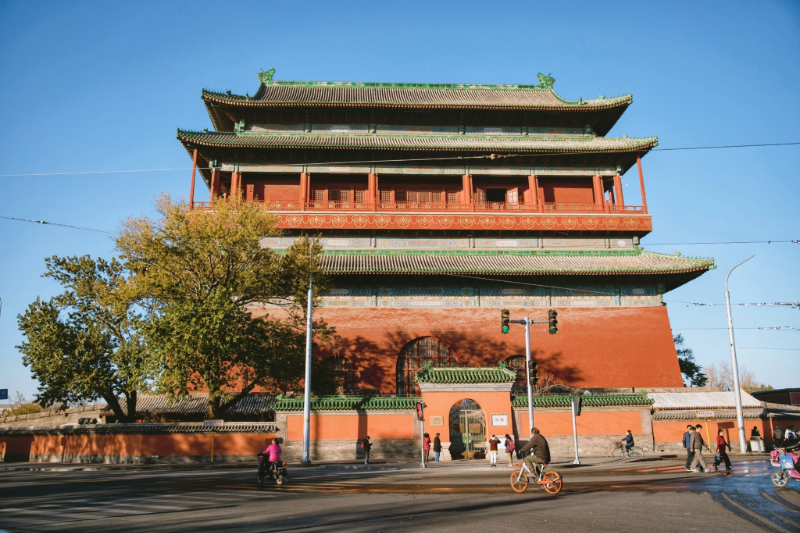
The central axis ends at the Bell and Drum Towers Square, once the city’s official timekeeping center under the Yuan, Ming, and Qing. From the Drum Tower you can look toward Wanchun Pavilion in Jingshan Park. Inside is a restored night-watch drum that once marked time. The brick Bell Tower to the north is currently closed to visitors. The surrounding hutongs are perfect for a slow post-dinner walk, with stone alleys that still echo Beijing’s past.
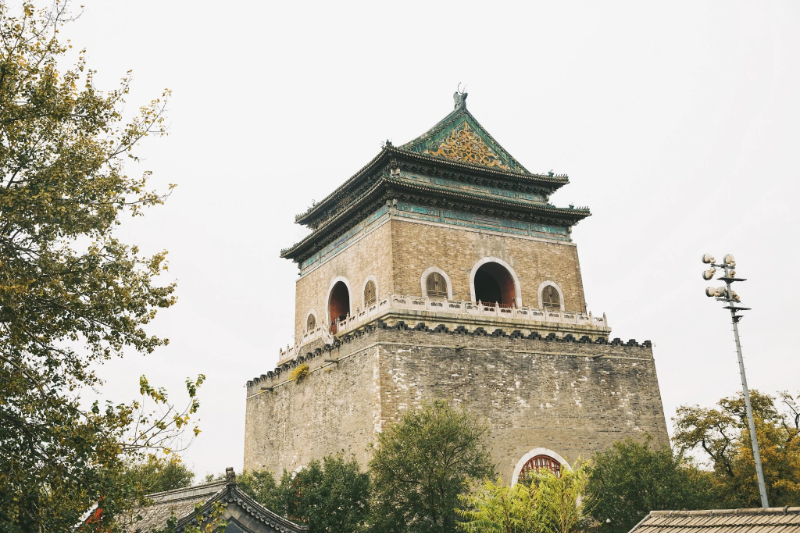
Address: Bell and Drum Tower Bay, Dongcheng District
Drum Tower Opening Hours:
April ~ December: 10:30 AM ~ 5:00 PM
January ~ March: 1:30 PM ~ 5:00 PM
Admission Fee: 20 RMB/person
The Unique Way to Explore the Central Axis
Cycling along Chang’an Avenue is iconic, but riding the central axis is another distinctive way to experience this World Heritage landscape. It blends old Beijing traditions, modern city life, and the deep history embedded in the axis. Moving north to south on two wheels gives you a full, continuous view of the city’s backbone.