
During the Qing Dynasty, the Haidian area in Beijing’s western suburbs became home to the Four Great Imperial Gardens of Beijing. Of these, the Summer Palace, the Old Summer Palace (Yuanmingyuan), and Jingyi Garden (now part of Fragrant Hills Park) remain visitable today; Changchun Garden survives mainly in fragments and historical references.
The Summer Palace | From Royal Private Garden to People's Park
The Summer Palace sits in Beijing’s western suburbs and served as a royal retreat and imperial garden in the Qing Dynasty. A well-known story claims Empress Dowager Cixi diverted naval funds to restore it. Historically, the site began as the Garden of Clear Ripples, built under Emperor Qianlong. He drew inspiration from Hangzhou’s West Lake and Jiangnan garden design, reshaping this area into a vast landscape garden centered on lake-and-hill scenery. Spring is a particularly good time to visit, when flowers bloom across the grounds.
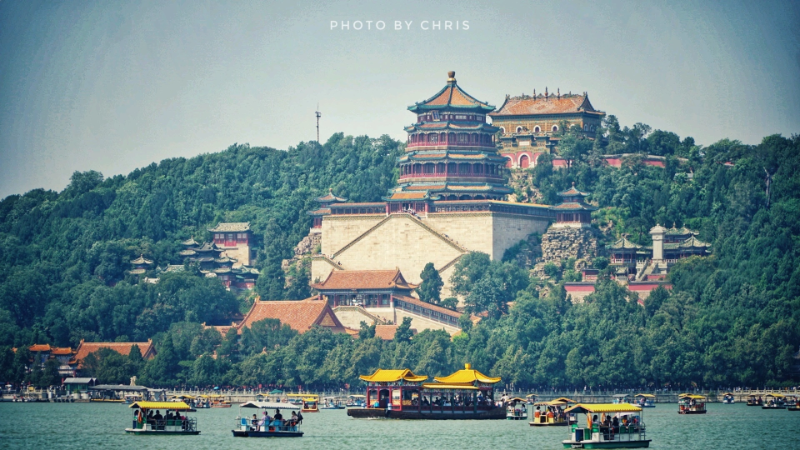
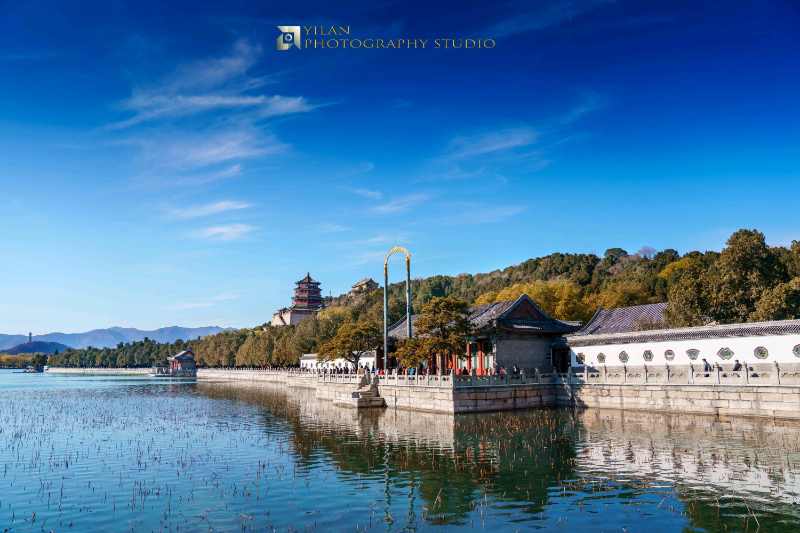
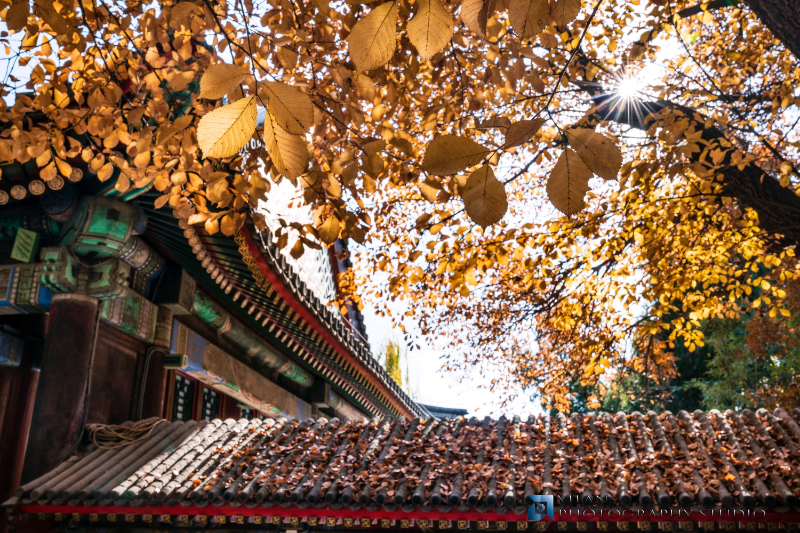
In 1860, the Qingyi Garden was burned by the Anglo-French allied forces. It was later rebuilt during the Guangxu reign and renamed the Summer Palace, again serving as a summer retreat. In 1900, it was damaged once more during the invasion of the Eight-Nation Alliance. By 1914, during the Republican era, the site opened to the public, turning a former imperial garden into a shared city landmark.
The park is often understood in five parts: the Palace Area, Kunming Lake, the Front Hill of Longevity Hill, the Back Hill and Back Lake, and the Long Corridor.
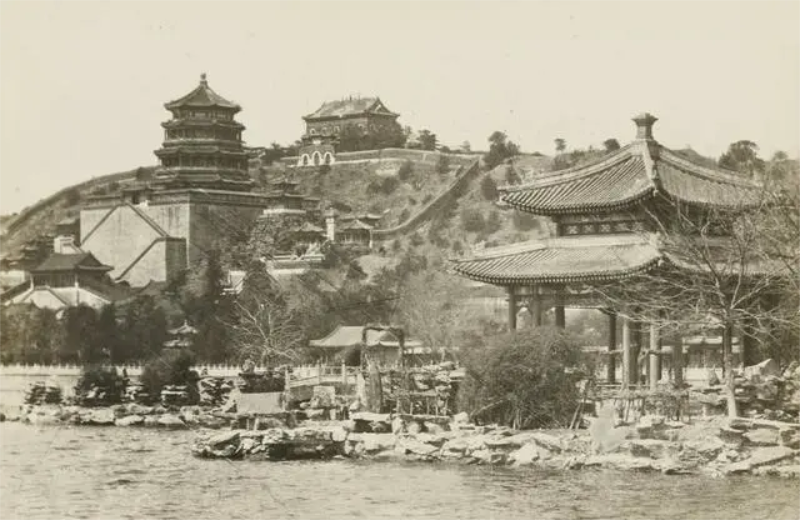
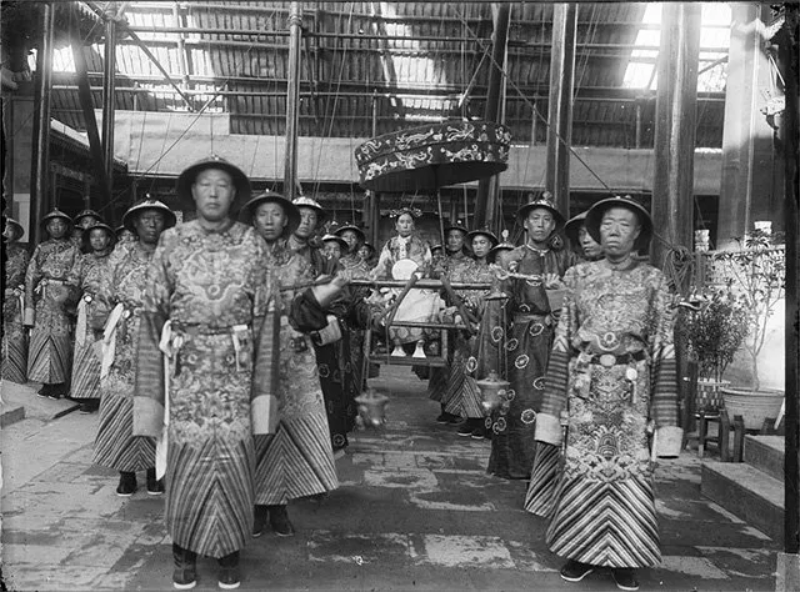
Palace Area
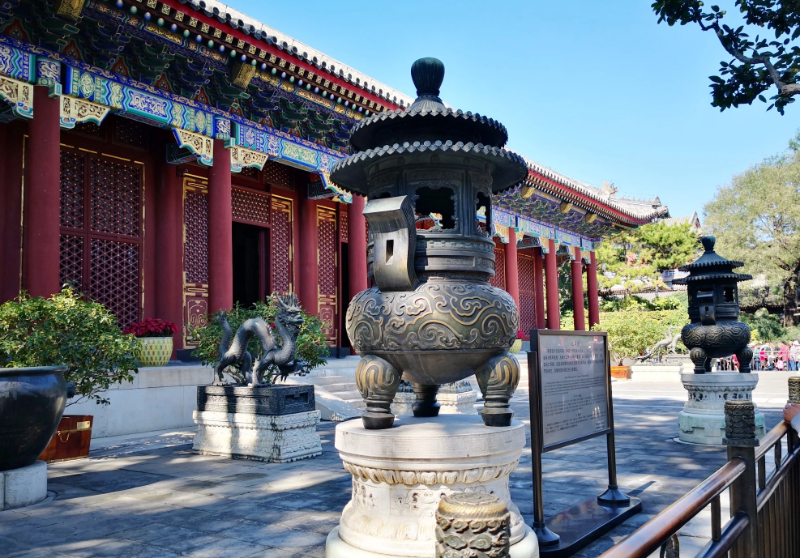
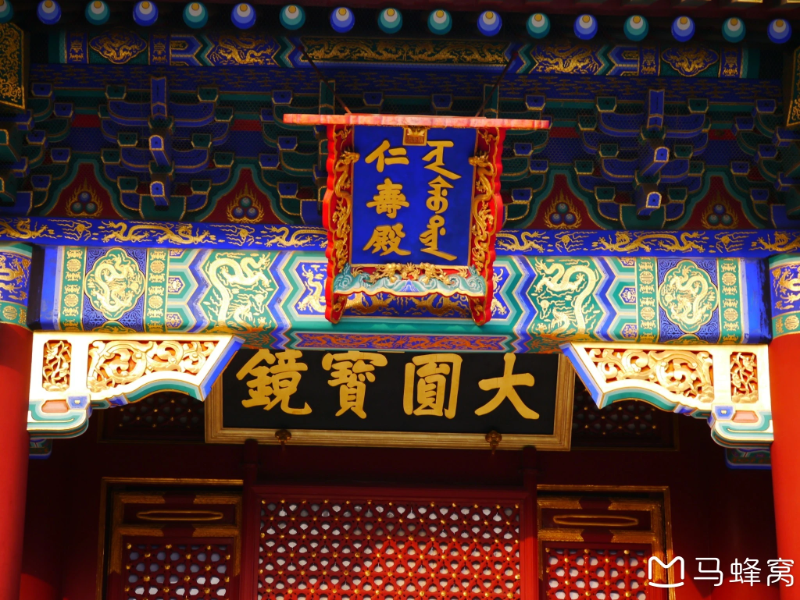
Centered on the Hall of Benevolence and Longevity, this court area was used by Empress Dowager Cixi and Emperor Guangxu to hold audiences and receive guests. Behind it are three major residential compounds: the Hall of Joyful Longevity, the Hall of Jade Ripples, and the Hall of Literary Profundity, associated with Cixi, Guangxu, and members of the imperial household.
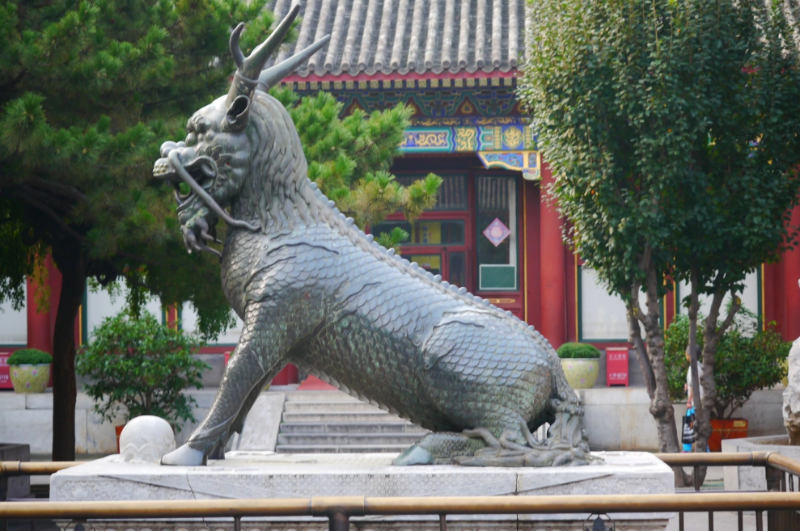
Kunming Lake
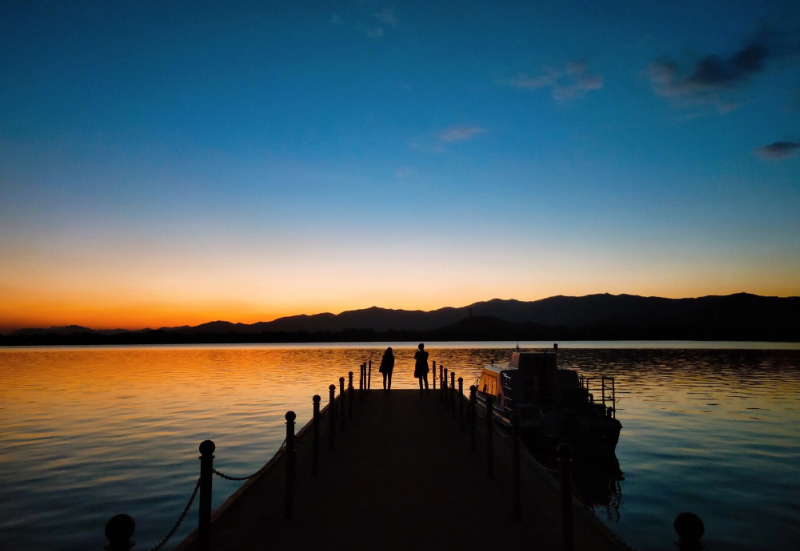
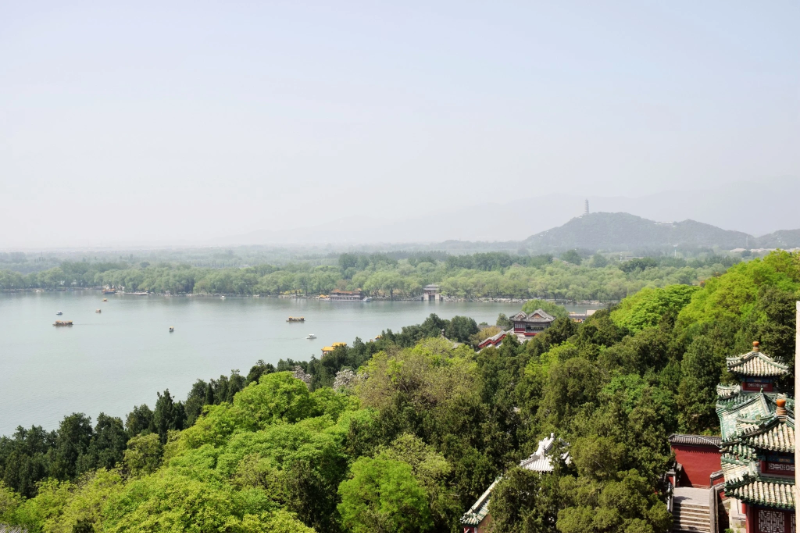
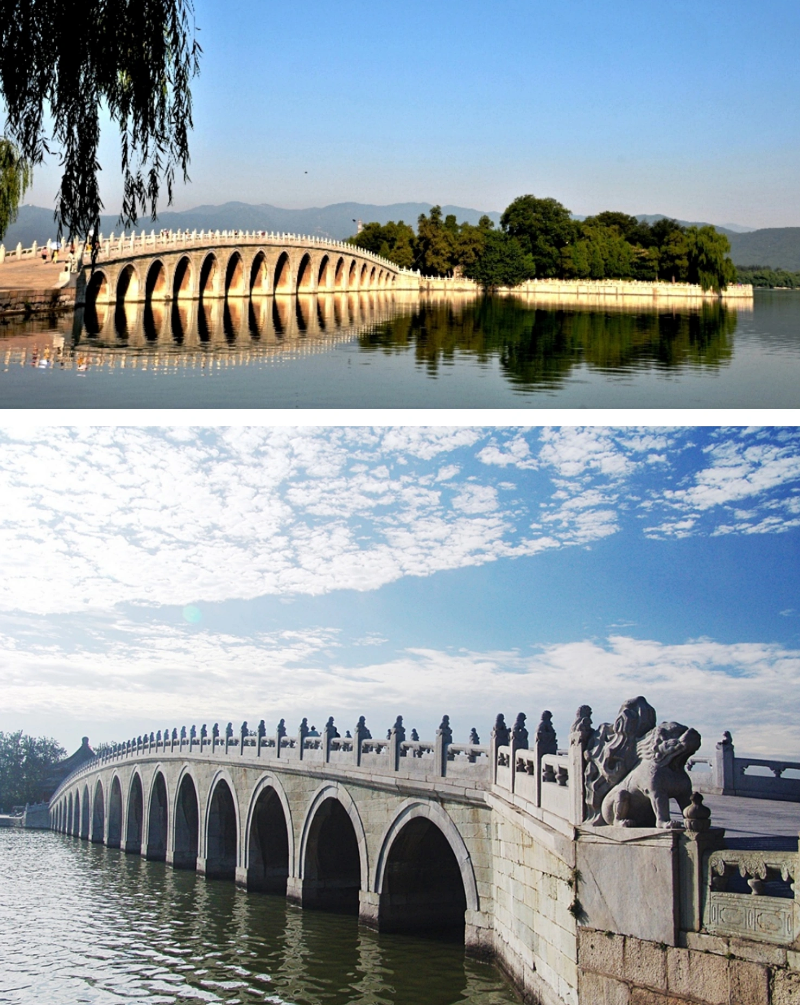
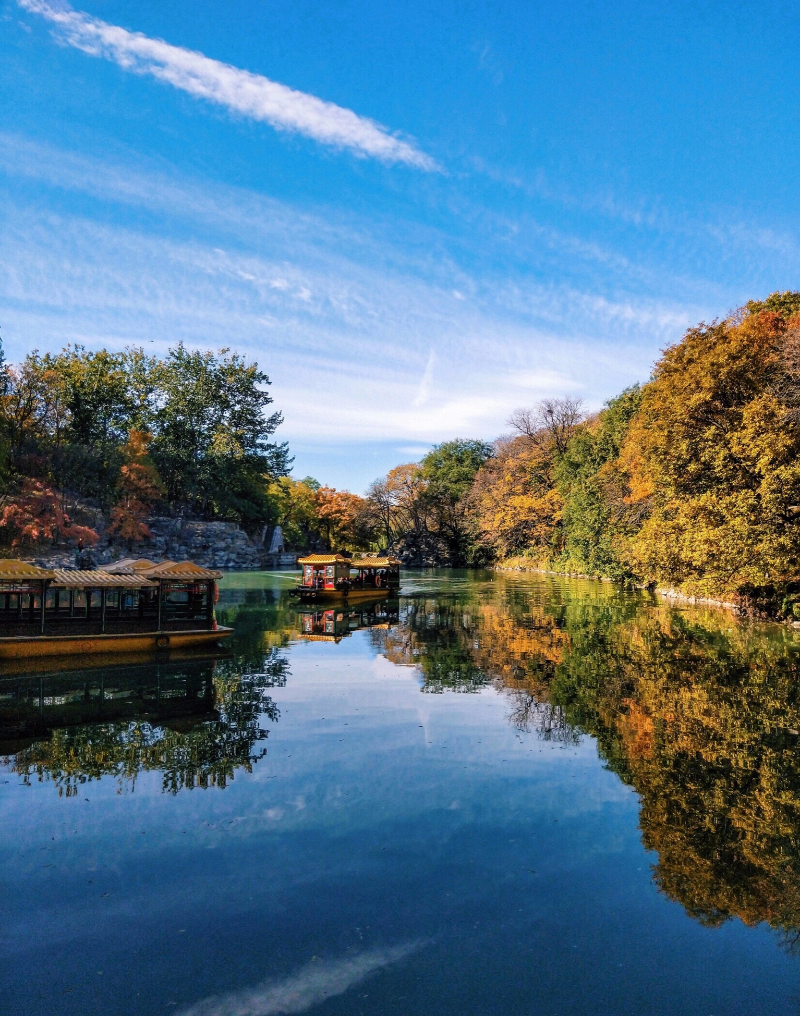
Kunming Lake takes up roughly three quarters of the Summer Palace, and a full circuit on foot can easily take two hours or more. The West Causeway divides the lake into three sections, each with a central island. The best-known is South Lake Island, linked to the shore by the famous Seventeen-Arch Bridge.
The Front Hill Area of Longevity Hill
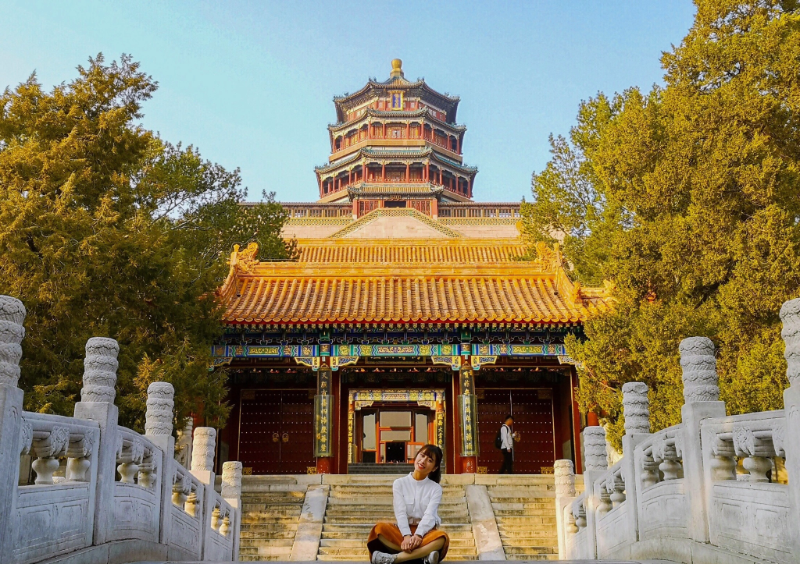
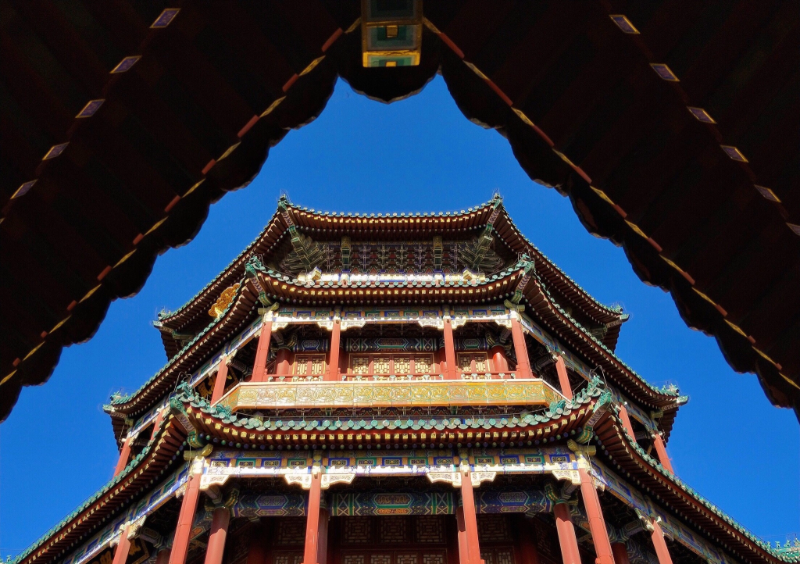
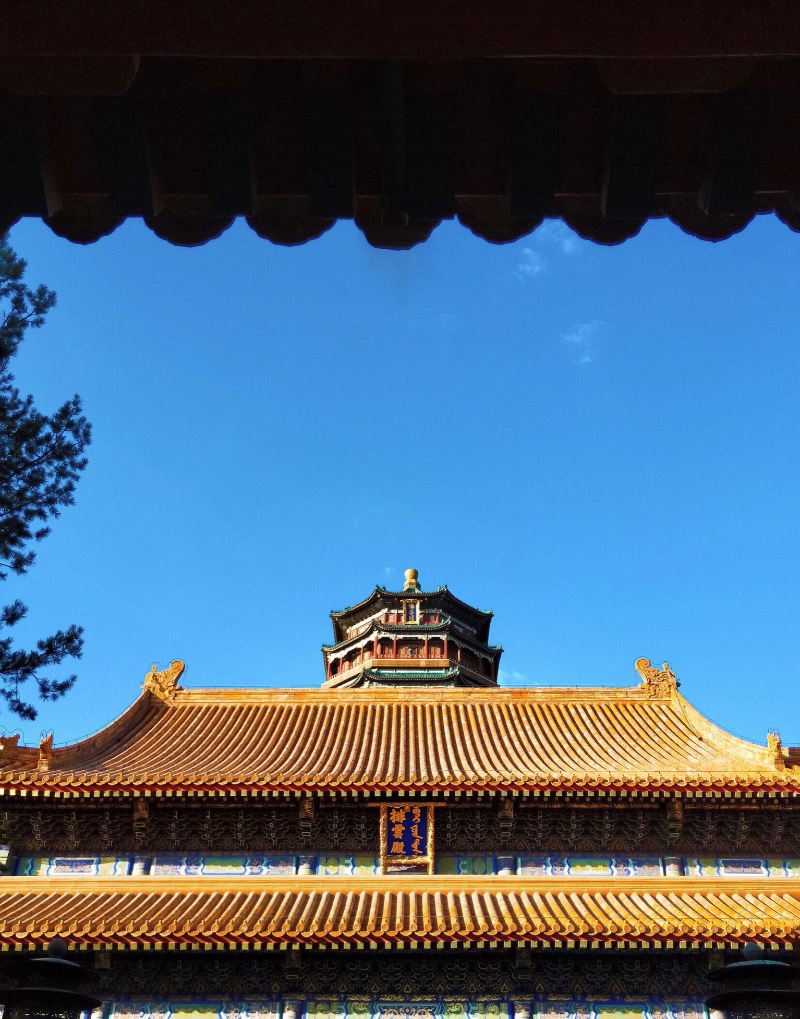
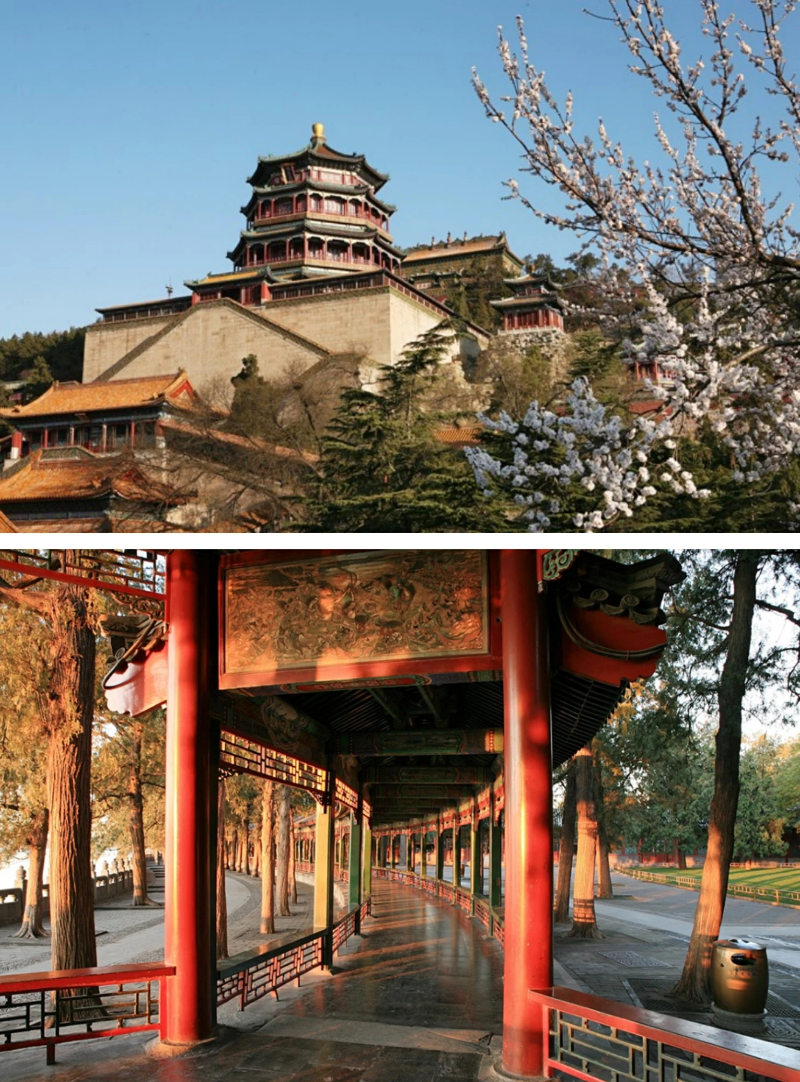
The Front Hill is the densest sightseeing zone in the park. Starting at the “Cloud-Dispelling Jade Universe” archway at the base of Longevity Hill, you pass Paiyun Gate, the Second Palace Gate, Paiyun Hall, Dehui Hall, and the Tower of Buddhist Incense, continuing up to the Sea of Wisdom at the summit. This rising central line neatly layers gardens, temples, and palace structures into one sequence.
Rear Mountain and Rear Lake Area
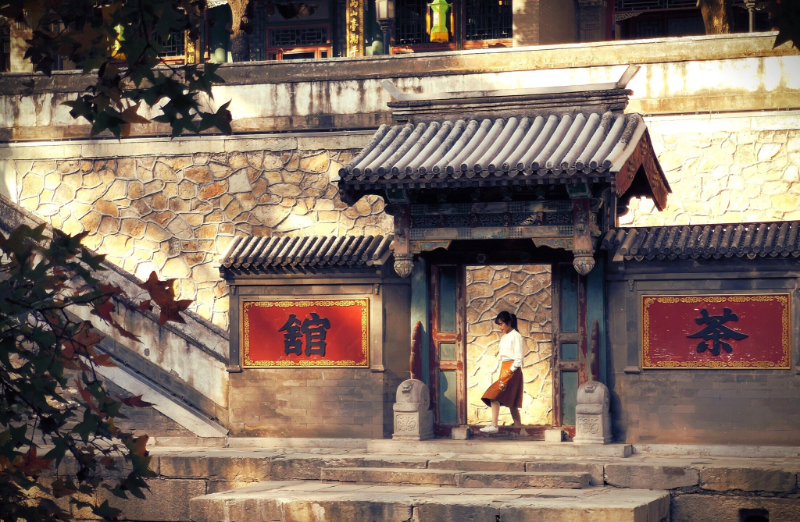
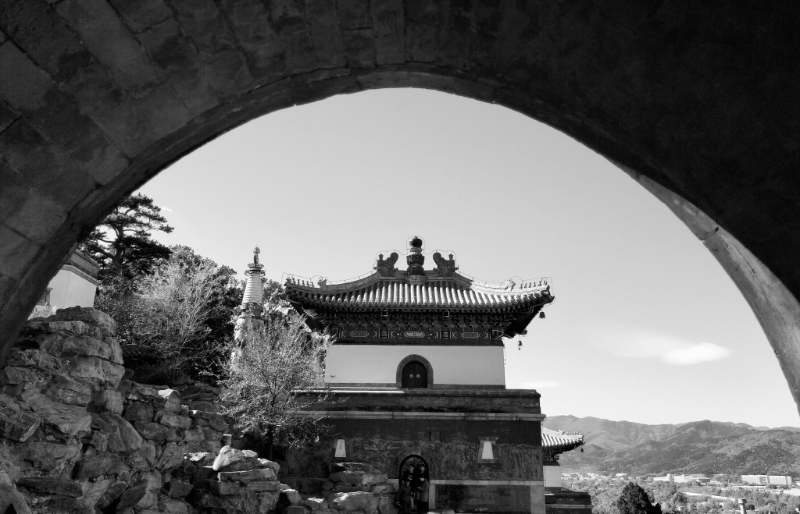
The back slope and back lake of Longevity Hill feel quieter and more secluded. Here you’ll find Suzhou Street, a Jiangnan-style waterside market built for imperial strolling and shopping. Nearby is the Garden of Harmonious Interests, modeled after southern gardens and often described as a classic “garden within a garden.”
The Long Corridor
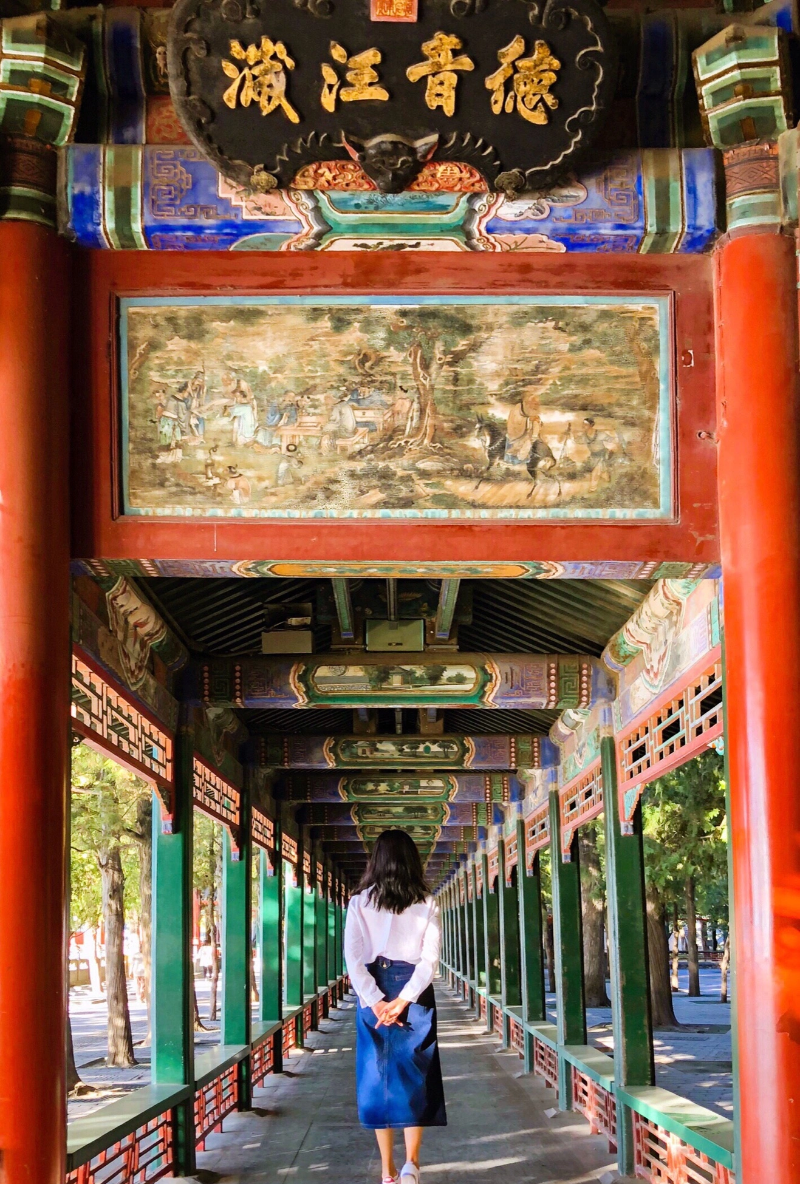
The Long Corridor in front of Longevity Hill is the longest covered walkway in a Chinese classical garden. Centered on the Hall of Dispelling Clouds, it extends east and west, linking pavilions, terraces, and towers at the foot of the hill. As you walk, you can admire the painted beams and glimpses of courtyards, with regular views out across Kunming Lake.
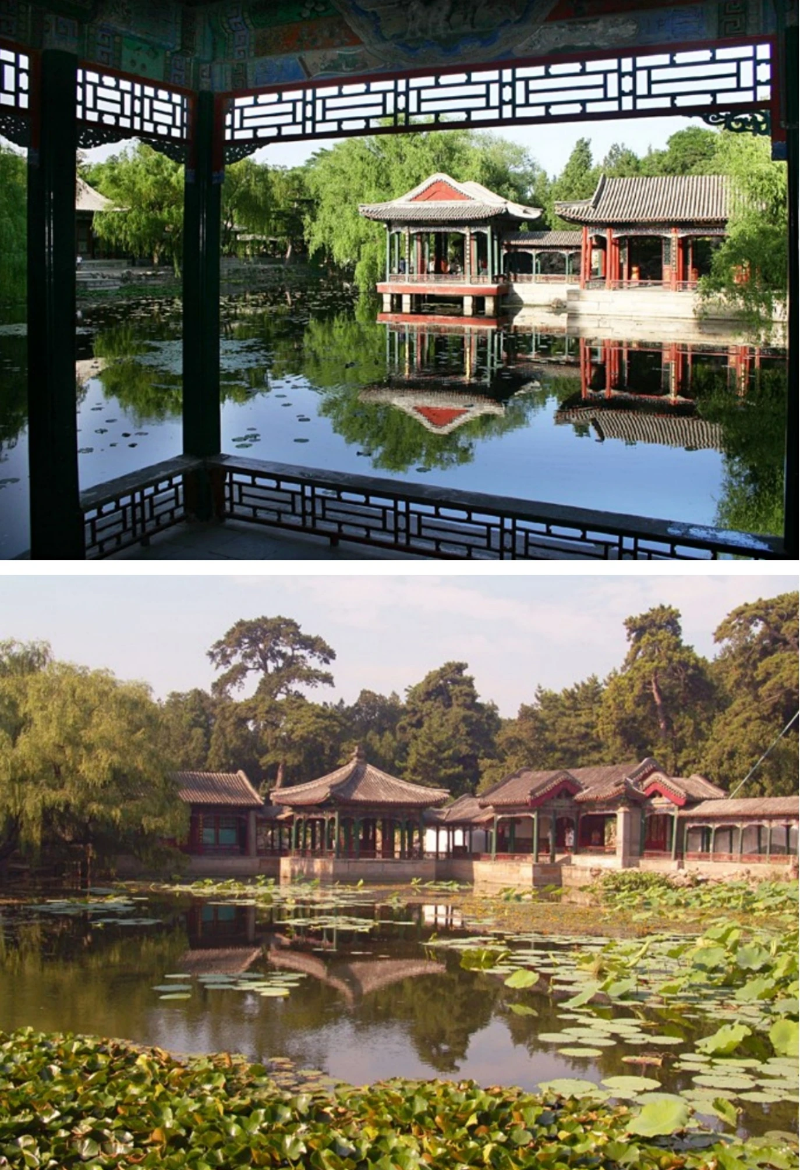
Tour Route
The Summer Palace is large, and a relaxed visit can easily take a full day. If time is limited, focus on the classic highlights.
2-hour route
North Palace Gate → Back Hill and Back Lake Area (Suzhou Street) → Front Hill Area (Four Great Regions → Tower of Buddhist Incense → Cloud Dispelling Hall → Long Corridor) → Imperial Living Area (Leshou Hall → Yulan Hall → Wenchang Garden → Renshou Hall) → East Palace Gate
This is the quickest highlight route, covering several must-see sights with convenient subway access near both the entrance and exit.
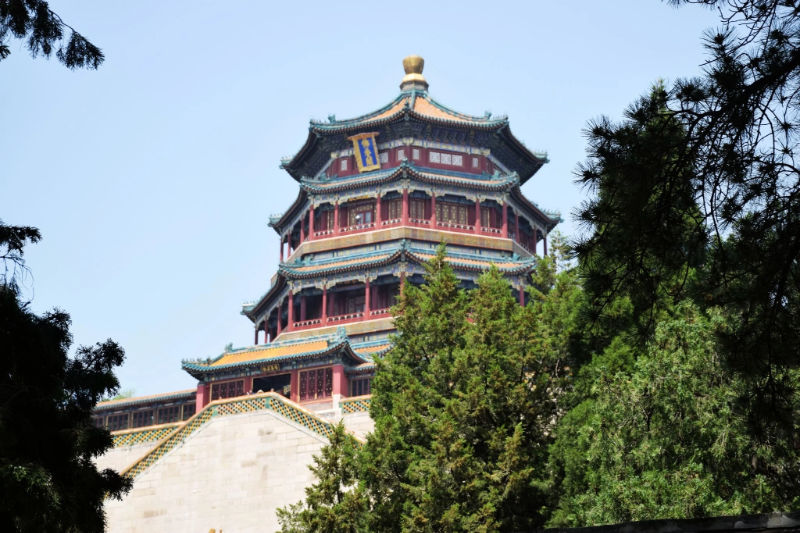
3-hour route
New Palace Gate → Seventeen-Arch Bridge → South Lake Island → Imperial Living Area (Wenchang Pavilion → Hall of Benevolence and Longevity → Garden of Virtue and Harmony → Hall of Jade Ripples → Hall of Literary Profundity → Yongshou Study → Hall of Joyful Longevity) → Long Corridor → Front Hill Area (Paiyun Gate → Marble Boat → Paiyun Hall → Tower of Buddhist Incense → Four Great Regions → Sea of Wisdom) → Back Hill and Back Lake Area (Suzhou Street) → North Palace Gate
Enter via the New Palace Gate, start with the eastern side of Kunming Lake, then work your way through the main attractions on Longevity Hill.
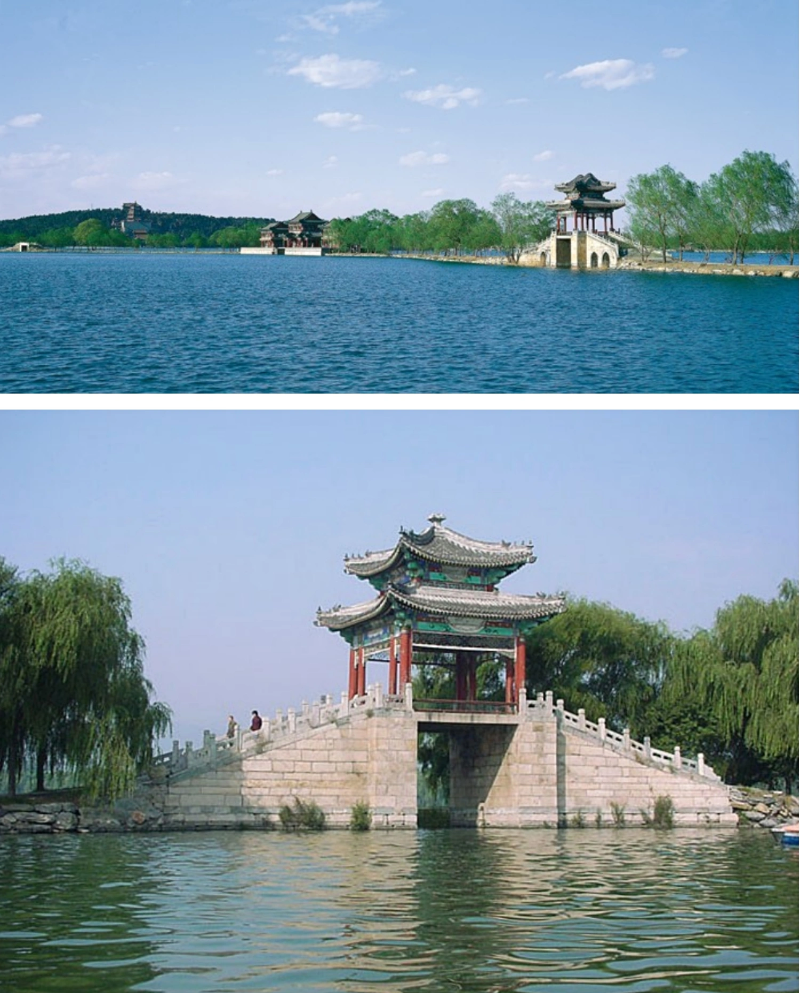
One-Day Tour Itinerary
West Gate of the Summer Palace → Kunming Lake → Farming and Weaving Scenic Area → West Causeway → South Ruyi Gate → Boating on Kunming Lake → Arrive at the Boat House and Disembark → Nine-Turn Bridge → Linhe Hall → Marble Boat → Long Corridor → Front Hill Area (Paiyun Gate → Yuhua Hall → Tower of Buddhist Incense → Revolving Archive → Four Great Regions → Sumeru Spiritual Realm) → Rear Hill Area (Suzhou Street) → Rear Lake Area (Jingfu Pavilion → Garden of Harmonious Interests → Grand Theater) → Imperial Living Area (Dehe Garden → Yulan Hall → Renshou Hall → Wenchang Hall) → East Palace Gate
This route covers nearly all major sights and works best for a slow, day-long visit.
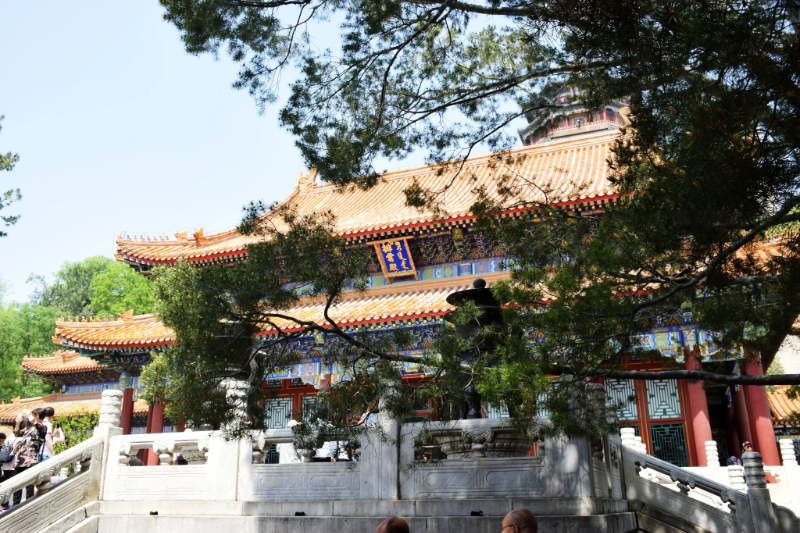
Practical Information
Address: No. 19, Xinjiangongmen Road, Haidian District
Transportation: Take Metro Line 4 to [Beigongmen Station] for the North Palace Gate, or to [Xiyuan Station] for the East Palace Gate
Opening Hours: 6:30-18:00 (April to October) 7:00-17:00 (November to March)
Ticket Price: 30 RMB/person (peak season) 20 RMB/person (off-season)
Reservation Information: Search for "Summer Palace" or the official WeChat account "Changyou Park" to book tickets in advance.
Yuanmingyuan Ruins Park | The “Garden of Gardens”
Heading east from the Summer Palace’s North Palace Gate brings you to the Old Summer Palace (Yuanmingyuan), long praised as the “Garden of Gardens.” It began under Emperor Kangxi, who later bestowed it on his son Yinzhen (the future Yongzheng Emperor) and inscribed the name Yuanmingyuan himself. Under Qianlong, the complex expanded with Changchun Garden and Wanchun Garden, creating the “Three Gardens of Yuanmingyuan.” A Western-style palaces area was also added, one of the earliest large-scale integrations of Western garden art into a Chinese imperial garden.
The site was later burned and heavily damaged during the invasions of 1860 and 1900. In the Republican era, building materials were removed and the landscape suffered further loss. After 1949, the area was protected as a heritage park and gradually shaped into the ruins park visitors see today.
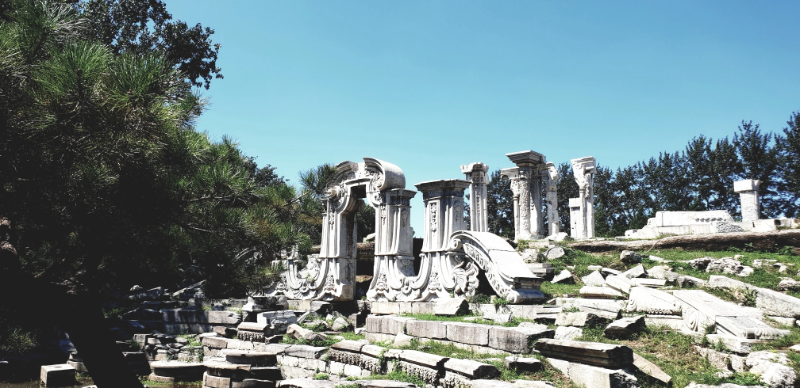
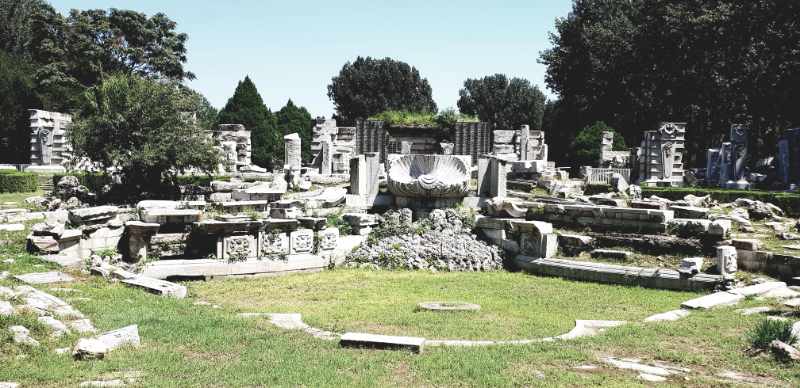
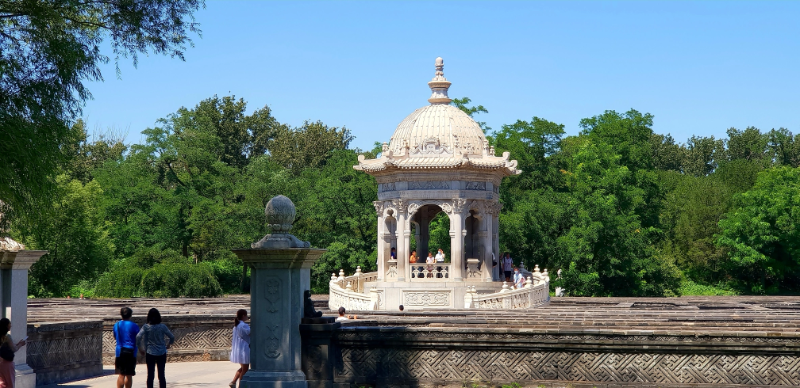
Yuanmingyuan represents a high point of Qing imperial garden design and became famous abroad as well. Today, the ruins park is organized around three gardens: Yuanmingyuan, Changchun Garden, and Qichun Garden. Among the most visited highlights, the best known is the Grand Waterworks ruins in the Western-style palaces area of Changchun Garden.
The Grand Waterworks was once one of the most dramatic fountain complexes in the Western-style palaces area. When it operated, historical accounts describe it as torrent-like. It was destroyed in 1860, and its remaining stonework has become a symbol of Yuanmingyuan’s loss and memory. Other notable stops include the Jiuzhou Qingyan area, Qinzheng Qinxian (where the emperor handled affairs), and Zhengda Guangming (used for major court occasions).
Tour Route
Travel Route (Approximately 2 hours)
South Gate → Qichun Garden and Scenic Spots → Three Gardens Junction (Take the Western Loop Line) → Scenic Spots by Vehicle: Deep in the Cave, Diligent Governance and Close to the Wise, Upright and Bright, Changchun Fairy Hall, Wenyuan Pavilion, etc. → Qian Garden → Second Palace Gate
Walking Route (Approximately 2.5 hours)
Zhengjue Temple (Horse Head Exhibition) → Chunze Zhai → Bridge 101 → Dongtian Shenchu → Qinzheng Qinxian → Jiuzhou Scenic Area → Wanfang Anhe → Yuedi Yunju → Zaoyuan Gate
Practical Information
Address: 28 Qinghua West Road, Haidian District
Transportation: Take Line 4 and get off at [Yuanmingyuan Station]
Opening Hours: 7:00~21:00 (Peak Season), 7:00~17:30 (Off Season)
Ticket Price: 10 RMB
If you want context without heavy planning, consider a guided half-day route that pairs the Summer Palace with Yuanmingyuan and helps you move efficiently between the two.
Fragrant Hills Park | Frosted Leaves Redder Than February Flowers
Jingyi Garden—one of the Four Great Gardens of the Capital—is located in the Fragrant Hills in Beijing’s northwest. Built along the mountain range as an imperial garden, it now forms part of Fragrant Hills Park alongside temples and other scenic areas. Traditionally it’s described in three parts: the Inner Enclosure, the Outer Enclosure, and a Separate Enclosure. The Inner Enclosure includes the palace area and major temples such as Fragrant Hills Temple and Hongguang Temple. The Outer Enclosure covers higher mountain terrain and is especially popular for autumn red-leaf hikes. The Separate Enclosure includes the lake area sometimes referred to as Eye Lake.
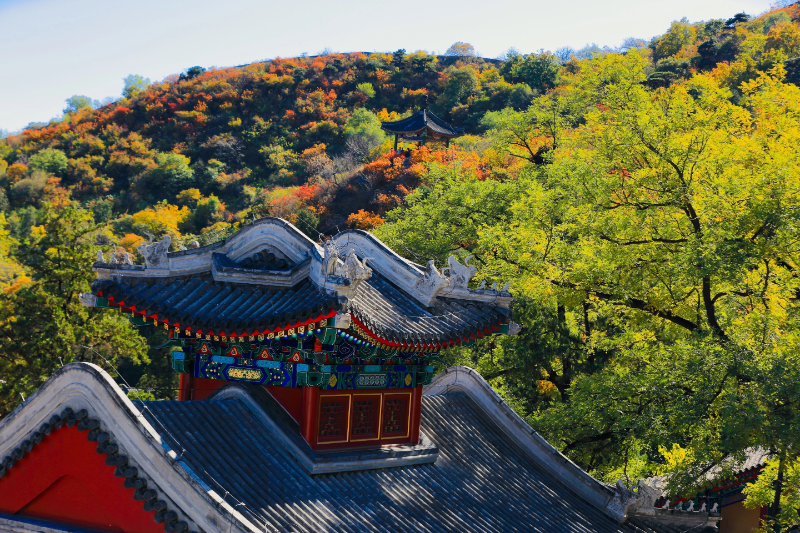
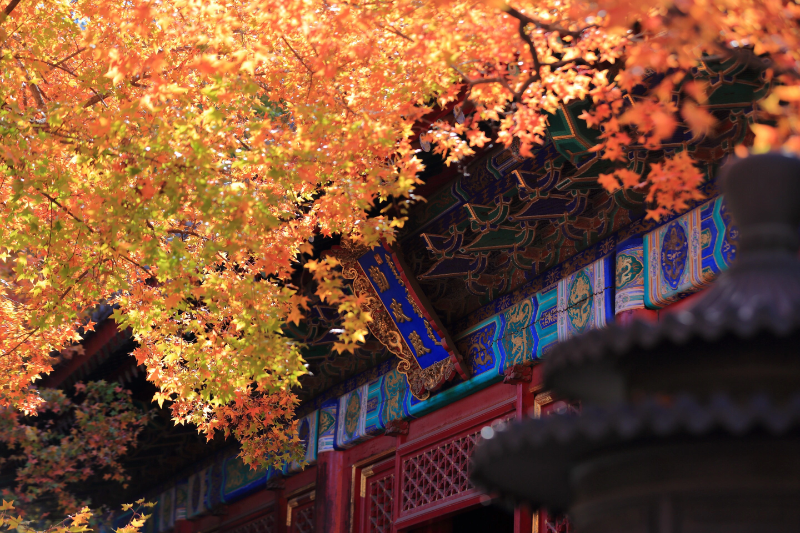
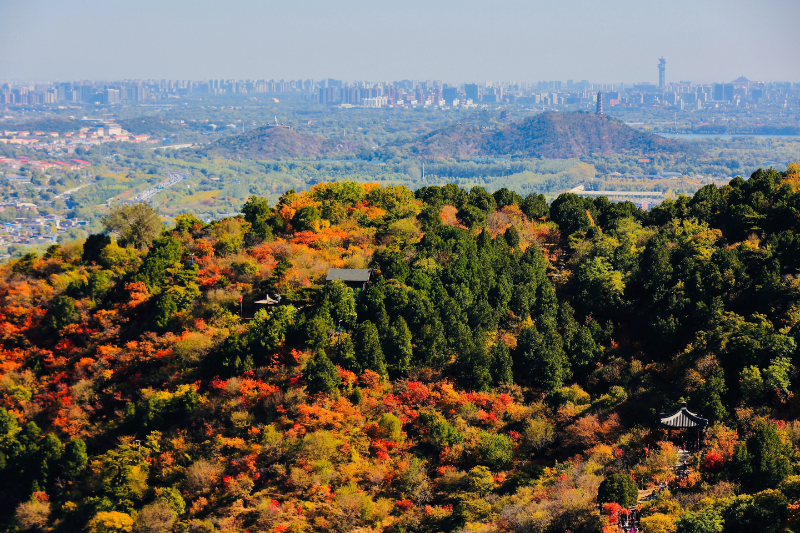
The main peak of Xiangshan, Xianglu Peak, is named for two summit rocks that resemble incense burners. It’s also nicknamed “Ghost’s Despair” because the climb can be steep. Today, many visitors take the cable car and enjoy panoramic views from the Chongyang Pavilion near the top. Biyun Temple, built into the mountainside, is another highlight, with layered courtyards that follow the terrain and create a grand, vertical composition.
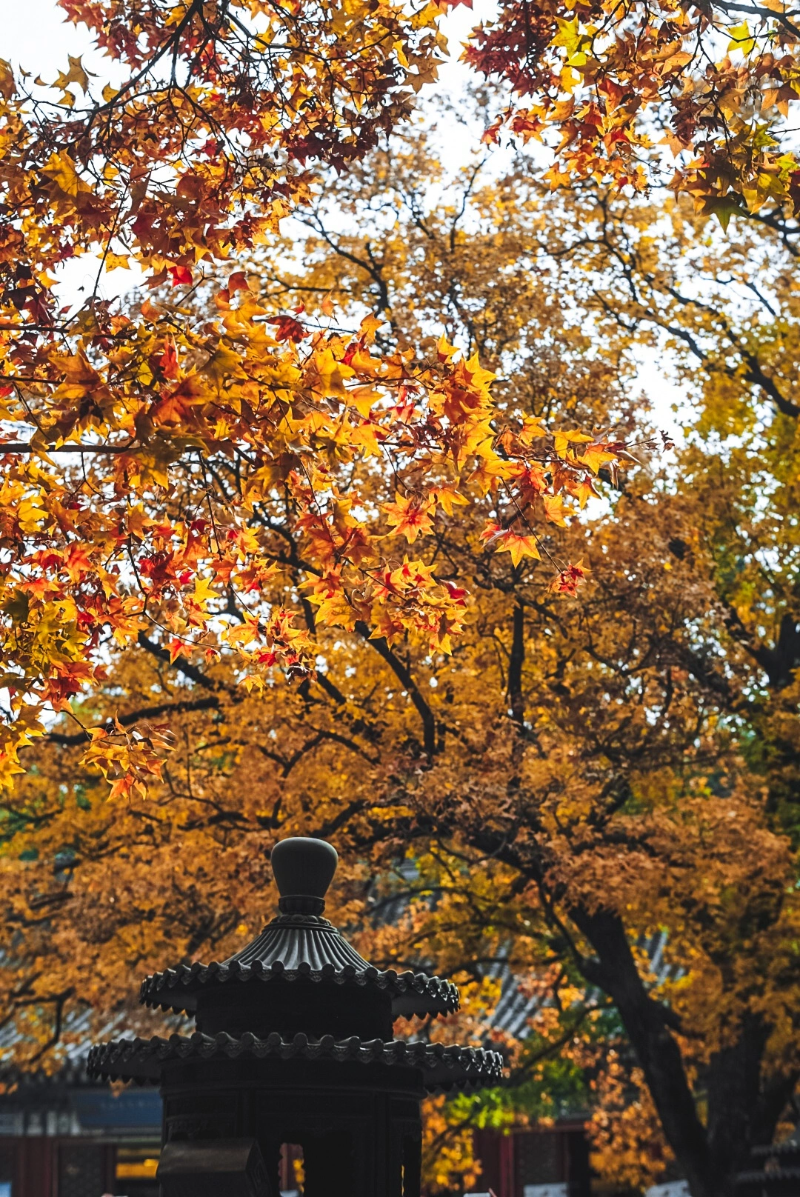
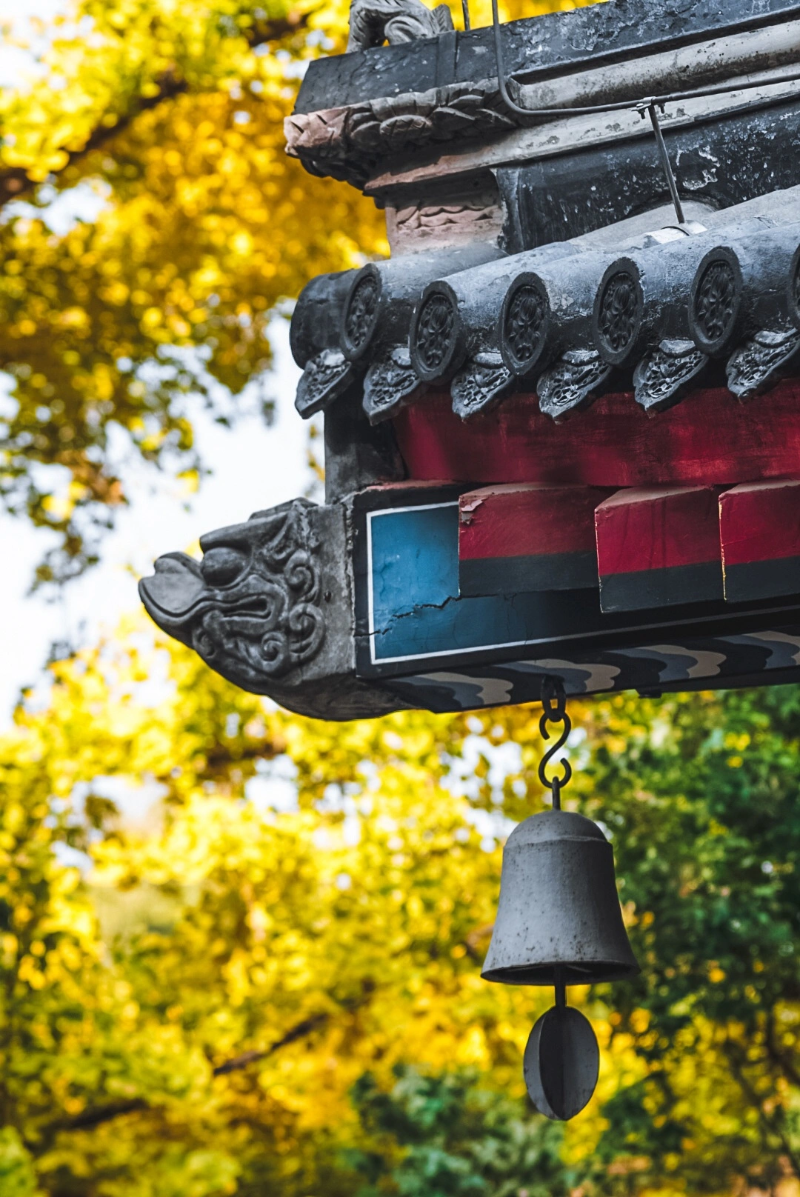
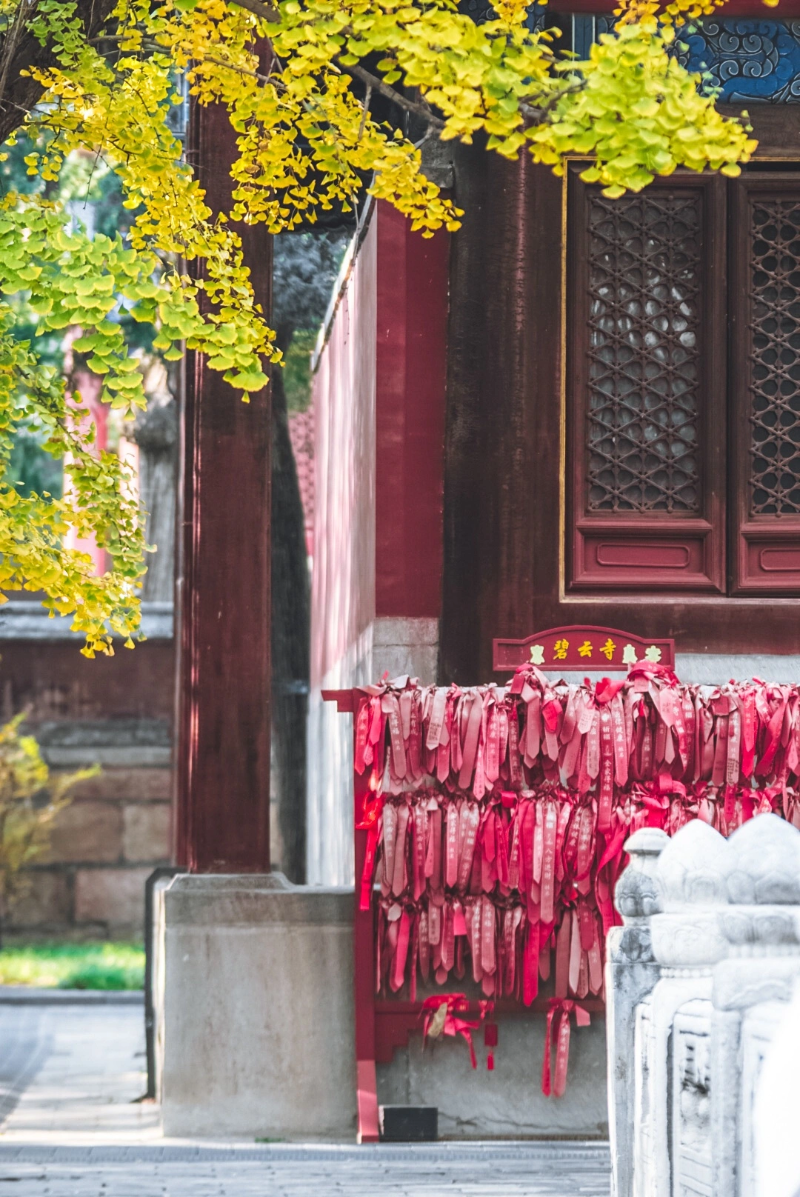
If you’re in Beijing in autumn, Xiangshan is hard to beat. The park is at its most famous in late fall, when smoke trees and maples turn and the hills layer into reds, yellows, and greens. The “red leaves of Xiangshan” have been praised in writing for centuries.
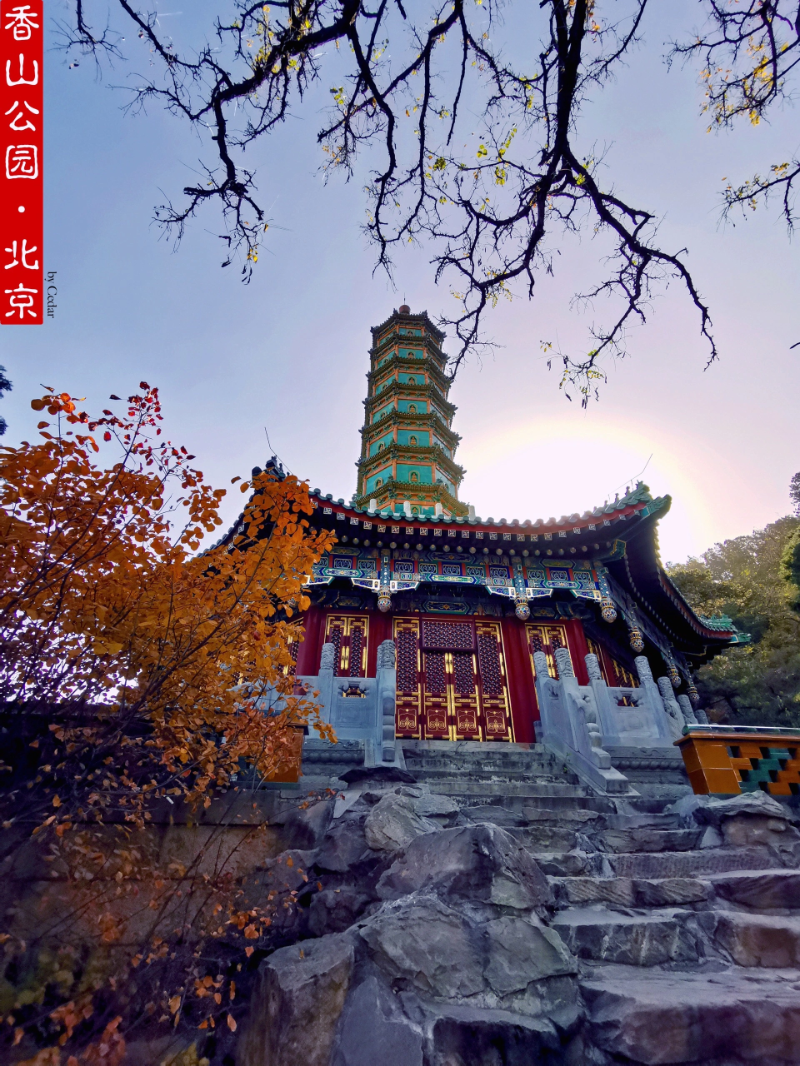
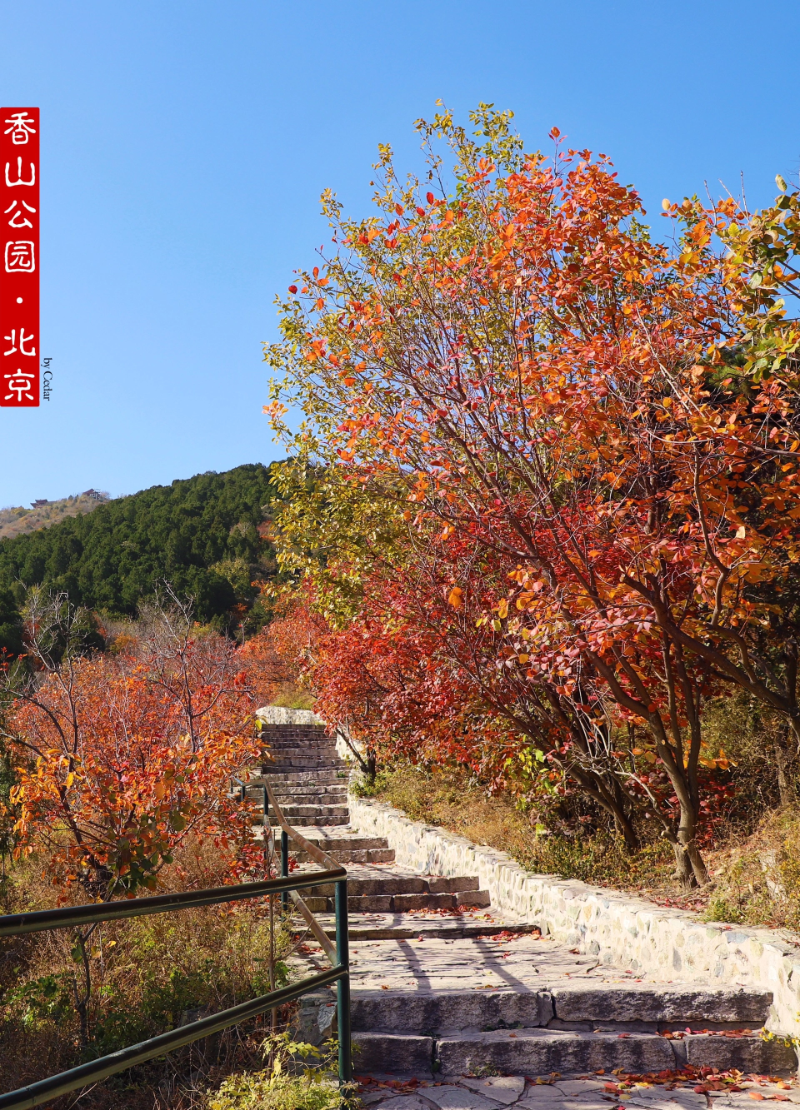
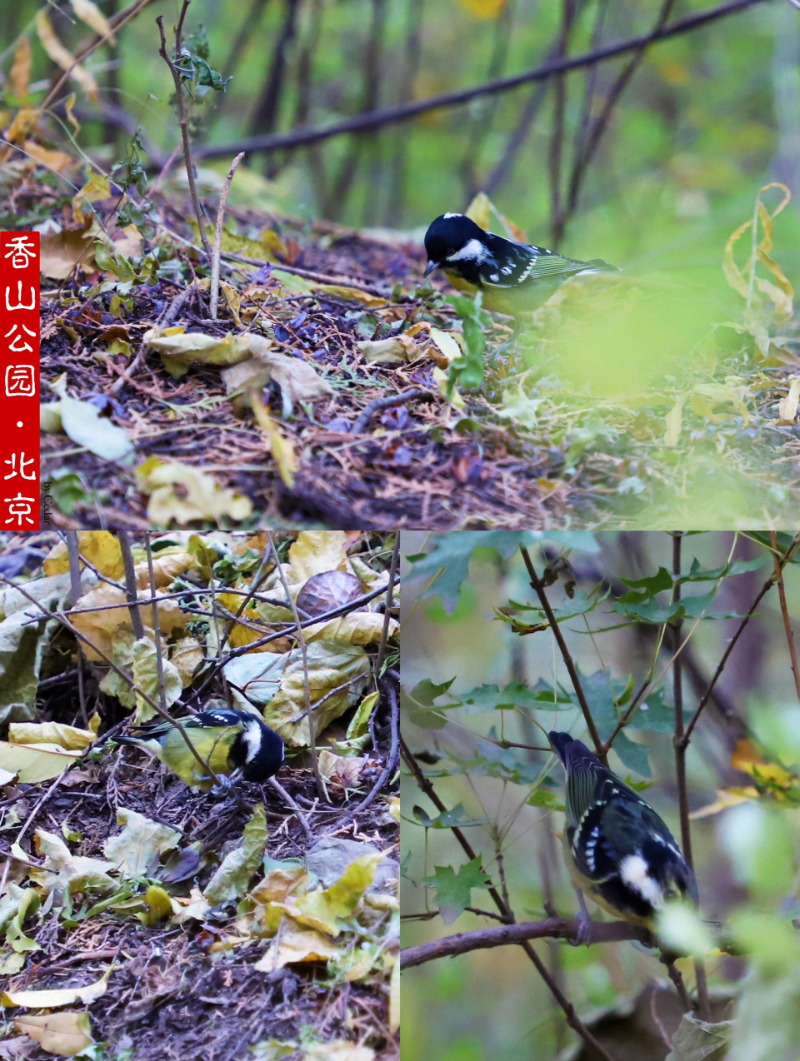
In red-leaf season, visitor numbers spike and cable car lines get long. Go early and aim for off-peak hours.
Practical Information
Address: No. 40, Maimai Street, Xiangshan, Haidian District
Opening Hours: 6:00 AM - 6:00 PM
Ticket Price: 5 yuan
Reservation Information: Book tickets by logging into the WeChat official account "Xiangshan Park Service" or Changyou Park.
Beijing Botanical Garden | A Grand Display of Plants at the Foot of the Mountain
After Fragrant Hills, many visitors continue to the Beijing Botanical Garden at the foot of the mountains. It’s especially good for spring outings and flower viewing. The park has three main parts: the open botanical garden areas, the tropical greenhouse, and a historical sites section. The greenhouse’s desert plant zone is a popular photo spot, and nearby sites include the Cao Xueqin Memorial Hall and the Temple of the Reclining Buddha.
Across the year, the garden hosts seasonal flower displays. Wintersweet appears in February, peach blossoms are a draw in early March, and chrysanthemums take over in late autumn.
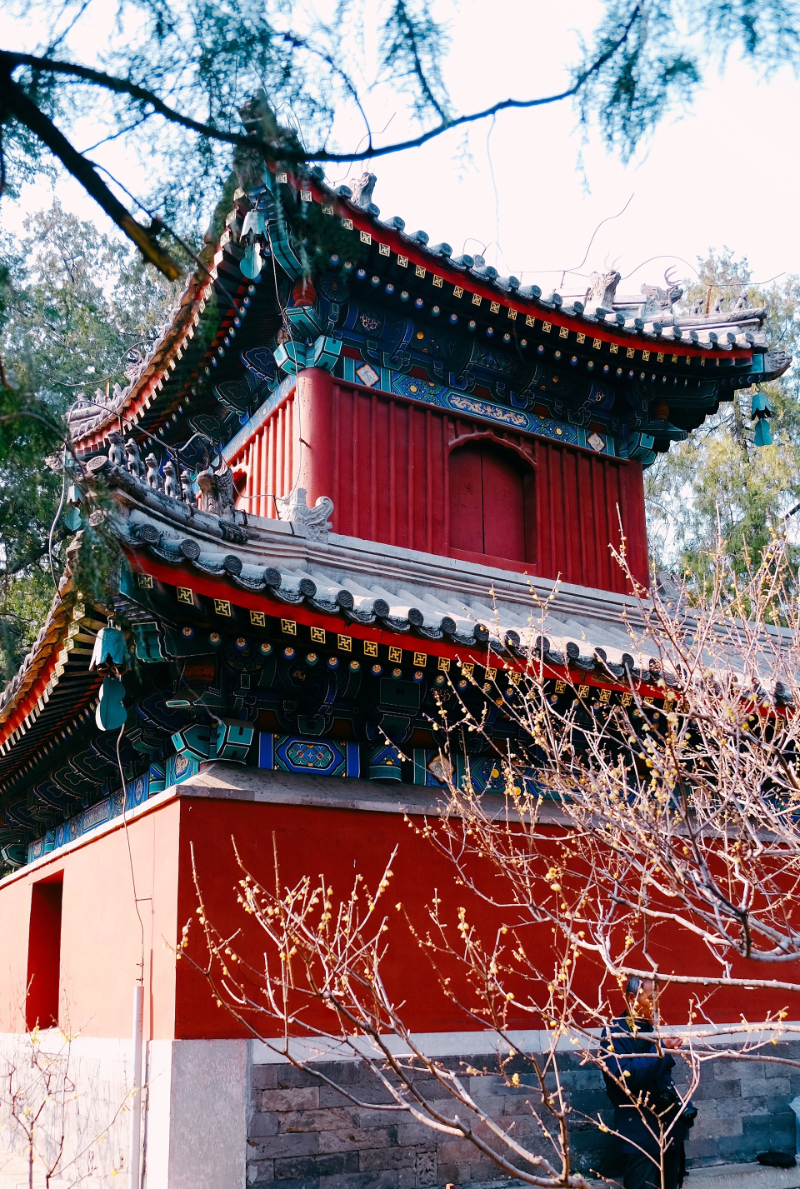
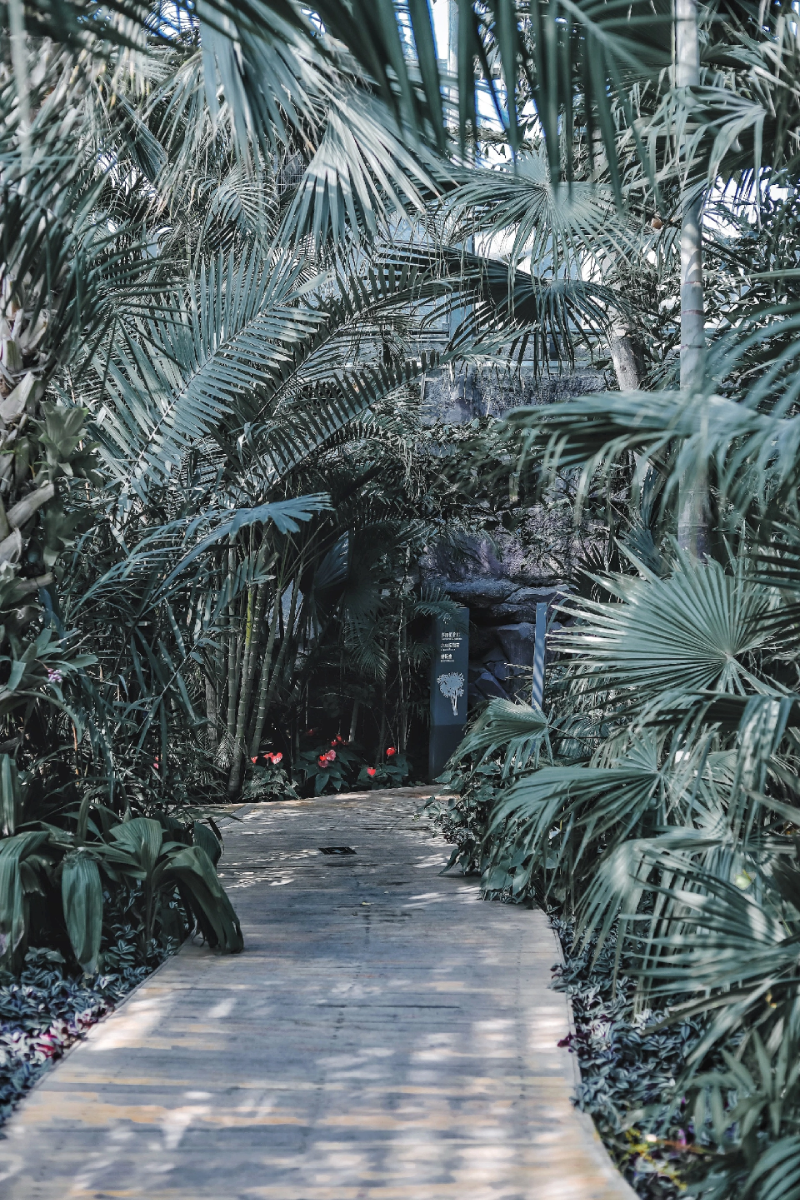
Flower timing varies year to year; check official updates before you go.
Practical Information
Address: Wofo Temple Road, Xiangshan, Haidian District
Opening Hours: 6:00 AM - 7:00 PM (Summer) / 7:00 AM - 5:00 PM (Winter), Closed on Mondays
Admission Fee: 5 RMB per person
Reservation Information: Book tickets via the WeChat official account 「Changyou Park」 or click the link below👇